
Visual discrimination Normal Letter Recognition Worksheets for Ages 3-4
4 filtered results
Difficulty Level
Grade
Age
-
From - To
Subject
Activity
Standards
Discover our engaging Visual Discrimination Normal Letter Recognition Worksheets, specially designed for children ages 3-4. These worksheets promote early literacy skills by helping young learners identify and differentiate various letters and shapes. Each activity is crafted to enhance visual perception, ensuring kids gain confidence in recognizing the alphabet. Perfect for playful learning at home or in the classroom, our resources feature colorful illustrations and interactive exercises that captivate young minds. Equip your child with essential skills for reading and writing success as they embark on an exciting journey of exploration through letters and sound recognition. Start their learning adventure today!
Favorites
With answer key
Interactive
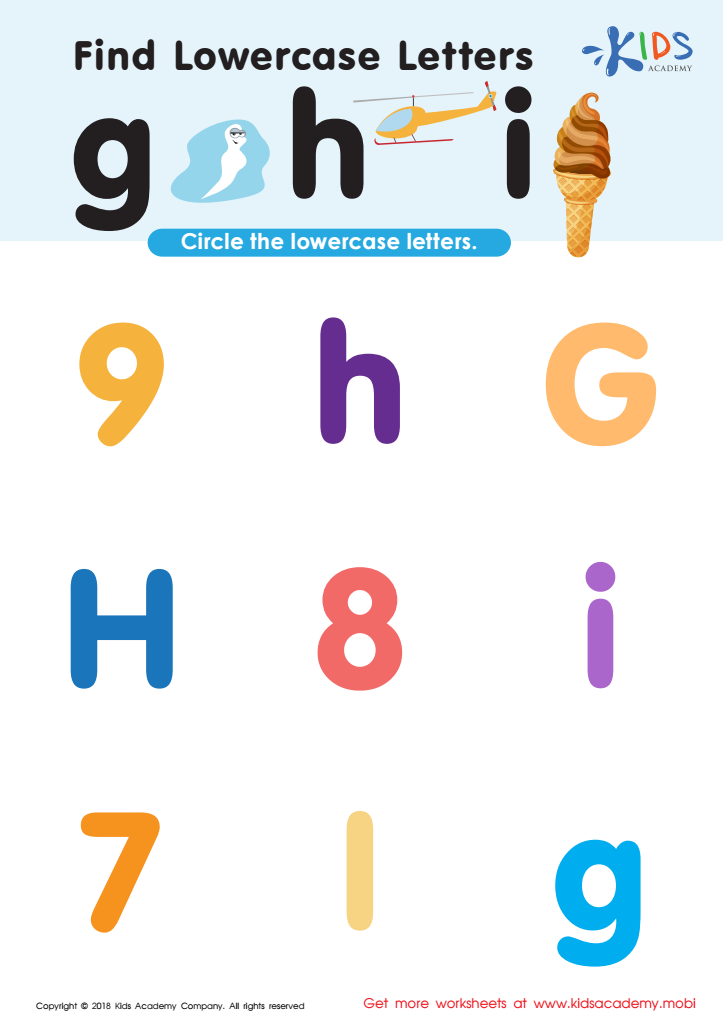
Find Lowercase Letters g h i Worksheet
Turn learning into a fun journey with your child! Use this free worksheet to find and circle the lowercase letters hidden amongst uppercase letters and numbers. Your child will understand what you're teaching them as they enjoy the search.
 Assign to My Students
Find Lowercase Letters g h i Worksheet
Worksheet
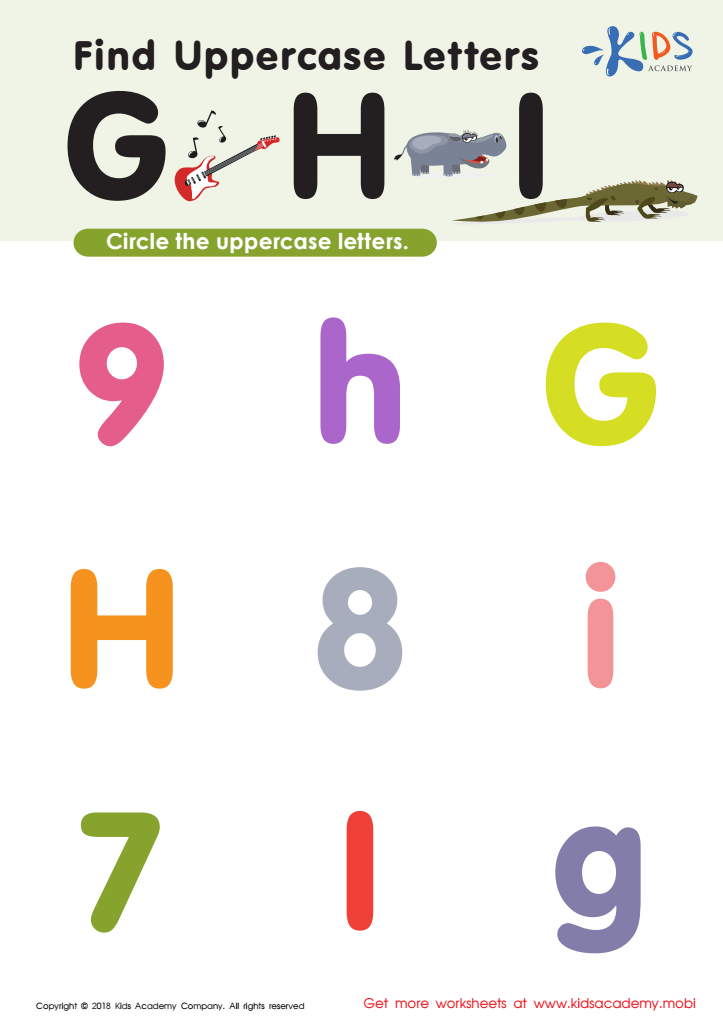
Find Uppercase Letters G, H, and I Worksheet
Find G, H, and I in uppercase with this downloadable worksheet! Numbers are included to challenge your kindergartener's letter recognition skills. Plus, practice G, H, and I sounds using the cute graphics. Perfect for learning letter case recognition!
Find Uppercase Letters G, H, and I Worksheet
Worksheet
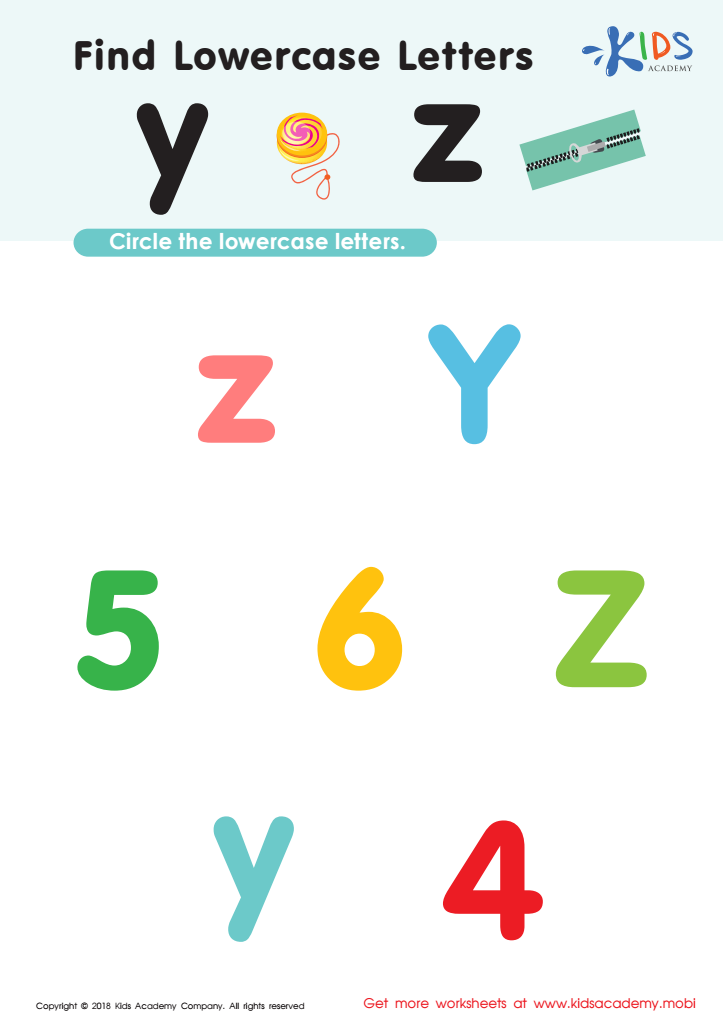
Find Lowercase Letters y z Worksheet
Help your kid learn the alphabet. Before they can move on to words and reading, they must first know the lower and uppercase letters. Show them how to find the letters y and z in this worksheet, which is filled with uppercase letters and numbers. Together, find and circle them.
Find Lowercase Letters y z Worksheet
Worksheet
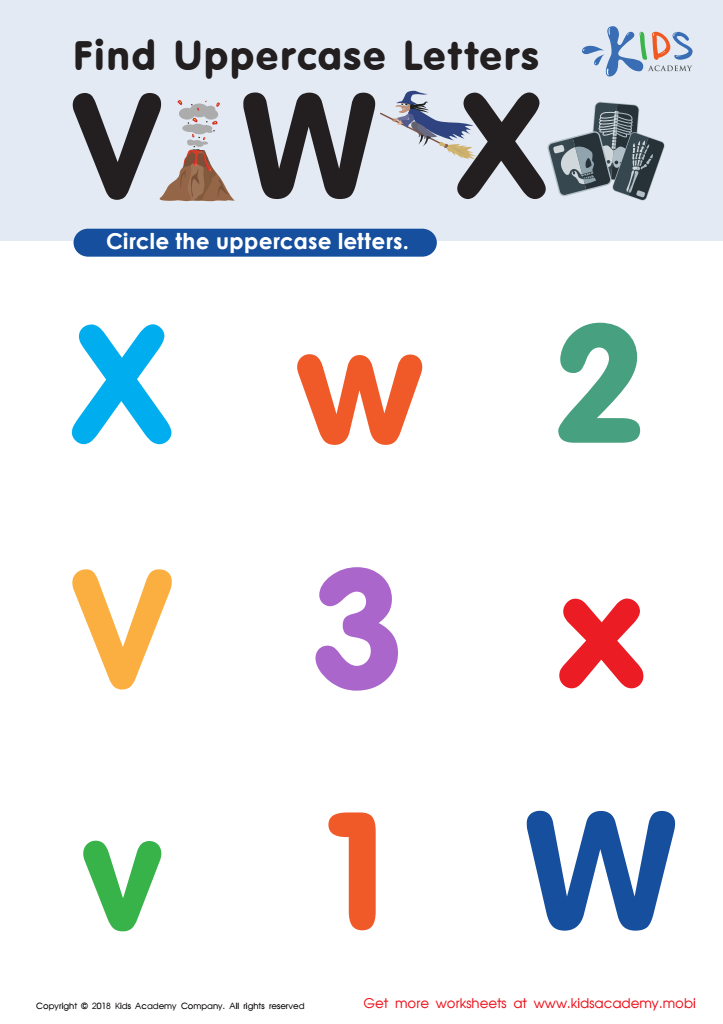
Find Uppercase Letters V, W, X Worksheet
Ask your kids if they can spot the uppercase letters V, W and X hidden in the lowercase letters and numbers, then have them circle them. After that, ask them to give you examples of words beginning with those letters. This worksheet will help them get started.
Find Uppercase Letters V, W, X Worksheet
Worksheet
Join Kids Academy for Free
Who is primarily going to use this learning content?








Visual discrimination and normal letter recognition are critical skills for children aged 3-4 because they lay the foundational framework for literacy development. At this age, children are beginning to explore and understand their environment, including the printed word. Visual discrimination enables them to notice differences and similarities in letters, an essential skill for reading and writing. For instance, distinguishing between letters like "b" and "d" is pivotal as they start to encounter them in their early reading activities.
Teachers and parents should care about nurturing these abilities because they are directly linked to a child’s ability to read and spell proficiently in later years. Early experiences with letters—through play, stories, and interactive activities—cultivate children’s interest in literacy and foster lifelong reading habits. Support in this area enhances cognitive skills, boosts vocabulary, and improves overall academic performance.
Furthermore, addressing visual discrimination provides a positive reinforcement cycle. Recognizing letters confidently can lead to increased self-esteem and engagement in learning. As educators and caregivers prioritize these skills, they empower children with the tools needed to succeed academically and enjoy the wonders of reading, ultimately shaping their educational path and future opportunities.








