Handwriting improvement Normal Tracing Letters Worksheets for Ages 3-4
4 filtered results
-
From - To
Discover the joy of handwriting improvement with our Normal Tracing Letters Worksheets, specially designed for children aged 3-4. These engaging worksheets are perfect for young learners to practice letter formation, enhancing fine motor skills and confidence in writing. Each page features clearly outlined letters for tracing, encouraging children to develop proper hand grip and control. Fun illustrations and interactive activities make learning enjoyable, sparking creativity while reinforcing essential literacy skills. Support your child’s early education journey with these beautifully designed resources, helping them master the basics of handwriting in a playful and effective way. Ideal for home or classroom use!
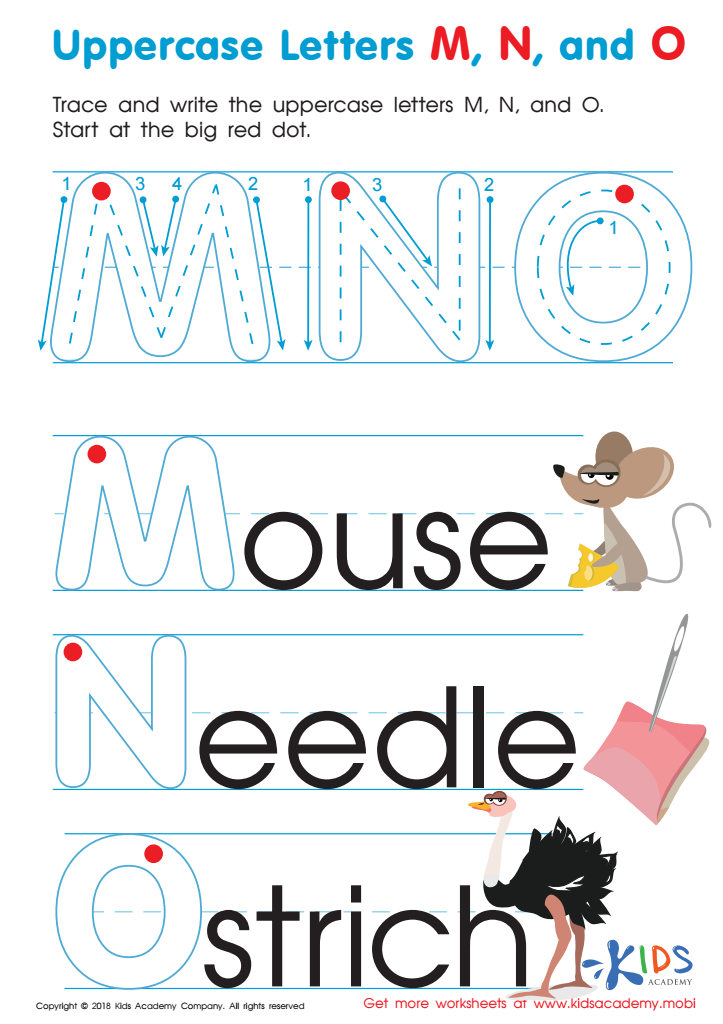
Uppercase Letters M, N, and O Worksheet
 Assign to My Students
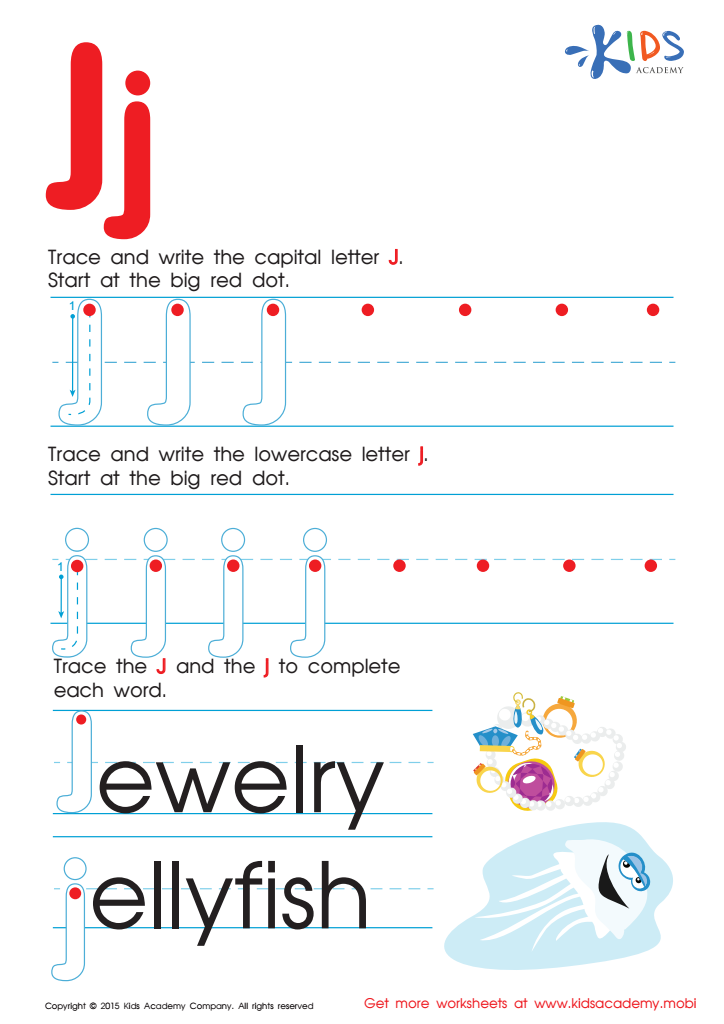
Letter J Tracing Page
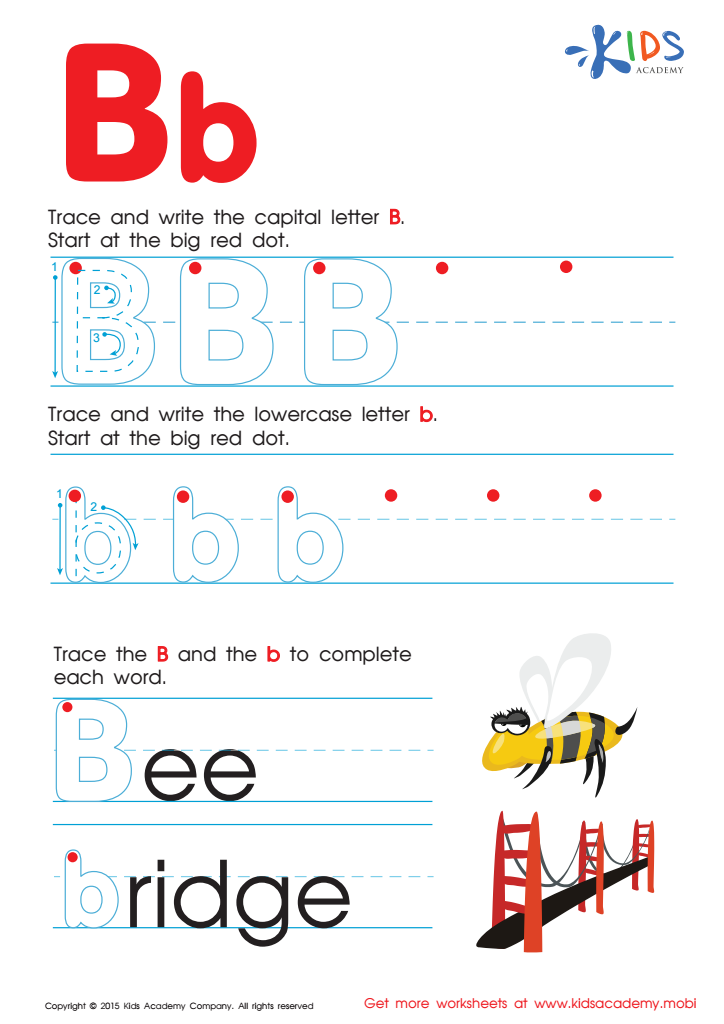
Letter B Tracing Page
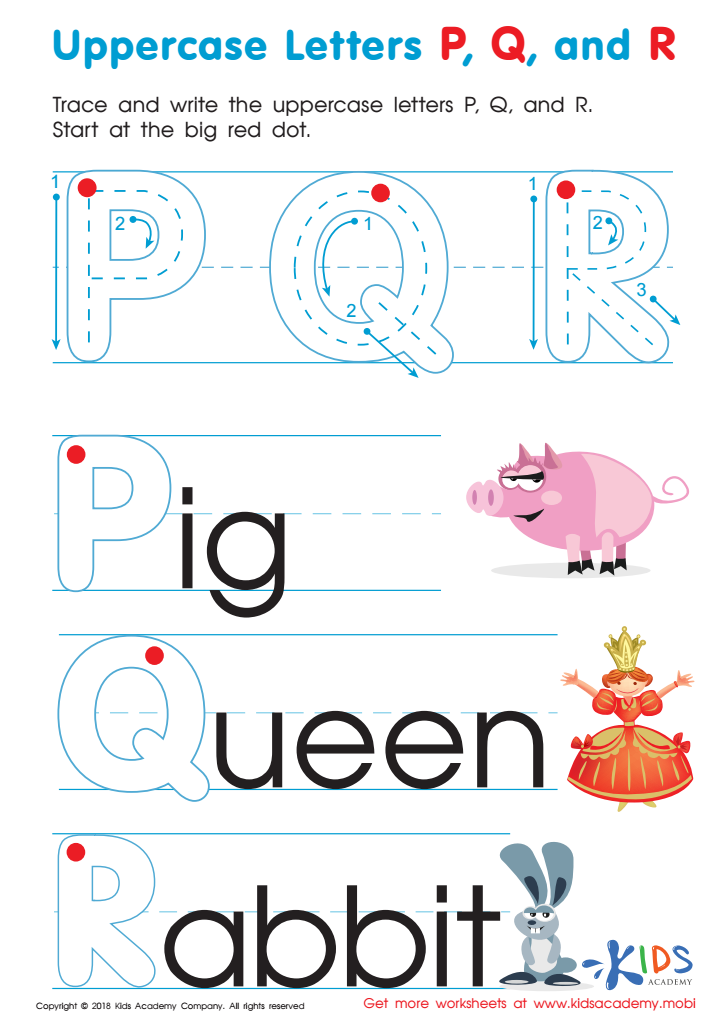
Uppercase Letters P, Q, and R Worksheet








Handwriting improvement, particularly through activities like tracing letters, is crucial for children aged 3-4. At this early stage, children are developing fine motor skills, which serve as the foundation for their handwriting abilities. Tracing letters helps strengthen the small muscles in their hands that are essential for writing, allowing for better control and precision over time.
Moreover, engaging in tracing activities enhances cognitive development by allowing children to recognize letters, their shapes, and sounds. This foundational knowledge is vital for later literacy skills, including reading and writing. Improved handwriting also supports children's confidence in their abilities; as they see their progress in forming letters, they feel a sense of achievement that encourages them to engage further.
Additionally, handwriting fosters concentration and discipline. It encourages children to focus on tasks, thereby fostering better attention spans. In today’s digital age, where technology often dominates learning, ensuring children develop fundamental handwriting skills is essential for a well-rounded education.
Overall, parents and teachers should prioritize tracing activities as they not only enhance handwriting but also support broader developmental milestones in early childhood, contributing to a child’s overall academic success and self-esteem.








