Lowercase letter writing Normal Tracing Letters Worksheets for Ages 3-4
3 filtered results
-
From - To
Introducing our engaging Lowercase Letter Writing Normal Tracing Letters Worksheets for Ages 3-4! Designed specifically for early learners, these worksheets help young children develop their fine motor skills and letter recognition. Each worksheet features fun illustrations alongside clearly outlined lowercase letters, making tracing a delightful experience. As kids practice, they'll improve their handwriting and confidence in writing. Our resources are perfect for both home and classroom use, encouraging active participation in letter learning. Foster a love for learning early on with these creative and educational tracing worksheets that make mastering the alphabet enjoyable for every child!
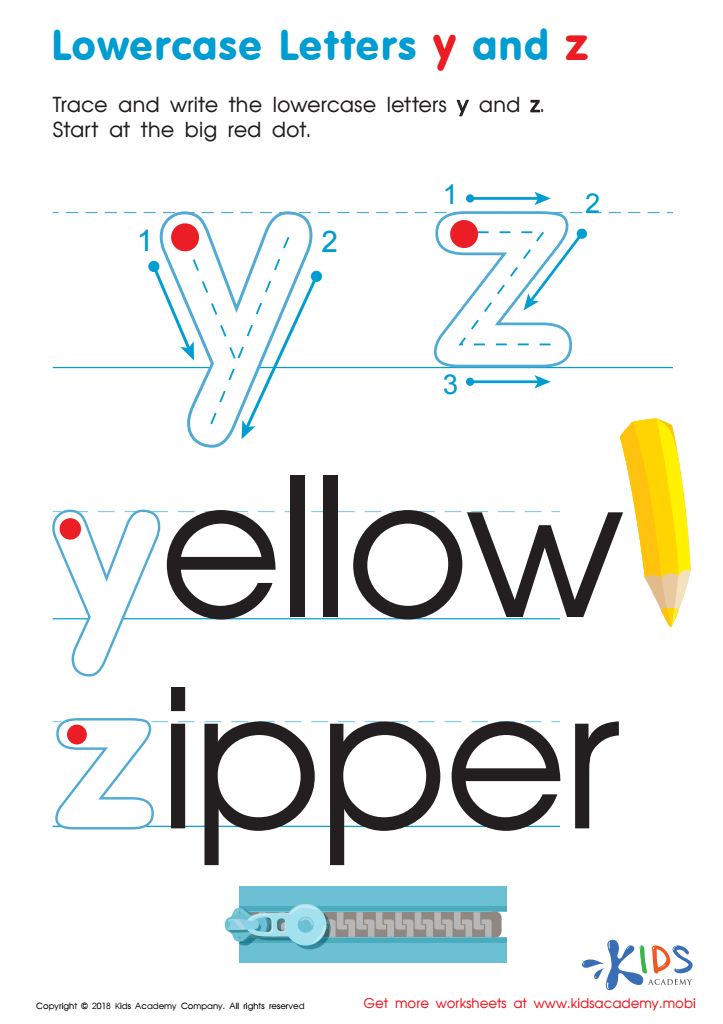
Lowercase Letters y z Worksheet
 Assign to My Students
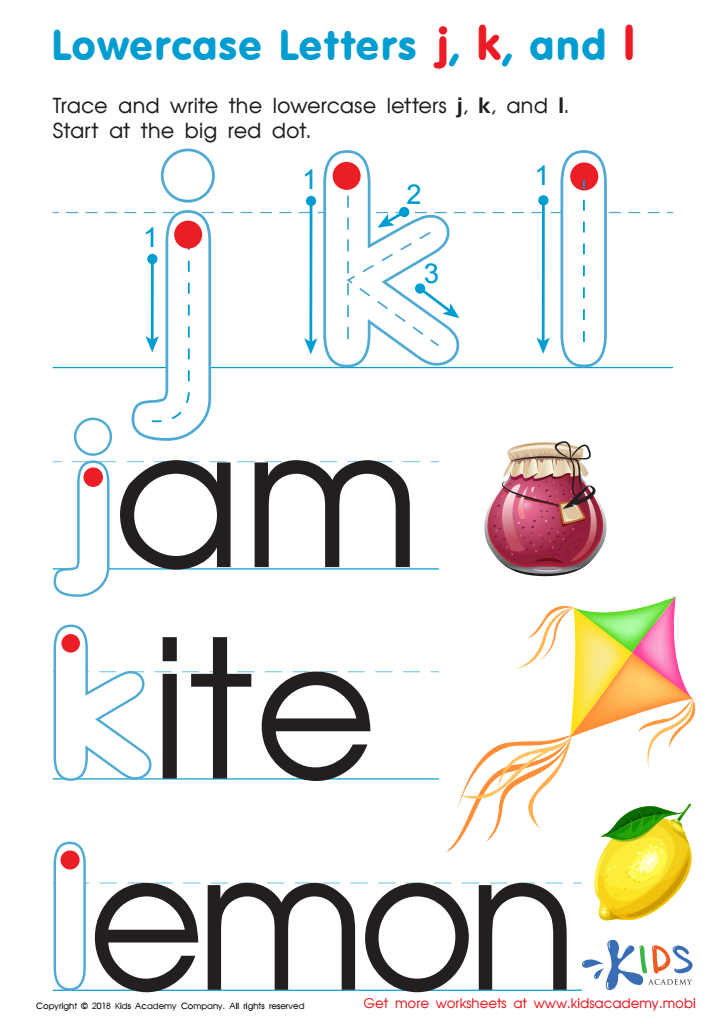
Lowercase Letters j k l Worksheet
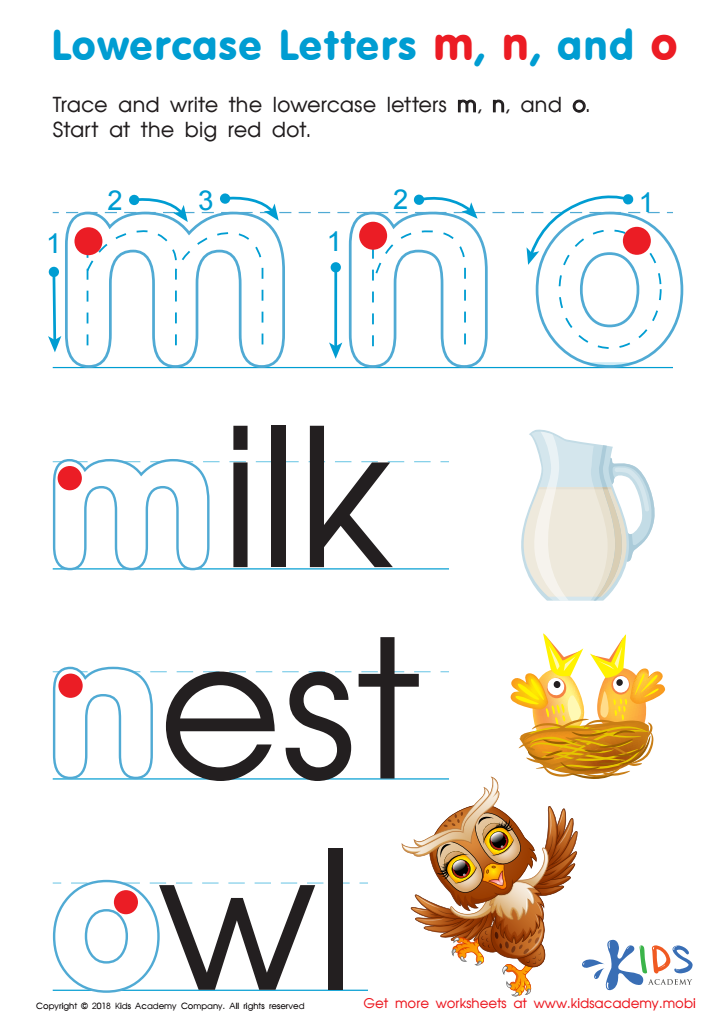
Lowercase Letters m n o Worksheet








Parents and teachers should prioritize teaching lowercase letter writing and tracing letters to children aged 3-4 for several important reasons. Firstly, this foundational skill sets the stage for effective written communication. Lowercase letters are used in most texts, making familiarity with them crucial for early literacy development. By practicing tracing, children hone their fine motor skills, which are essential not only for writing but also for everyday tasks like buttoning shirts or using scissors.
Engaging in letter tracing activities can also enhance cognitive development. As children practice, they develop recognition of letter shapes and sounds, reinforcing their understanding of the alphabet and preparing them for reading. Furthermore, this type of practice encourages positive learning habits. The act of tracing letters promotes focus, concentration, and patience, qualities that are vital for future learning experiences.
In addition, these activities can be fun and interactive. Parents and teachers can incorporate songs, games, and visual aids, making learning an enjoyable experience. This positive reinforcement builds a strong emotional connection to literacy, fostering a lifelong love for reading and writing. Ultimately, focusing on lowercase letter writing at a young age ensures that children are well-prepared for more advanced literacy challenges as they grow.








