Alphabet understanding Normal Upper & Lowercase Letters Worksheets for Ages 3-4
3 filtered results
-
From - To
Discover our engaging Alphabet Understanding worksheets designed specifically for children ages 3-4. These colorful resources focus on recognizing and differentiating between normal uppercase and lowercase letters, laying a strong foundation for early literacy skills. Each worksheet features fun activities that enhance letter identification, making learning enjoyable and effective. Perfect for home or classroom use, these printable worksheets help young learners boost their confidence in letters while fostering essential writing skills. Encourage your child's love for letters and support their developmental journey with our carefully crafted worksheets! Visit us today to download and start their alphabet adventure!
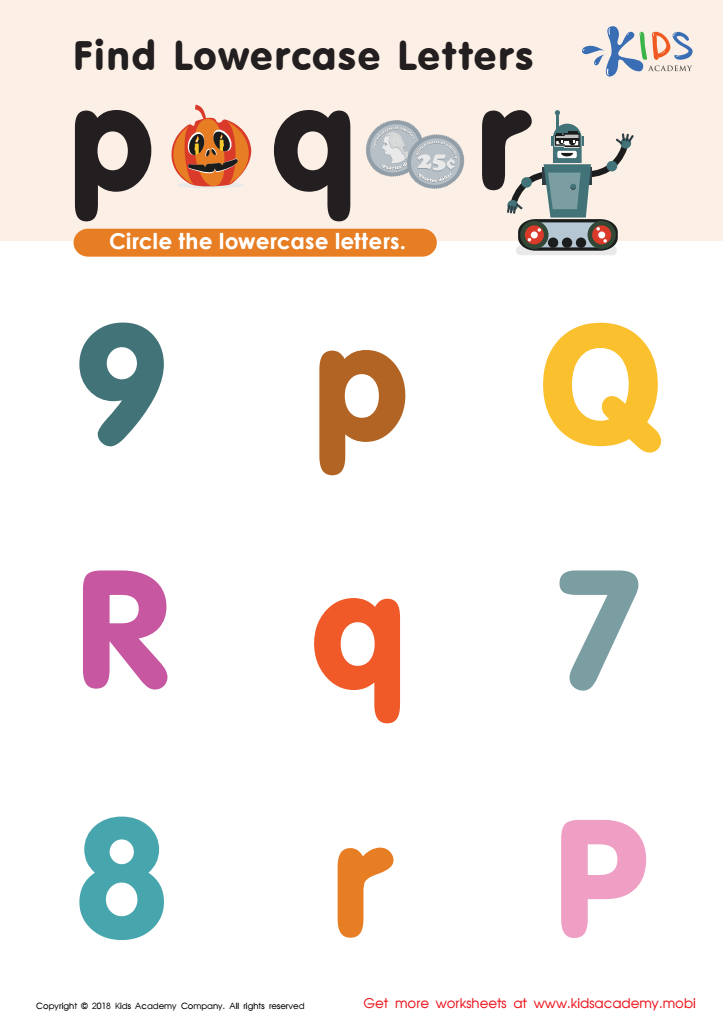
Find lowercase Letters p q r Worksheet
 Assign to My Students

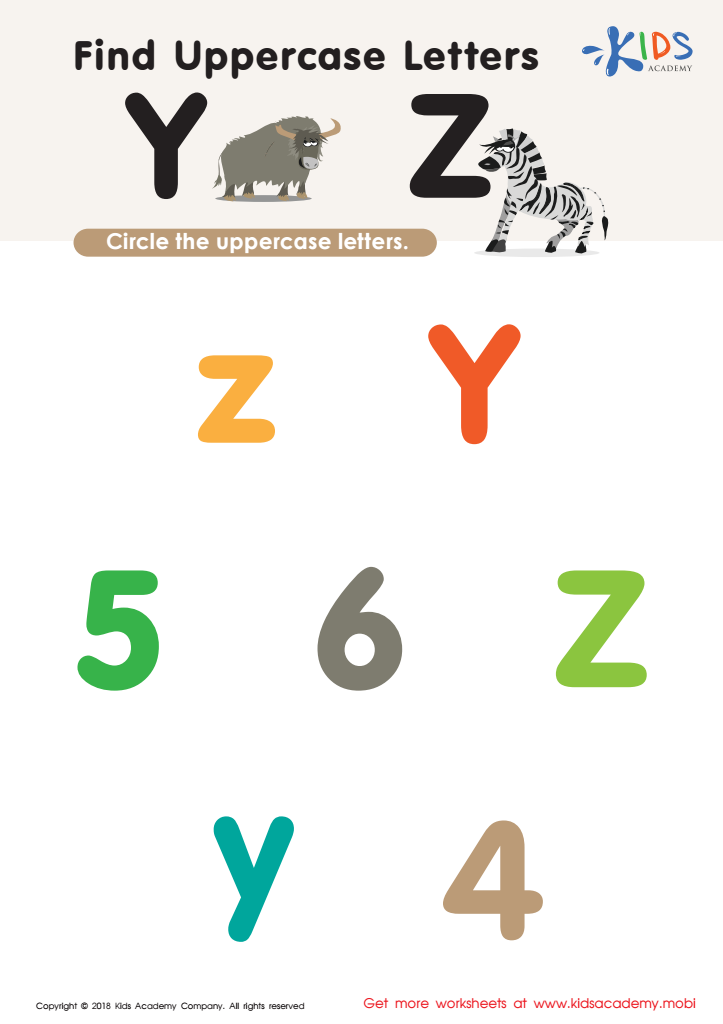
Find Uppercase Letters Y Z Worksheet

Find lowercase letters a b c Worksheet






Understanding both uppercase and lowercase letters is crucial for children aged 3-4 as it forms the foundation of their literacy development. At this age, children are starting to recognize and differentiate letters, which is essential for reading and writing skills later on. Familiarity with the alphabet helps them develop phonemic awareness—an understanding of the sounds associated with each letter—crucial for beginning readers.
Furthermore, knowing uppercase letters helps children recognize their names and important signs and labels around them, while lowercase letters are more frequently used in books and everyday writing. By grasping the differences between these two letter forms, children gain confidence and competence in reading. This serves to encourage a love for books and storytelling, setting them on a path toward academic success.
For teachers and parents, fostering an environment that blends play and learning is vital. Activities such as letter games, singing the alphabet song, and showcasing letter-themed art can make learning engaging. Ultimately, prioritizing letter recognition aids in better communication skills and cognitive development, equipping children with essential tools they will use throughout their educational journey. Early alphabet understanding is a small step toward lifelong learning and literacy.







