Uppercase identification Normal Upper & Lowercase Letters Worksheets for Ages 3-4
5 filtered results
-
From - To
Introduce your little ones to the exciting world of letters with our Uppercase Identification worksheets, designed specifically for children ages 3-4. These engaging activities focus on normal upper and lowercase letters, helping young learners differentiate and recognize uppercase letters with ease. Through fun and interactive exercises, kids will enhance their letter identification skills, setting a solid foundation for literacy. Each worksheet is tailored to capture the curiosity of young minds, fostering both learning and play. Perfect for home or classroom use, these resources will inspire confidence in your child's early reading journey. Download now to start their adventure with the alphabet!
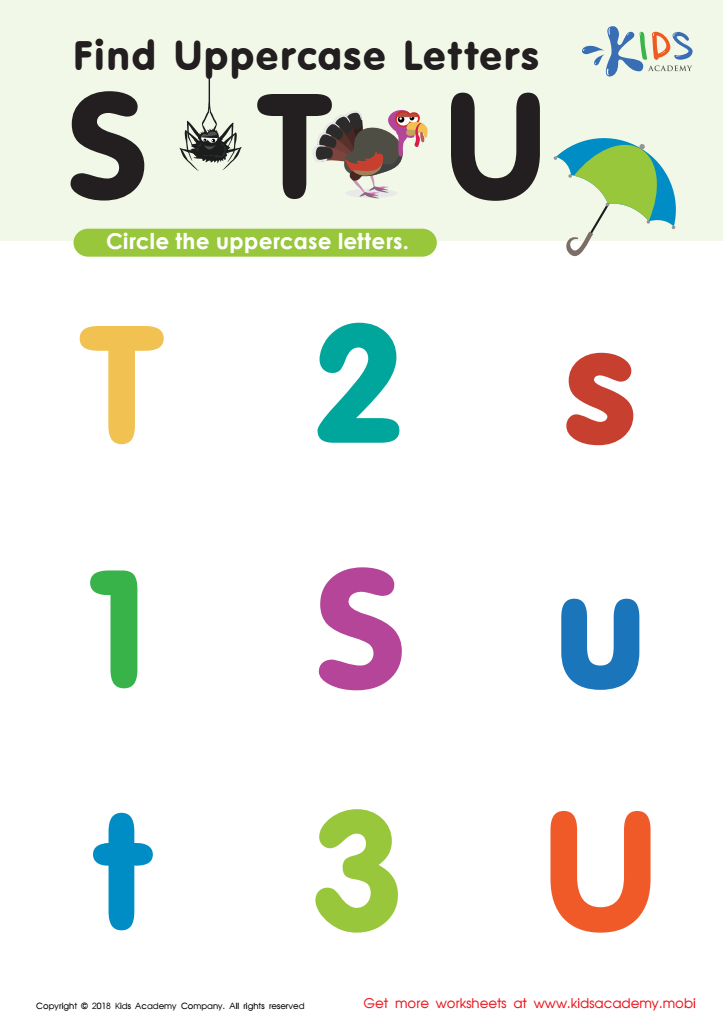
Find Uppercase Letters Worksheet
 Assign to My Students

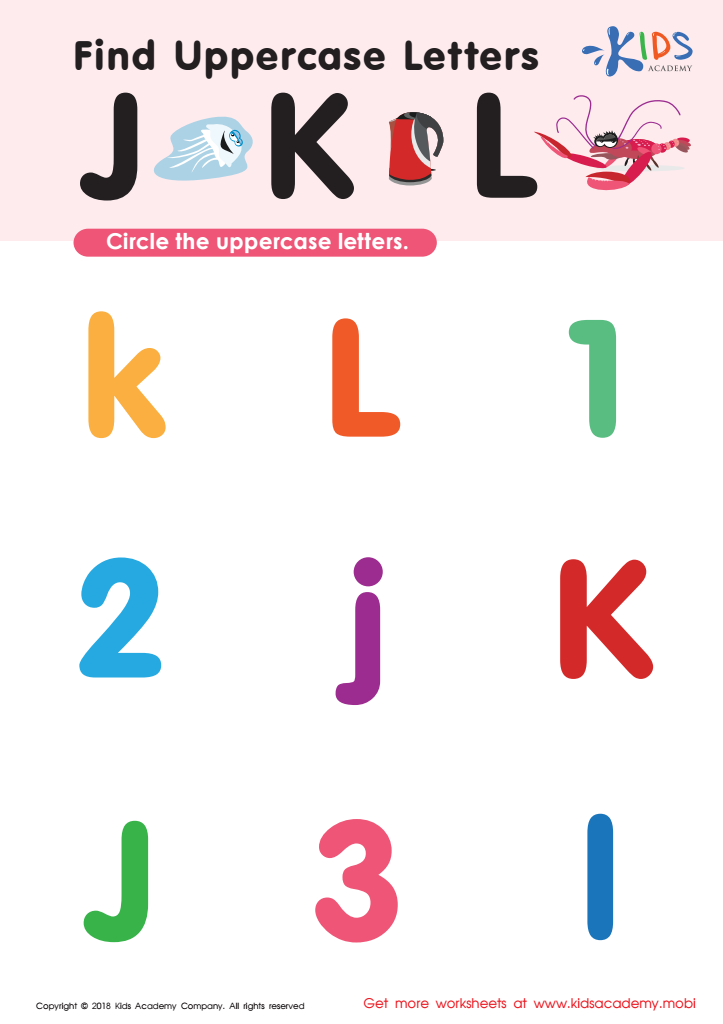
Find Uppercase Letters J, K, and L Worksheet

Find Uppercase Letters A, B, and C Worksheet
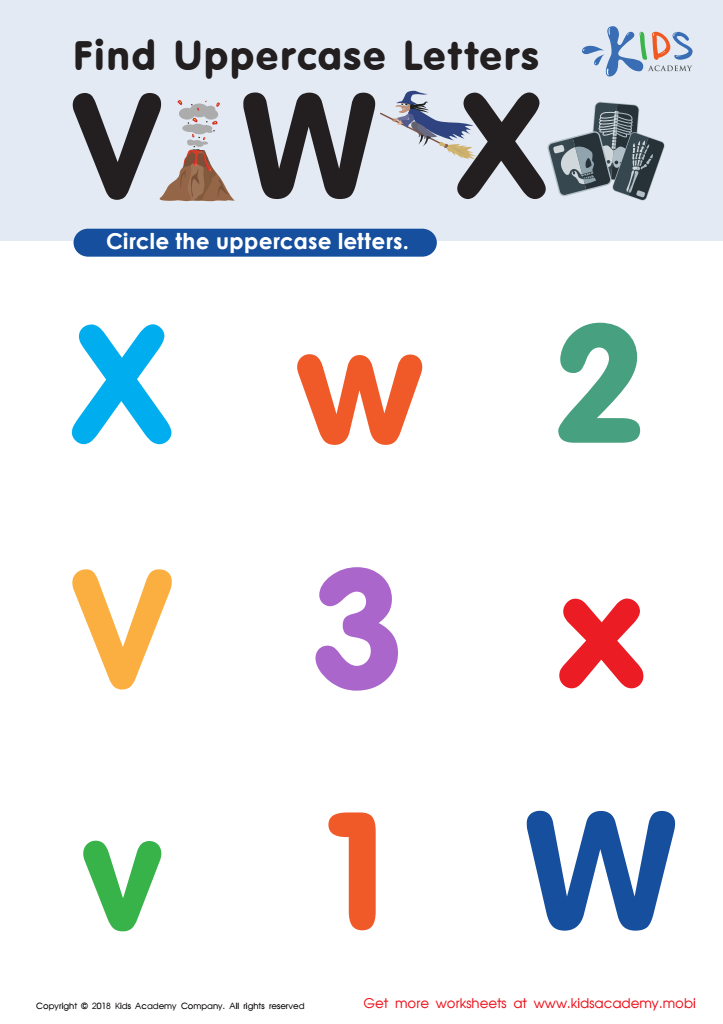
Find Uppercase Letters V, W, X Worksheet
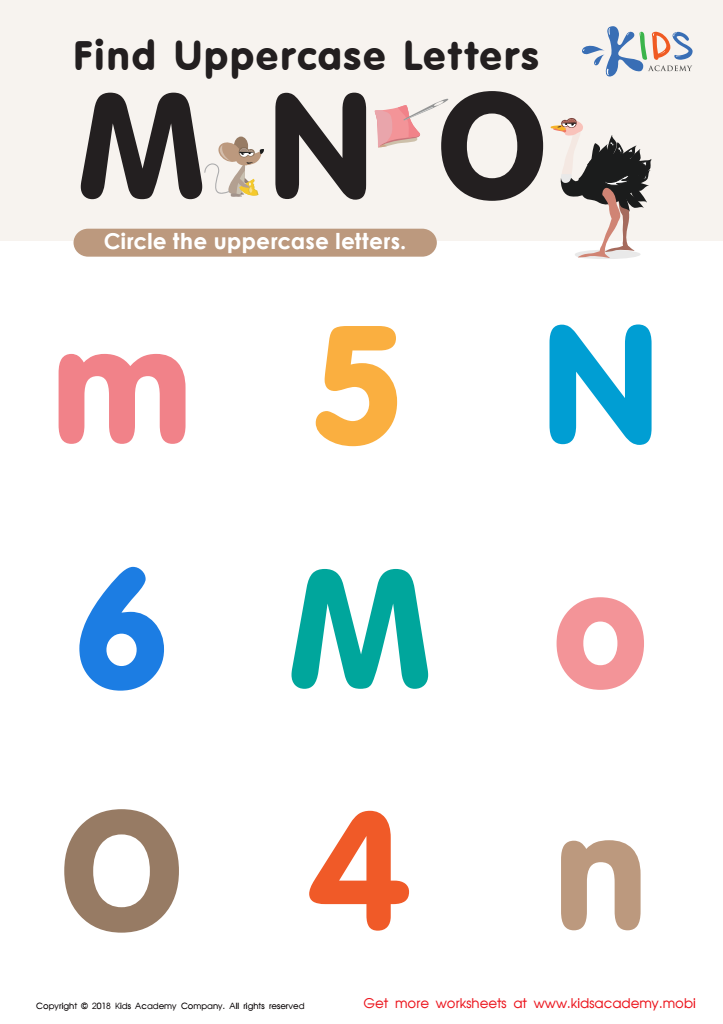
Find Uppercase Letters M, N, and O Worksheet






Recognizing and distinguishing between uppercase and lowercase letters is a crucial early literacy skill for children ages 3-4. This foundational knowledge not only fosters reading and writing development but also enhances critical cognitive skills. Parents and teachers should care about uppercase and lowercase letter identification for several reasons.
First, a child’s ability to recognize letters prepares them for phonemic awareness, essential for learning to read. When children learn that letters represent sounds, they can decode words effectively. Moreover, distinguishing between uppercase and lowercase letters introduces learners to the concept of alphabetic principles, crucial for understanding writing and text structures.
Second, learning these letters boosts children’s self-esteem and confidence as they engage with books and educational materials. Recognizing familiar letters and their different forms encourages children to express themselves through writing, laying the groundwork for effective communication.
Finally, nurturing these skills in early childhood promotes a lifelong passion for reading and learning. Engaging activities, songs, and playful interactions can be instrumental in making letter recognition enjoyable. By investing time in teaching uppercase and lowercase letters, parents and teachers can help cultivate a strong literacy foundation that will support children's academic journeys.







