
Word Recognition Normal Building Vocabulary Worksheets for Ages 3-4
3 filtered results
Difficulty Level
Grade
Age
-
From - To
Subject
Activity
Standards
Introducing our engaging "Word Recognition Normal Building Vocabulary Worksheets" designed specifically for ages 3-4! These interactive worksheets help young learners develop essential word recognition skills, laying a strong foundation for their reading journey. With colorful illustrations and fun activities, children will explore new vocabulary while enhancing their cognitive abilities. Each worksheet encourages creativity and critical thinking, offering a perfect balance of education and entertainment. Ideal for preschool and early learning environments, these resources not only support literacy development but also promote confidence in early readers. Start nurturing a love for words today with our thoughtfully crafted vocabulary-building worksheets!
Favorites
With answer key
Interactive
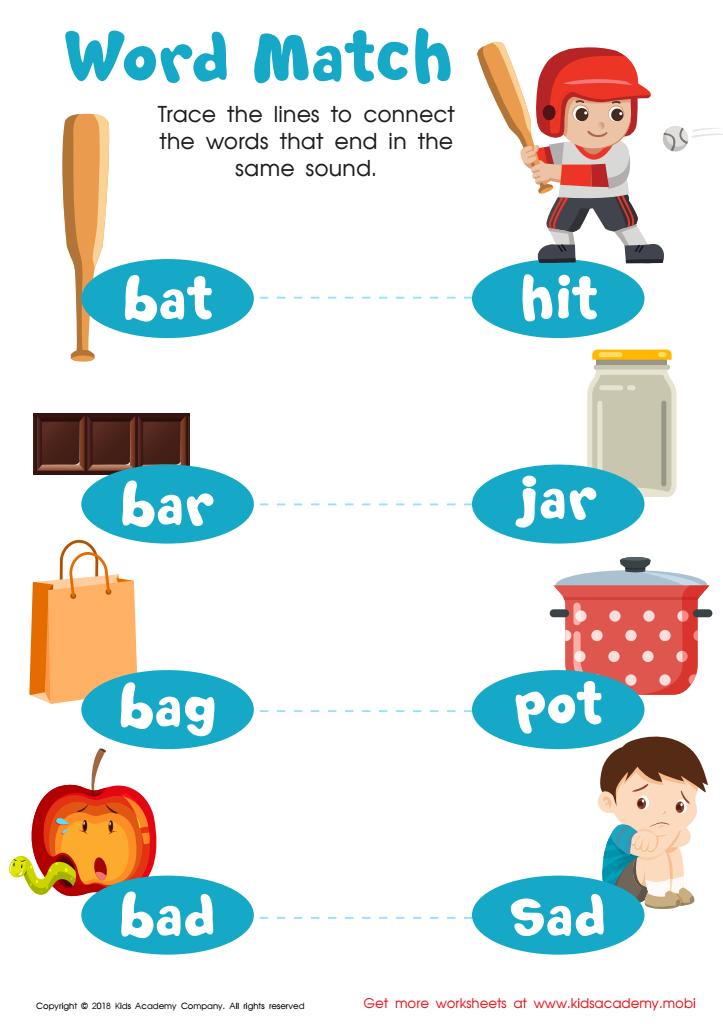
Word Match Reading Worksheet
This printout helps children learn to read fluently by connecting words with the same sound. Colorful pictures aid understanding and context for kindergarten-level students. Tracing lines, they learn to identify the sounds made by letters of the alphabet and deepen their knowledge of phonics.
 Assign to My Students
Word Match Reading Worksheet
Worksheet











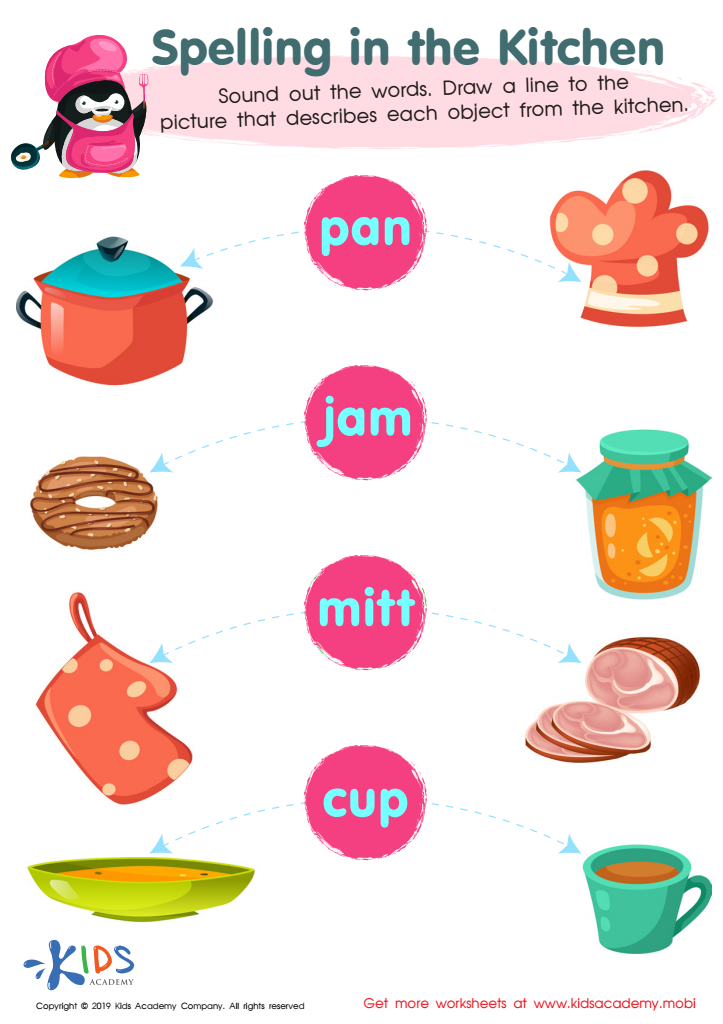
Spelling in the Kitchen Worksheet
Your little ones can learn a lot if they help in the kitchen. Get them to identify and say the name of each item in the picture in this worksheet. Sound out the words for them and help draw a line to the right picture. It's a great way for them to learn about kitchen items!
Spelling in the Kitchen Worksheet
Worksheet
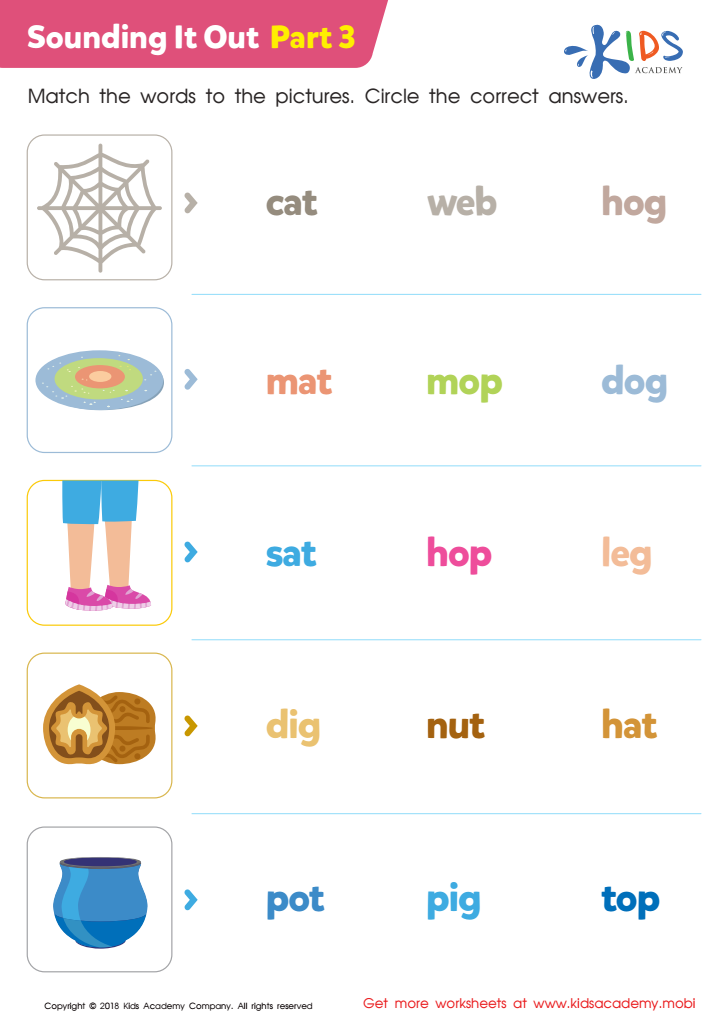
Sounding it Out: Part 3 Worksheet
Once Parts 1 and 2 are complete, this printable phonics worksheet will help kids take their reading skills to the next level! As they gain confidence, give them hints less often and direct their attention to three words in a row. Ask them to read and circle the correct word to complete!
Sounding it Out: Part 3 Worksheet
Worksheet
Join Kids Academy for Free
Who is primarily going to use this learning content?







Word recognition and vocabulary building are critical components of early literacy development for children aged 3-4. During these formative years, children are sponges, rapidly acquiring language and cognitive skills that form the foundation for future learning. When parents and teachers emphasize word recognition, they help children identify and understand words, crucial for reading fluency and comprehension later on.
Building a robust vocabulary helps young learners articulate their thoughts, express their emotions, and understand the world around them. It supports their ability to communicate effectively, facilitates social interactions, and lays the groundwork for academic success. A rich vocabulary also enhances listening skills and encourages curiosity, prompting children to explore new concepts and ideas.
Moreover, engaging children in discussions, storytelling, and interactive reading can significantly enrich their language experiences. Providing diverse words in various contexts helps reinforce understanding and retention. Parents and teachers play a pivotal role in creating an enriching language environment, ensuring that children not only recognize words but also comprehend their meanings and applications. By prioritizing word recognition and vocabulary development, they contribute to a child's confidence and love for learning, setting the stage for lifelong literacy skills.








