Sound recognition Normal Reading Worksheets for Ages 3-4
3 filtered results
-
From - To
Discover our engaging Sound Recognition Normal Reading Worksheets designed specifically for children aged 3-4! These worksheets encourage early literacy skills by introducing young learners to the fundamentals of sounds and phonetic awareness. With fun activities, colorful illustrations, and simple exercises, children can practice identifying sounds associated with objects, letters, and animals in a playful environment. Perfect for parents and educators, our worksheets promote cognitive development and foster a love for reading from an early age. Start your child's reading journey today with these interactive and educational worksheets that make learning sound recognition an enjoyable experience!

Rhyming Words Rhyming Worksheet
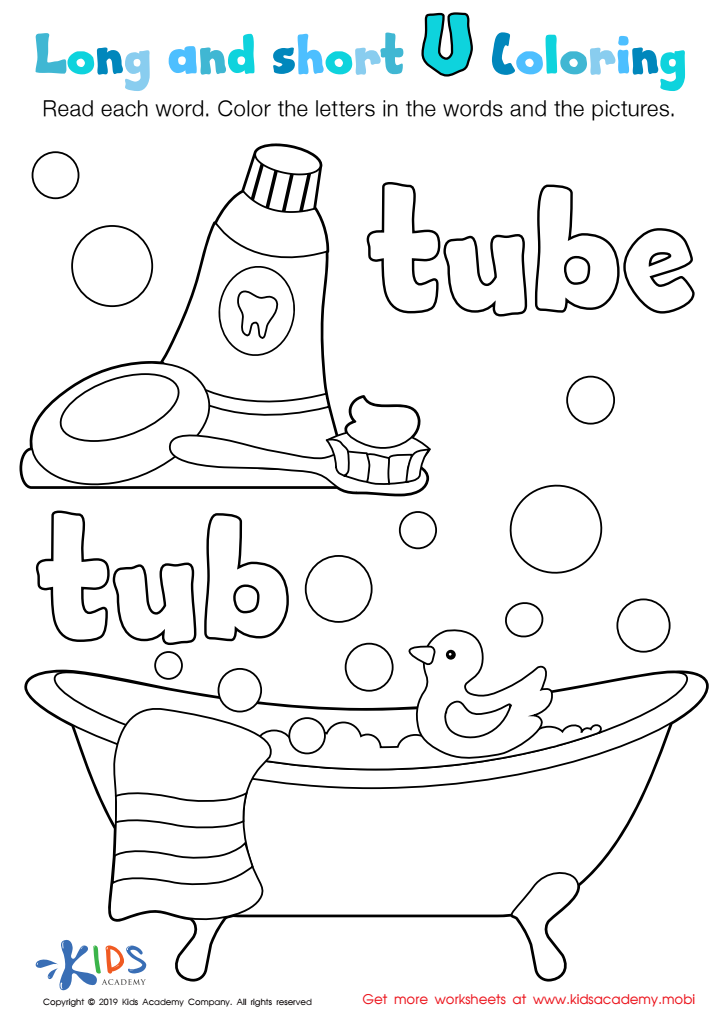
Long and Short U Worksheet
 Assign to My Students

First Words: Picture Rhymes Worksheet








Sound recognition is a crucial building block for early literacy, especially for children aged 3-4. During these formative years, children develop essential skills that form the foundation for understanding language and reading. Parents and teachers should care about sound recognition because it directly influences a child's ability to decode words, build vocabulary, and enhance comprehension.
When children learn to recognize sounds, they become better equipped to identify letters and their corresponding phonetic sounds. This recognition fosters phonemic awareness, an essential skill that helps children segment and blend sounds, paving the way for successful reading. Engaging in sound recognition activities—singing songs, playing rhyming games, or using sound-based toys—can make learning enjoyable while reinforcing these critical skills.
Moreover, early sound recognition profoundly impacts a child's overall cognitive development. It encourages listening skills, attention to auditory details, and promotes language development. Parents and teachers serve as role models in this learning process, providing support and encouraging exploration through interactive activities.
Ultimately, prioritizing sound recognition in early education helps lay a strong, successful trajectory for reading and lifelong learning, making it vital for parents and educators to be actively engaged in this foundational stage.








