
Spelling practice Normal Reading Worksheets for Ages 3-4
3 filtered results
Difficulty Level
Grade
Age
-
From - To
Subject
Activity
Standards
Nurture your child's early literacy skills with our "Spelling Practice Normal Reading Worksheets" tailored for ages 3-4. These engaging, educator-designed worksheets promote foundational spelling abilities, helping young learners recognize letters, sound out words, and enhance their vocabulary. Adorned with vibrant illustrations and interactive exercises, each worksheet captivates your child’s interest, making learning spellings a fun adventure. Our easy-to-follow activities are perfect for preschoolers developing essential pre-reading skills at their own pace. Give your child the tools they need to succeed with our captivating worksheets, and watch their confidence and skill set grow! Explore more at Kids Academy today!
Favorites
With answer key
Interactive
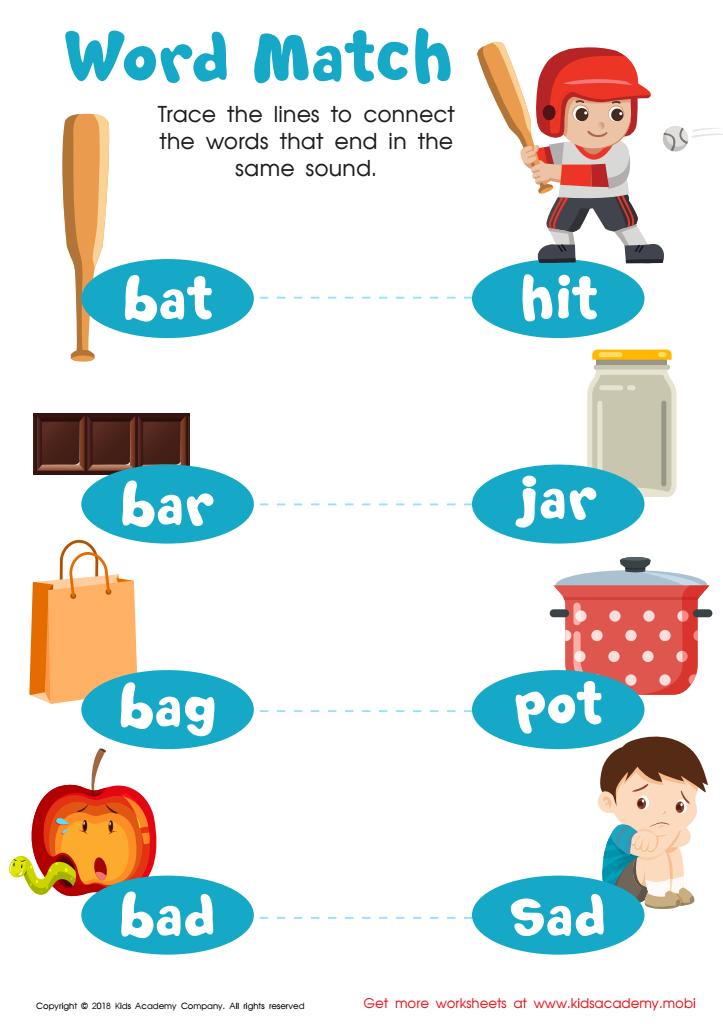
Word Match Reading Worksheet
This printout helps children learn to read fluently by connecting words with the same sound. Colorful pictures aid understanding and context for kindergarten-level students. Tracing lines, they learn to identify the sounds made by letters of the alphabet and deepen their knowledge of phonics.
 Assign to My Students
Word Match Reading Worksheet
Worksheet
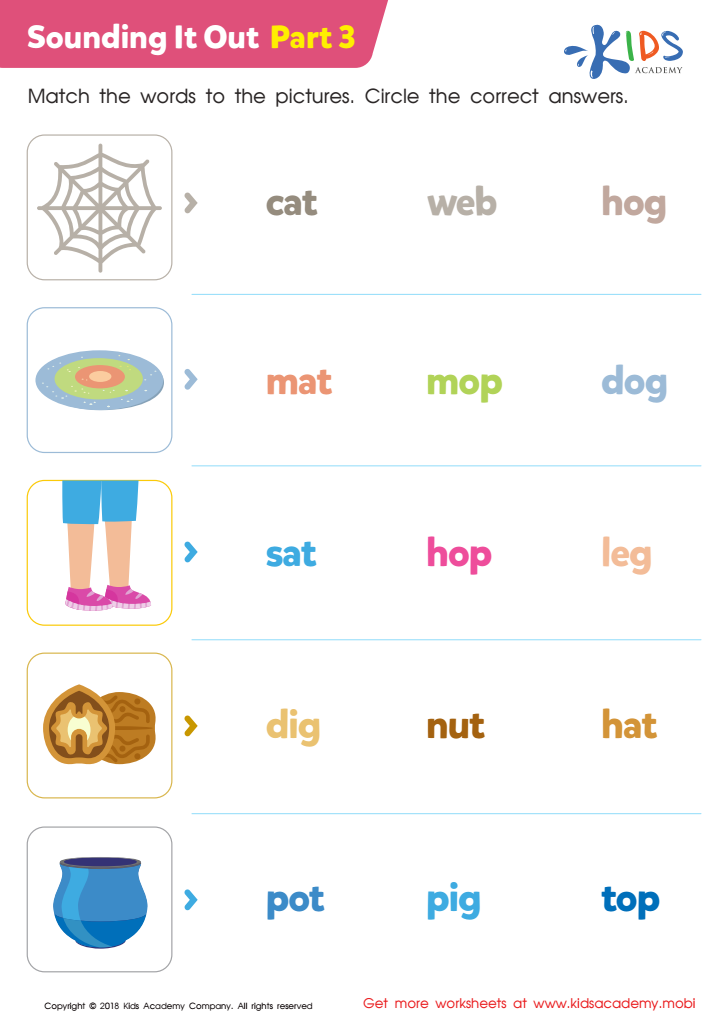
Sounding it Out: Part 3 Worksheet
Once Parts 1 and 2 are complete, this printable phonics worksheet will help kids take their reading skills to the next level! As they gain confidence, give them hints less often and direct their attention to three words in a row. Ask them to read and circle the correct word to complete!
Sounding it Out: Part 3 Worksheet
Worksheet
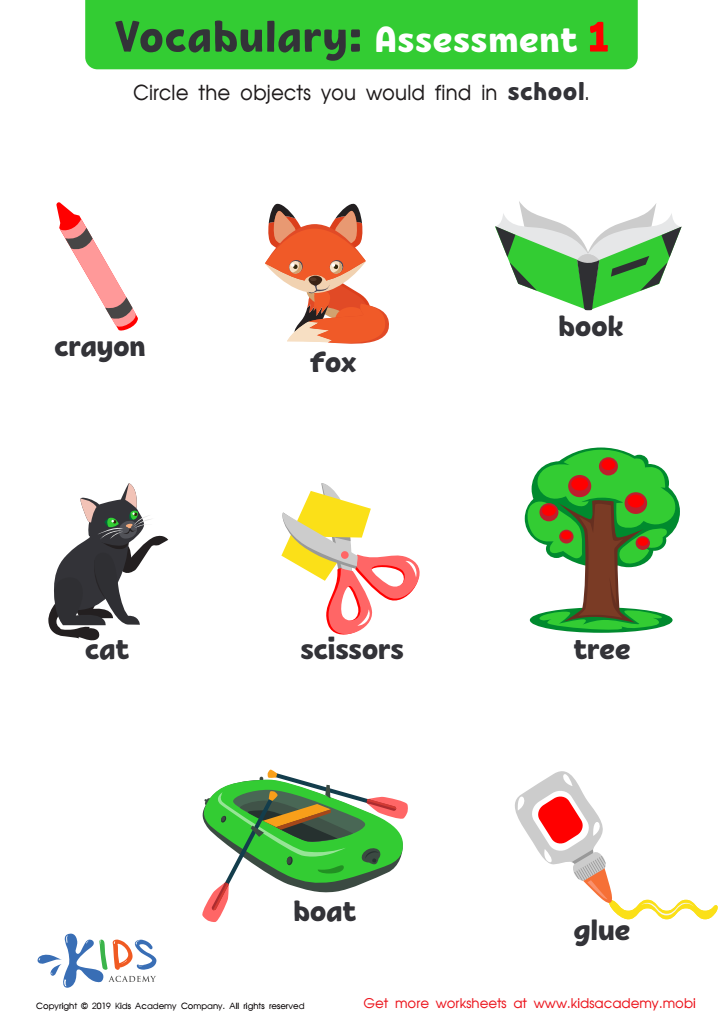
Vocabulary: Assessment 1 Worksheet
Want to check your child's vocabulary? This worksheet has kids identify objects from school through picture clues. It reinforces reading and fine motor skills, while providing an assessment of their reading growth and needs.
Vocabulary: Assessment 1 Worksheet
Worksheet
Join Kids Academy for Free
Who is primarily going to use this learning content?





.jpg)

.jpg)
Parents and teachers should prioritize spelling and reading practice for children aged 3-4 because these skills are foundational for overall literacy and academic success. Early engagement with spelling helps young children recognize the relationship between letters and sounds, enhancing their ability to decode and form words. This early exposure fosters phonemic awareness, which is crucial for effective reading.
Regular reading practice at this age not only builds vocabulary but also ignites a love for books and stories. When children frequently interact with printed media, they develop familiarity with language patterns, sentence structures, and storytelling elements. This engagement promotes cognitive skills, such as critical thinking and comprehension, that are essential for learning across various subjects.
Spelling and reading activities also support emotional and social development. Reading stories with themes of cooperation, empathy, and problem-solving provides models for children to emulate. Furthermore, these activities encourage parental and caregiver bonding, where joint reading sessions can be rewarding and comforting experiences.
By investing in spelling and reading practice early, parents and educators set the stage for children’s future educational achievements and lifelong learning habits. Nurturing these competencies prepares children not only for school readiness but also fosters independence, curiosity, and a confident approach to new challenges.








