Story comprehension Normal Reading Comprehension Worksheets for Ages 3-4
3 filtered results
-
From - To
Discover our engaging Story Comprehension Normal Reading Comprehension Worksheets for Ages 3-4! Designed to foster early literacy skills, these worksheets help young learners develop a deeper understanding of stories through age-appropriate exercises. Each activity encourages children to recall key details, characters, and settings, enhancing their ability to grasp story structure. With vibrant illustrations and simple tasks, our worksheets make reading fun and educational. Perfect for preschoolers, these resources build a strong foundation for future reading success while nurturing a love for books. Explore our collection and support your child's journey to becoming an avid reader.
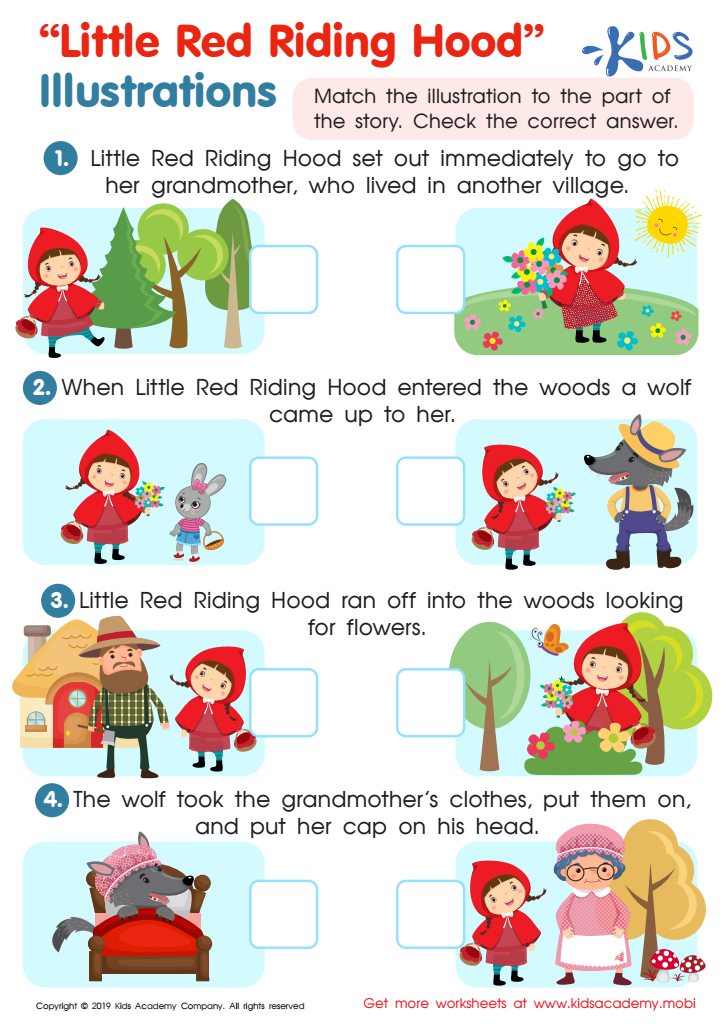
Little Red Riding Hood: Illustrations Worksheet
Red Riding Hood Coloring Page
 Assign to My Students
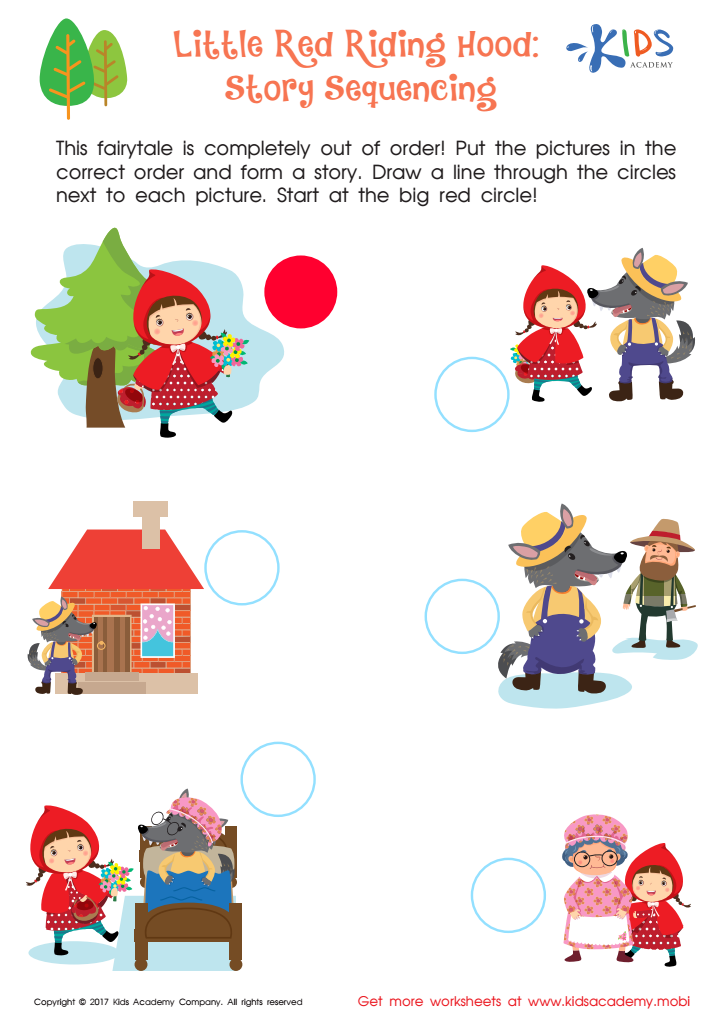
Story Sequencing Printable








Story comprehension in early childhood, particularly for ages 3-4, is crucial as it lays the foundation for critical literacy and cognitive skills. At this tender age, children are rapidly developing their language abilities, and their experiences with stories can significantly enhance these skills. By engaging in story comprehension, children learn to follow narratives, understand sequences, and recognize language patterns. These capabilities are fundamental for later reading comprehension and overall educational success.
Parents or teachers focusing on story comprehension also nurture essential emotional and social development. Through stories, children explore different emotions and perspectives, which can aid in improving empathy and social skills. They learn to express themselves better and understand the world around them more insightfully.
Furthermore, fostering a love for stories and reading at an early age can ignite lifelong learning and curiosity. It creates a positive association with books, encouraging independent reading as the child grows. Storytime interactions, involving questioning about the story, discussing characters, and predicting outcomes, also strengthen the child’s critical thinking and problem-solving abilities.
In sum, prioritizing story comprehension for 3-4-year-olds not only equips them with necessary language and cognitive tools but also supports their overall emotional and social development, forming a robust base for future educational achievement and personal growth.








