Animal Classification Normal Science Worksheets for Ages 3-4
4 filtered results
-
From - To
Introduce young learners to the wonders of wildlife with our "Animal Classification Normal Science Worksheets for Ages 3-4". These engaging and colorful printable worksheets help preschoolers recognize and categorize various animals based on their characteristics. Perfect for developing early science skills, each activity encourages children to explore and understand the natural world. Foster curiosity and a love for learning with fun exercises designed to build foundational knowledge in biology. Ideal for both classroom and home use, these worksheets provide a playful introduction to animal classification, making science exciting and accessible for young minds. Download now to spark their scientific adventure!
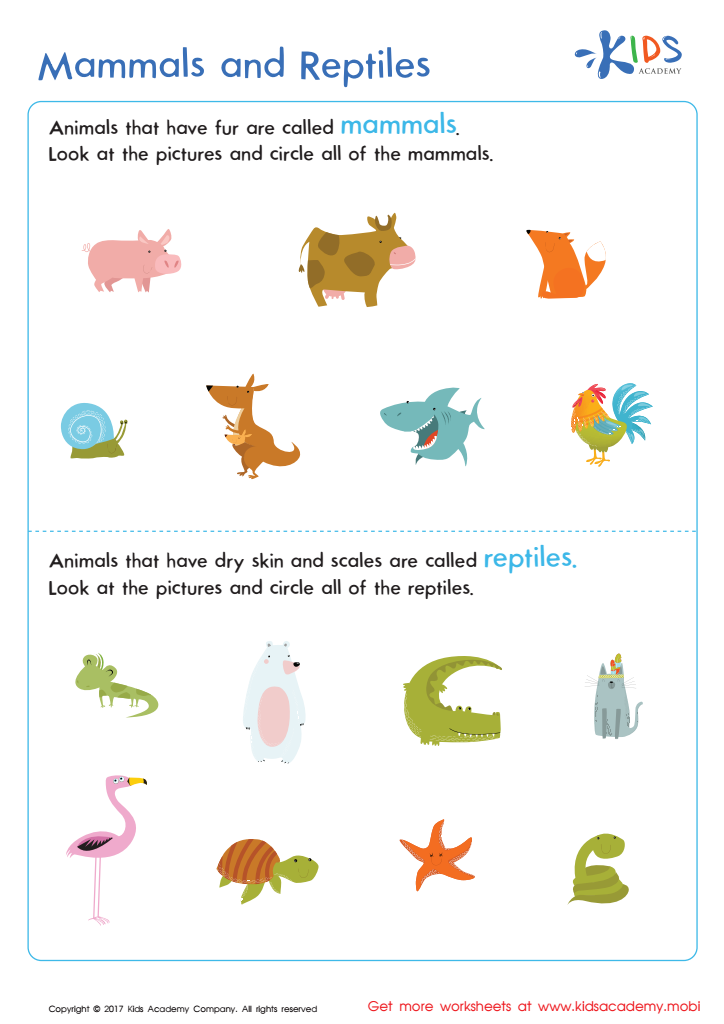
Mammals and Reptiles Worksheet
 Assign to My Students
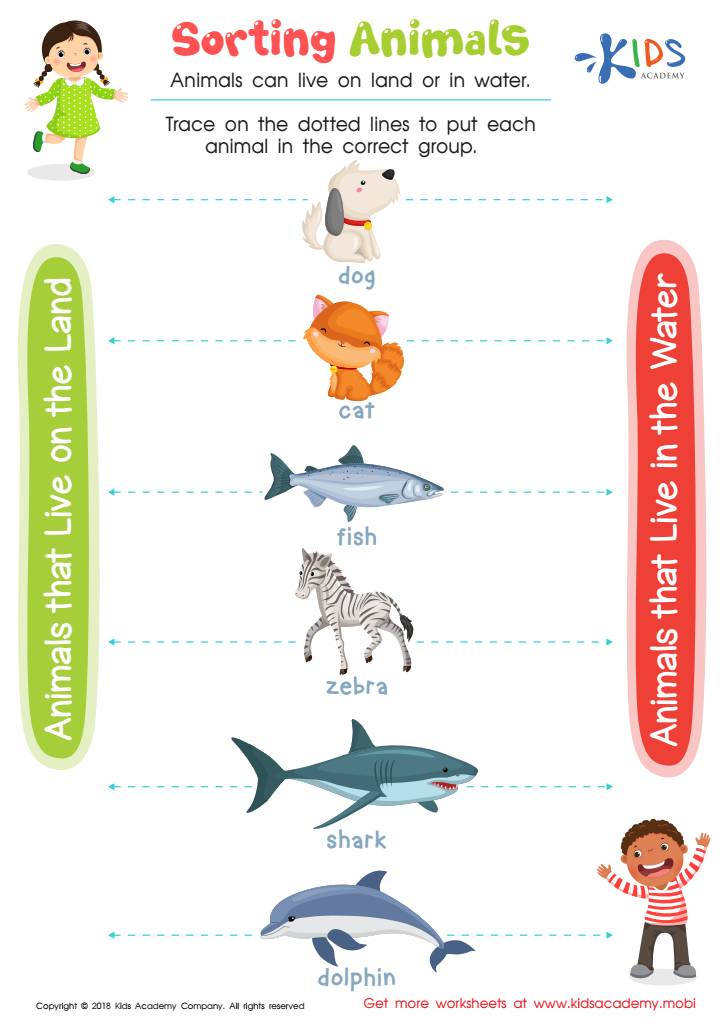
Sorting Animals Worksheet
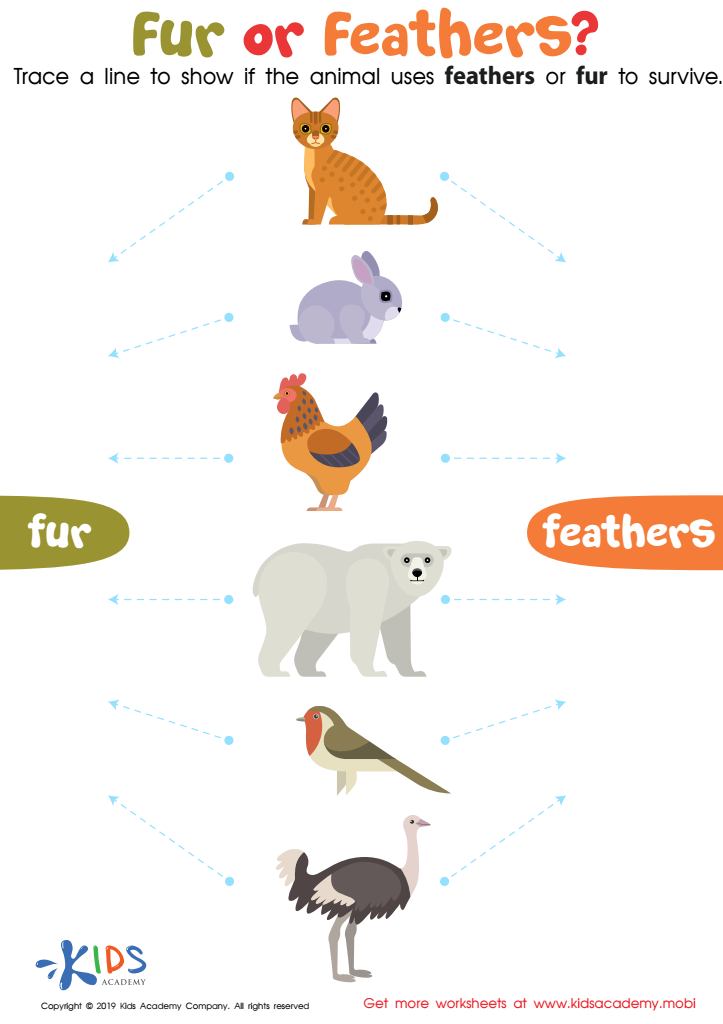
Fur or Feathers? Worksheet
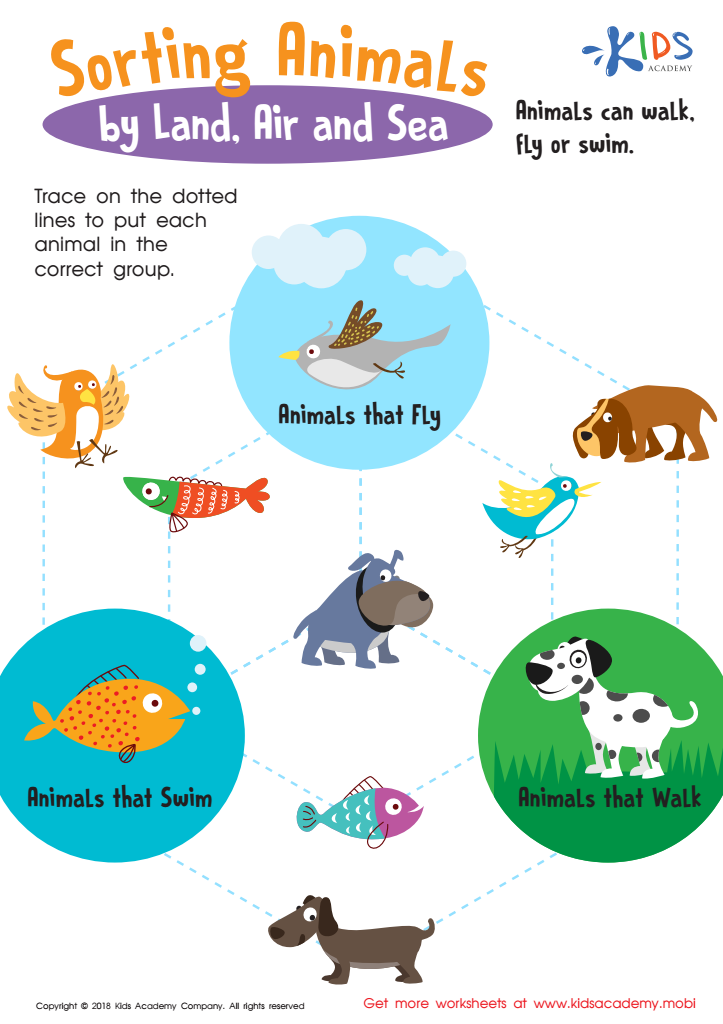
Sorting Animals by Land, Air and Sea Worksheet








Introducing Animal Classification to children aged 3-4 holds immense value for their early cognitive and emotional development. At this tender age, children's brains are remarkably receptive to learning new concepts, and they possess a natural curiosity about the world around them. By teaching them about animal classification, parents and teachers can foster a child's observational skills, enhance their understanding of the natural world, and contribute to a foundation for scientific thinking.
Learning to classify animals based on characteristics such as habitat, diet, and physical features helps children categorize and make sense of the world. This early exposure can also expand their vocabulary with specialized terms, enriching their language development. Moreover, understanding animal diversity promotes empathy and instills an appreciation for wildlife and nature, potentially cultivating lifelong environmental consciousness.
Engaging children in interactive activities like sorting toys, creating drawings, and reading picture books about animals can make learning fun and memorable. These activities not only harbor a sense of wonder and excitement but also support fine motor skills and critical thinking.
In summary, introducing Animal Classification to young children is a foundational step that helps nurture scientific curiosity, linguistic abilities, and environmental awareness, setting the stage for future educational pursuits and a respectful relationship with nature.







