Weather identification Normal Science Worksheets for Ages 3-4
4 filtered results
-
From - To
Discover our engaging "Weather Identification Normal Science Worksheets for Ages 3-4," designed to introduce toddlers to weather concepts through fun and interactive activities. These beautifully illustrated worksheets help little learners identify various weather conditions, enhancing their observation skills and vocabulary. By matching pictures, tracing words, and coloring sunny, rainy, cloudy, and snowy scenes, children gain a foundational understanding of weather patterns. Perfect for parents and teachers alike, these worksheets nurture early science curiosity and support preschool developmental milestones. Visit our website and make learning about weather an enjoyable adventure for your inquisitive child!
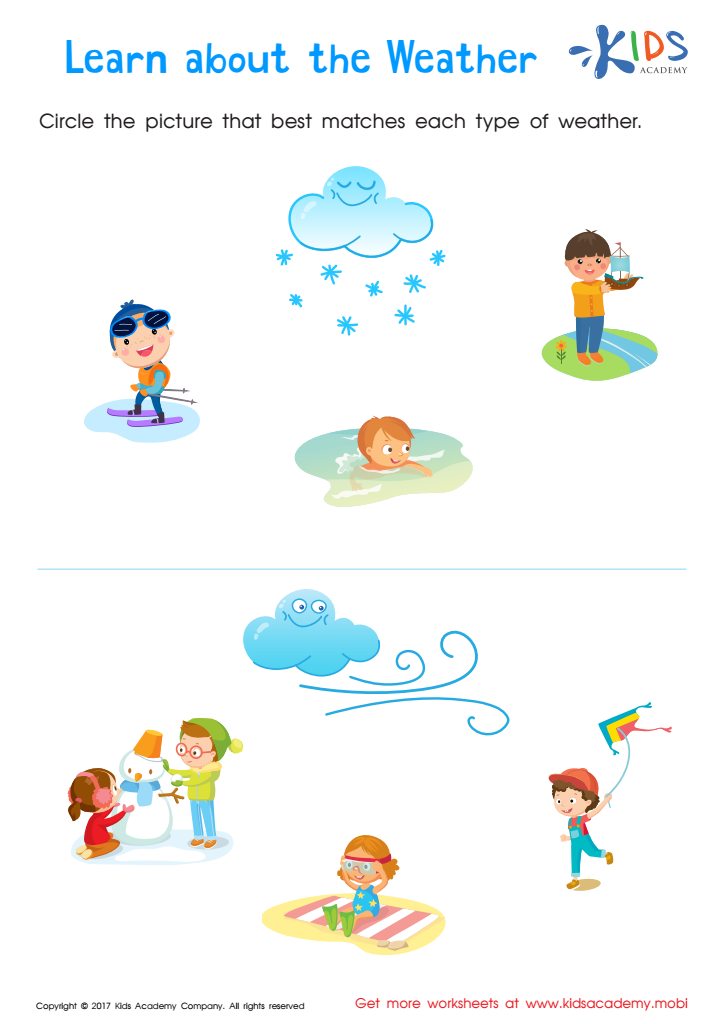
About the Weather Printable
 Assign to My Students
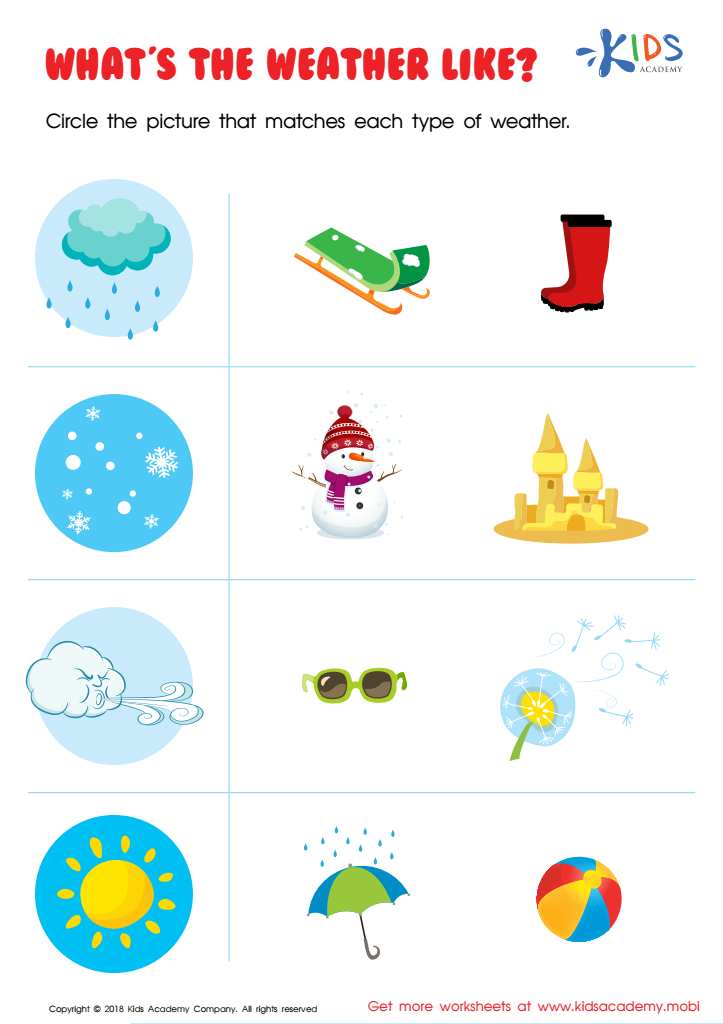
What's the Weather Like? Worksheet
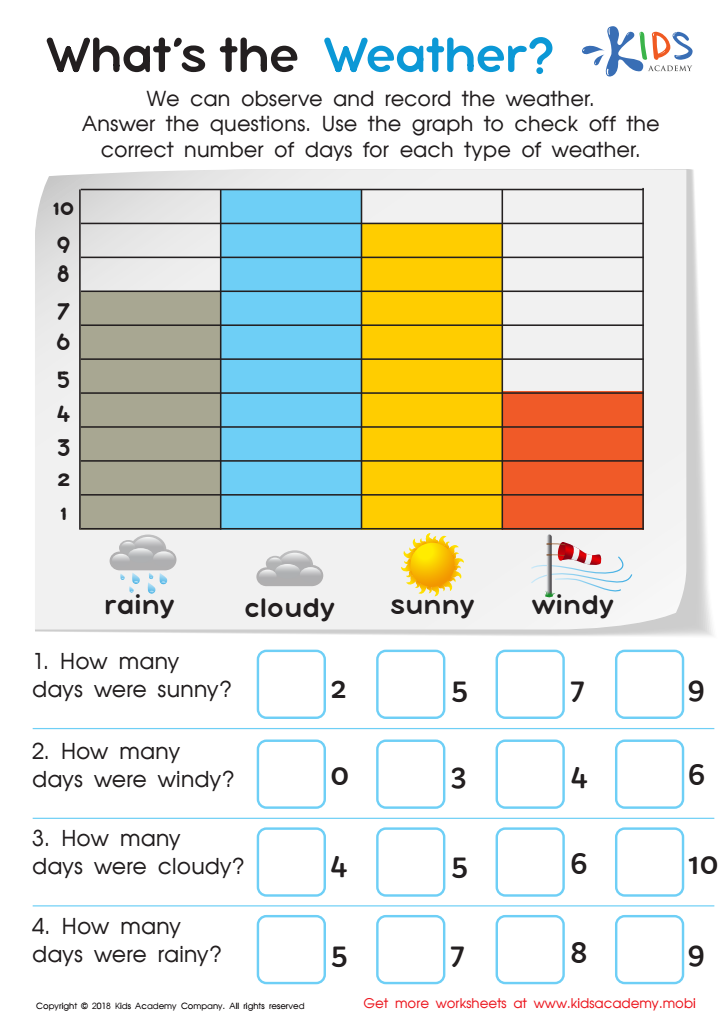
What's the Weather? Worksheet
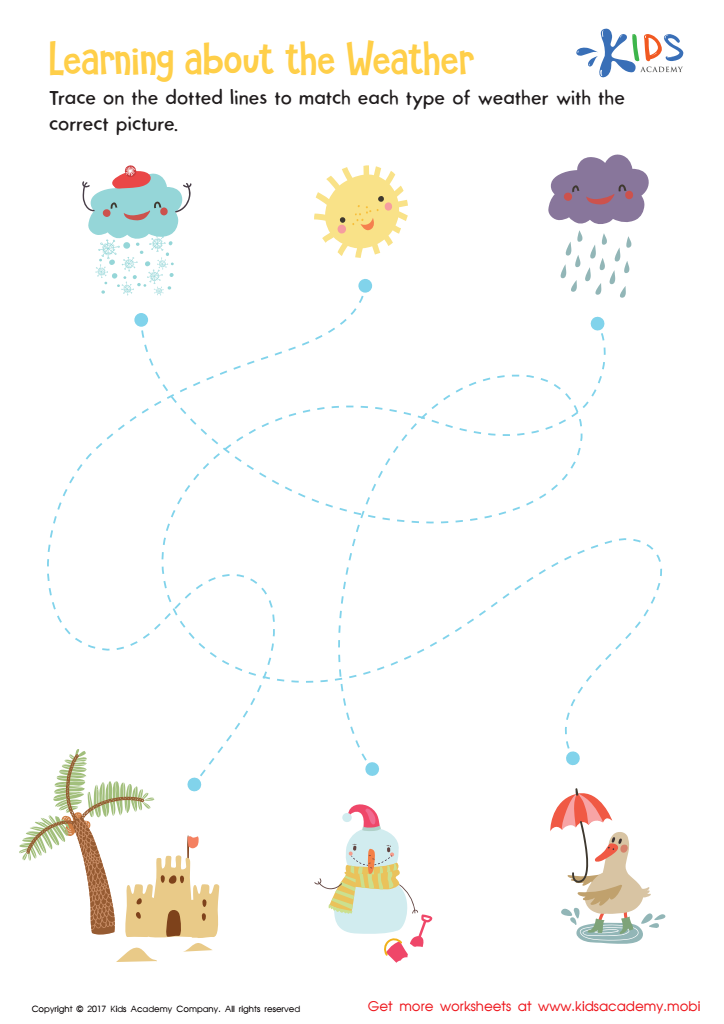



.jpg)



Introducing weather identification to young children aged 3-4 can be incredibly beneficial for multiple reasons. Early exposure to basic scientific concepts helps spark curiosity and foundational understanding among young learners. Understanding weather patterns such as sunny, rainy, or snowy days can teach children to comprehend and interpret their environment, fostering observational skills and prompting critical thinking from a young age.
Additionally, weather identification can lay the groundwork for more complex scientific learning in the future. By familiarizing children with these basic elements early on, educators and parents set the stage for smoother learning transitions into topics like Earth's systems and environmental science.
Practical knowledge of weather also enhances daily life skills. Recognizing and interpreting weather conditions helps children make informed decisions about appropriate clothing and outdoor activities, thereby promoting self-reliability and independence. Moreover, structured activities like charting weather changes can introduce important academic skills like categorization, pattern recognition, and early literacy.
Engaging in weather identification activities also provides opportunities for hands-on, interactive learning—an approach proven to enhance retention and understanding in young children. For all these reasons, prioritizing weather identification in early childhood education supports cognitive development, practical life skills, and fosters a love for learning about the world around them.







