Motor skills development Normal ABC Letters Worksheets for Ages 3-5
3 filtered results
-
From - To
Discover the perfect tool for nurturing your child's motor skills with our Normal ABC Letters Worksheets, designed specifically for ages 3-5. These engaging worksheets combine fun and education to help young learners enhance their fine motor skills through tracing, coloring, and drawing activities. Crafted to promote hand-eye coordination and dexterity, each worksheet guides children through the alphabet, ensuring a strong foundation in letter recognition and early writing abilities. Ideal for at-home learning or classroom usage, watch your child's confidence and skills flourish with our expertly designed resources. Explore our collection and support your child's developmental journey today!

Letter H Tracing Page






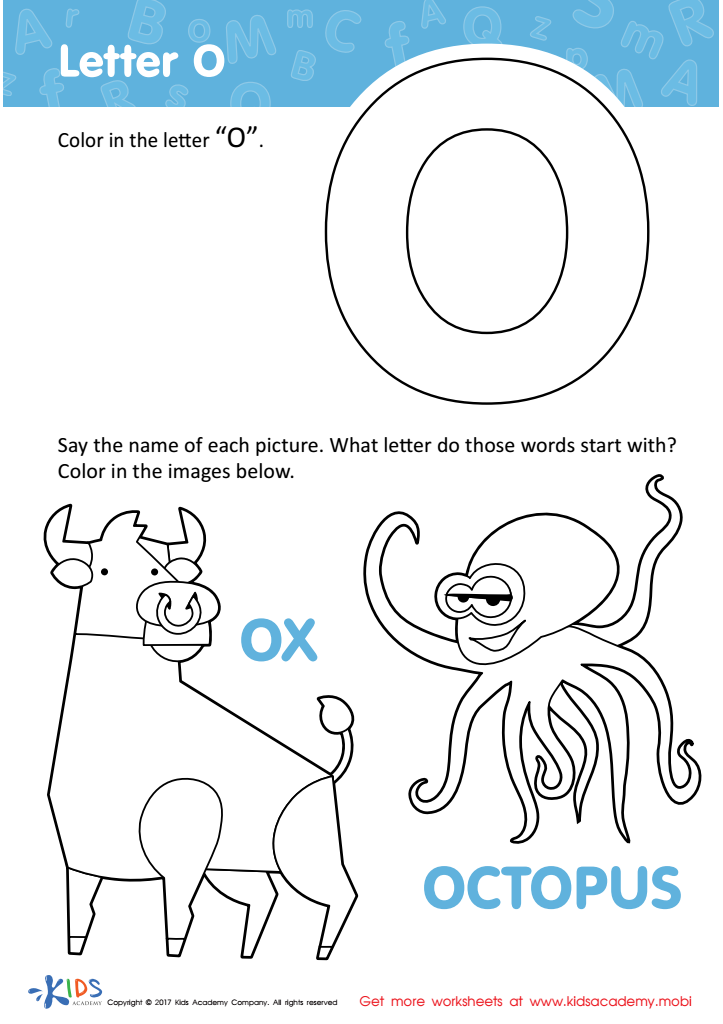
Letter O Coloring Sheet
 Assign to My Students
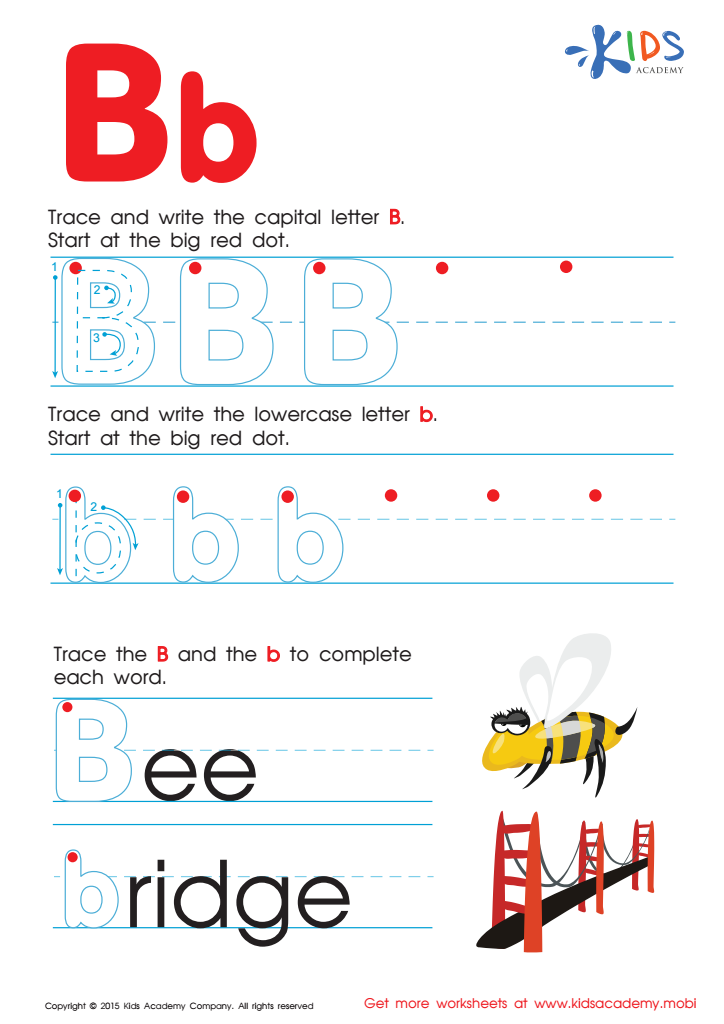
Letter B Tracing Page







Motor skills development is crucial for young children aged 3-5, as it lays the foundation for their overall growth and well-being. Parents and teachers should prioritize this aspect for several key reasons.
Firstly, motor skills—divided into fine and gross motor skills—are essential for a child's physical development. Gross motor skills, which involve large muscles, enable activities like running, jumping, and climbing, promoting healthy physical growth and coordination. Fine motor skills, involving smaller muscles, are crucial for tasks such as holding a pencil, cutting with scissors, and buttoning clothes, directly supporting self-care and academic readiness.
Secondly, motor skills development is closely linked to cognitive growth. For example, when children draw or practice writing letters, they enhance their hand-eye coordination and visual-motor integration. These activities stimulate neural pathways, fostering intellectual capabilities such as problem-solving, spatial awareness, and memory.
Furthermore, the development of motor skills also contributes to social-emotional growth. Achieving milestones in motor skills builds a child's confidence, independence, and self-esteem. It also fosters social interaction through play, helping children learn cooperation, teamwork, and communication skills.
In supporting motor skills development, parents and teachers are equipping children with essential capabilities for academic success, daily life, and a healthy, active lifestyle. Ensuring that children have opportunities to develop these skills is foundational to their holistic development.







