Fine motor skills development Normal Alphabet Worksheets for Ages 3-5
6 filtered results
-
From - To
Enhance your child's fine motor skills with our engaging Normal Alphabet Worksheets designed for ages 3-5. These worksheets provide a fun and interactive way for young learners to practice letter recognition and writing while honing their hand-eye coordination and dexterity. Each colorful exercise encourages children to trace, color, and connect letters, fostering their pencil grip and control. Perfect for use at home or in the classroom, our worksheets support early literacy development in an enjoyable manner. Give your child the foundation they need for successful writing skills and early reading readiness through playful, educational activities tailored to their age and abilities.

I Stands High Worksheet
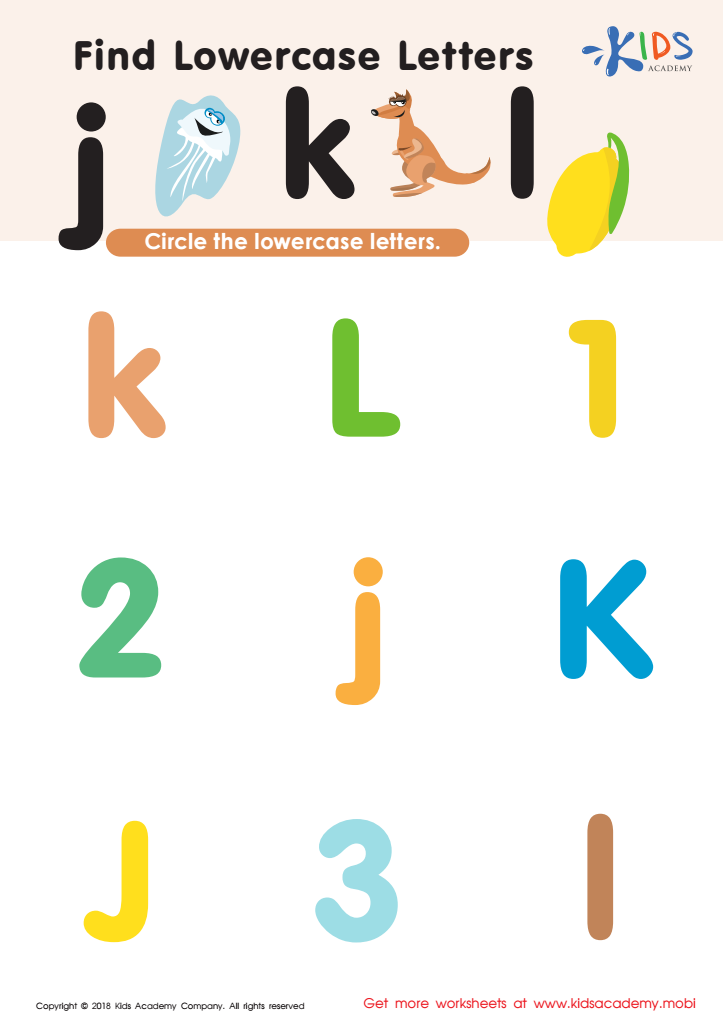
Find Lowercase Letters j k l Worksheet
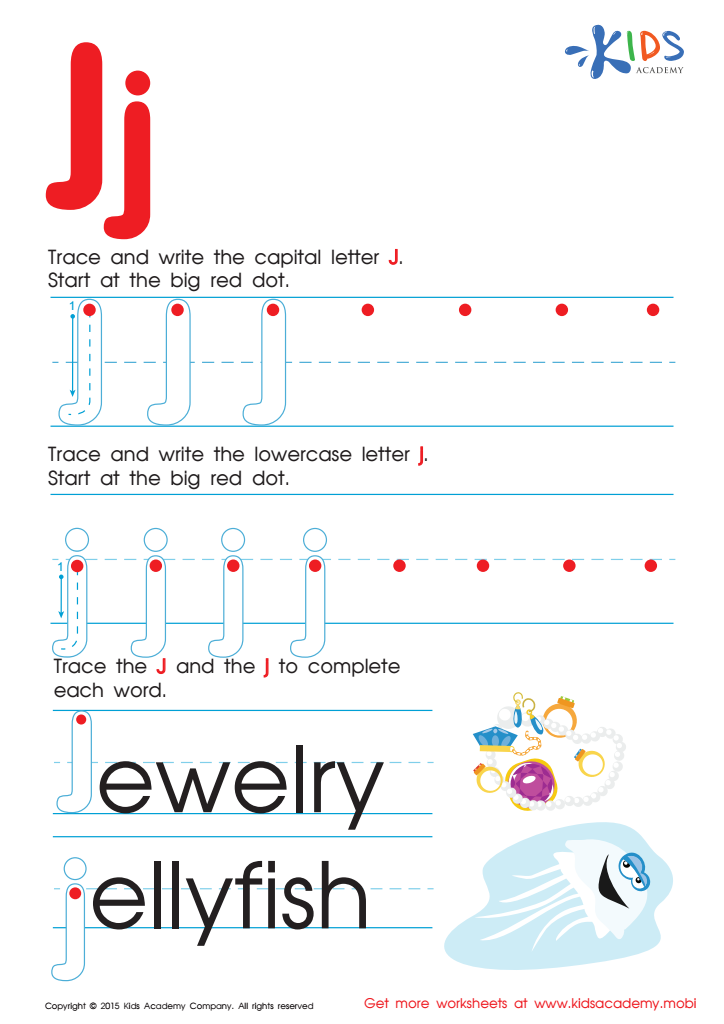
Letter J Tracing Page
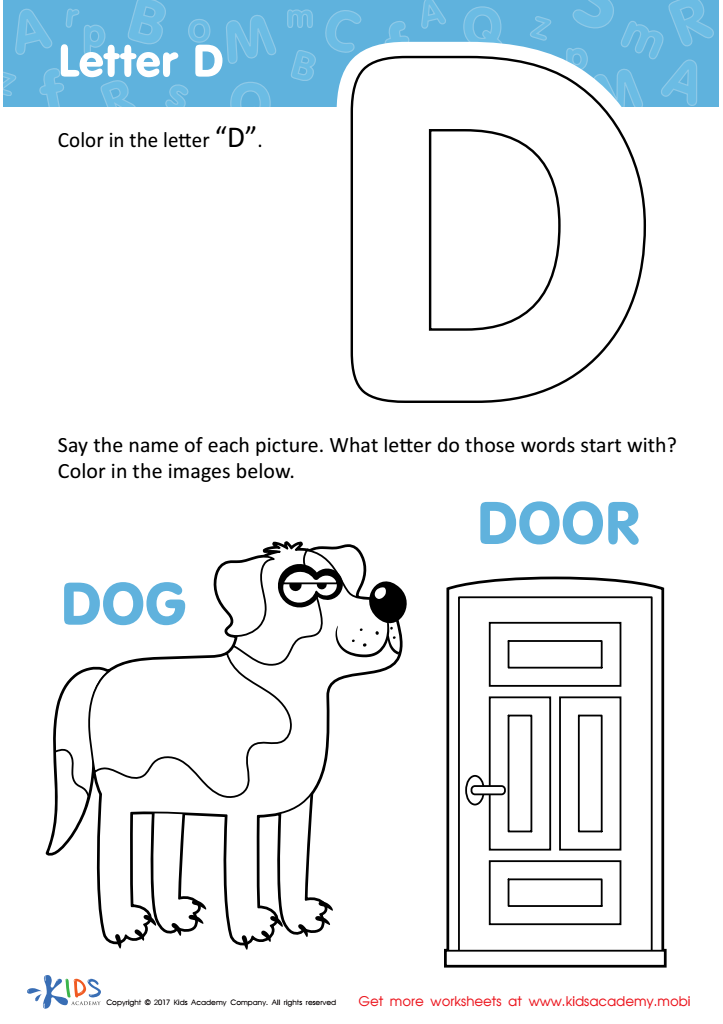
Letter D Coloring Sheet
 Assign to My Students
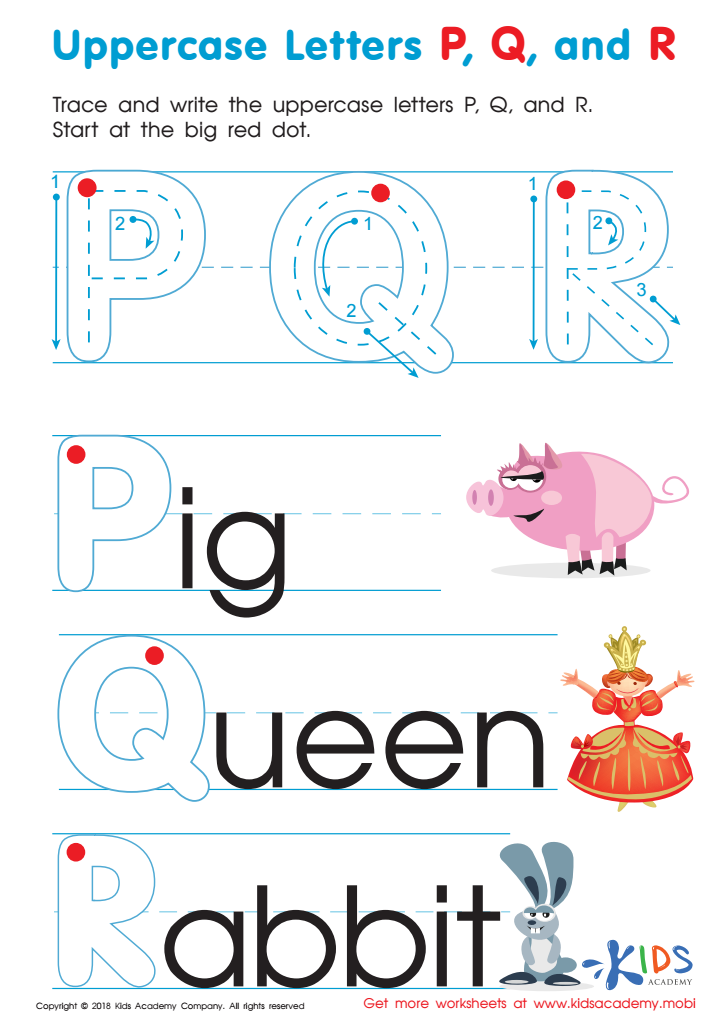
Uppercase Letters P, Q, and R Worksheet
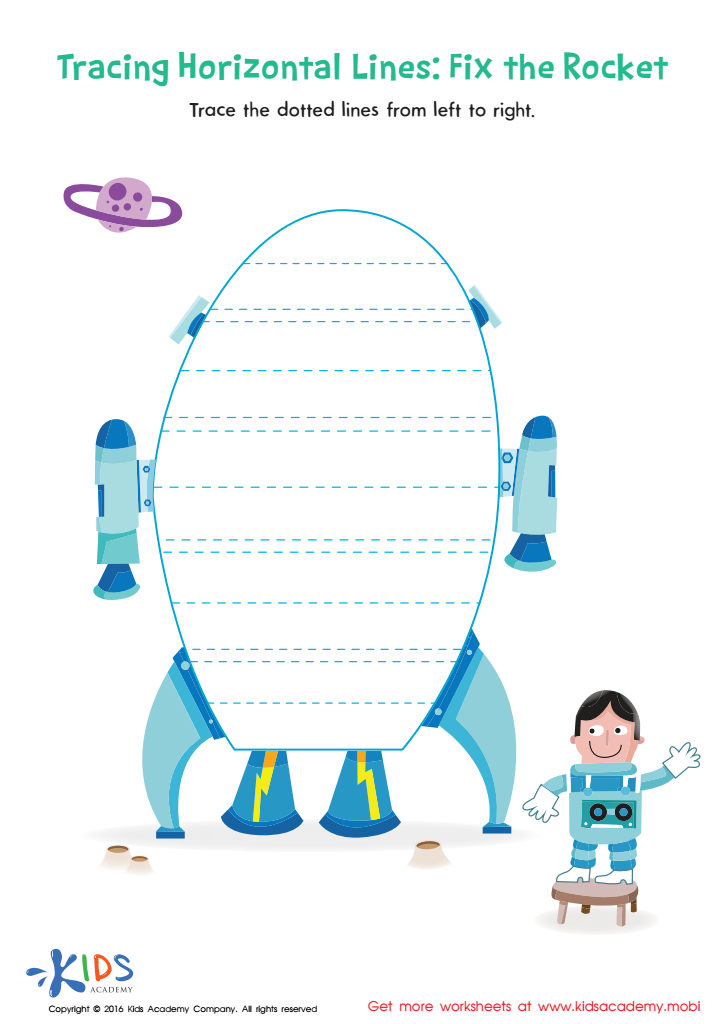
Tracing Horizontal Lines Worksheet






Fine motor skills development is crucial for children aged 3-5 as it plays a significant role in their overall growth and learning. These skills involve the use of small muscles in the hands and fingers, enabling children to perform tasks such as writing, drawing, and using utensils. Parents and teachers should care about this aspect of development because it lays the foundation for academic success and everyday activities.
During these formative years, children are beginning to engage in more complex tasks that require coordination and dexterity. Developing fine motor skills helps improve their hand-eye coordination, which is essential for both academic tasks and physical activities. Additionally, strong fine motor skills boost children's confidence and independence, encouraging them to explore and engage in their surroundings.
Moreover, early development of these skills can lead to better handwriting and school readiness, making the transition to more structured learning environments smoother. When parents and teachers prioritize activities that enhance fine motor skills—such as cutting, coloring, and manipulative play—they contribute to the child's cognitive, social, and emotional development. Ultimately, fostering fine motor skills during this critical age benefits children not just in school, but in their daily lives as well.







