Lowercase letter writing Normal Alphabet Worksheets for Ages 3-5
3 filtered results
-
From - To
Discover "Lowercase Letter Writing Normal Alphabet Worksheets for Ages 3-5" at Kids Academy. Our expertly crafted worksheets provide a fun and engaging way for young learners to master lowercase letter formation. Perfect for early childhood education, these activities bolster fine motor skills while fostering letter recognition and handwriting proficiency. Designed to captivate and educate, our visually appealing worksheets ensure kids stay motivated as they practice each letter of the alphabet. Ideal for parents and educators, these worksheets are the cornerstone for developing a strong educational foundation. Start your child's literacy journey today with Kids Academy's Lowercase Letter Writing worksheets!
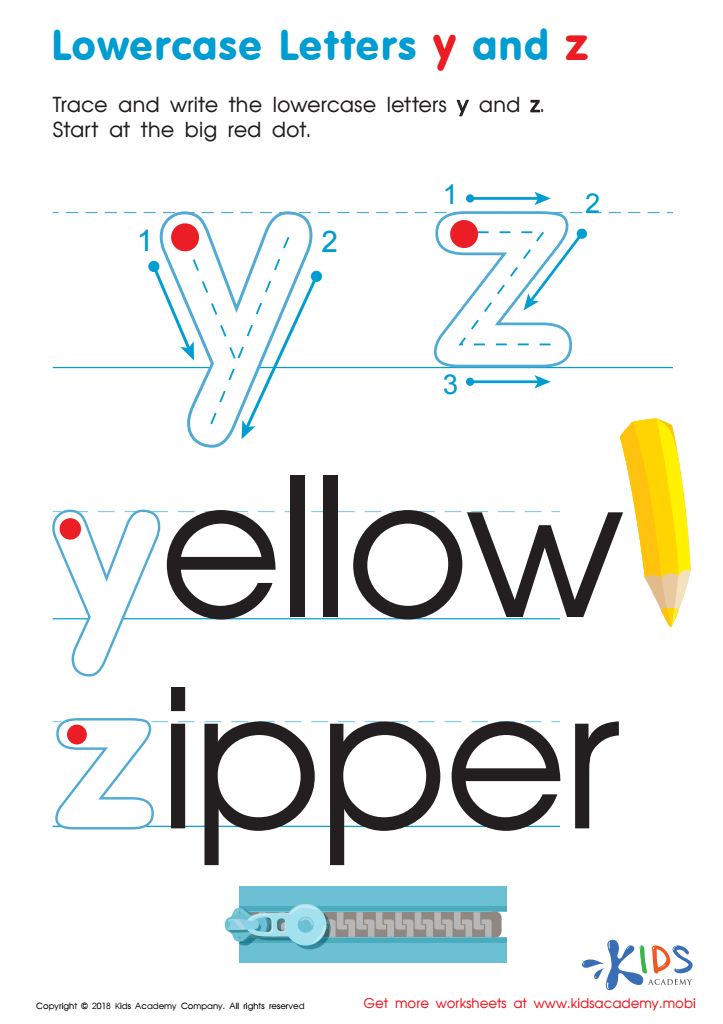
Lowercase Letters y z Worksheet
 Assign to My Students
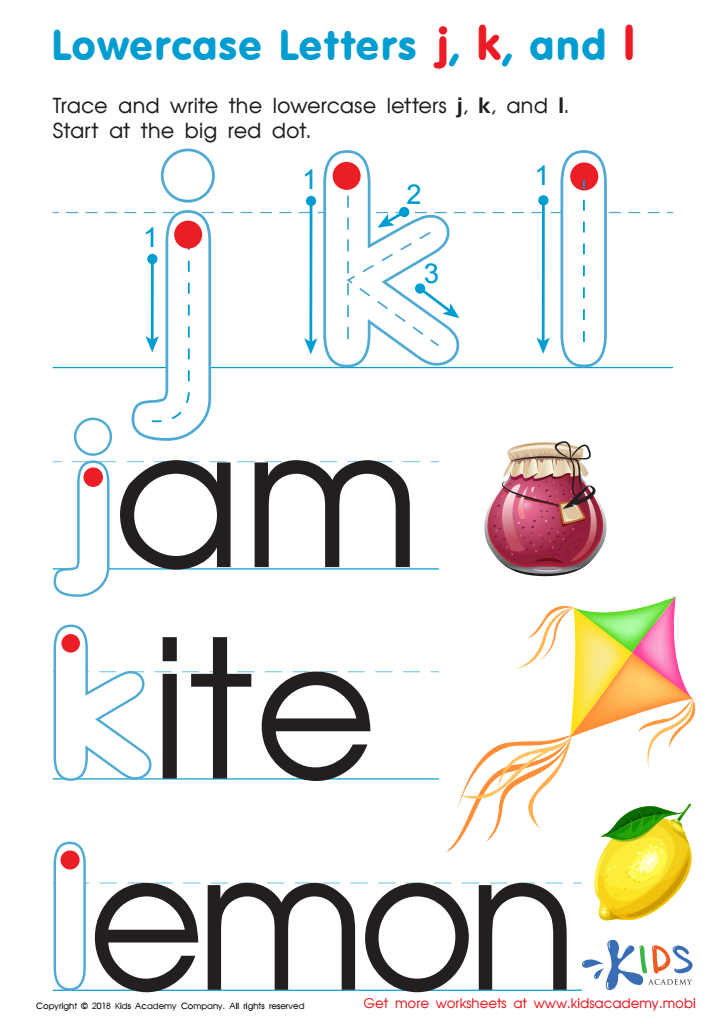
Lowercase Letters j k l Worksheet
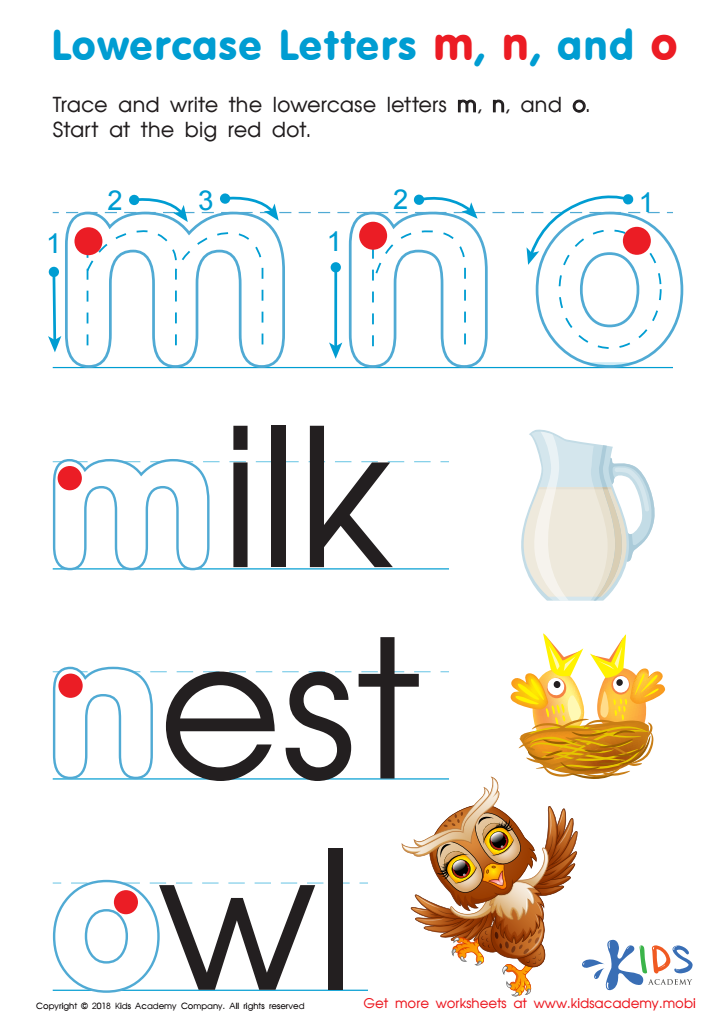
Lowercase Letters m n o Worksheet








Introducing lowercase letter writing to children aged 3-5 is crucial for their early literacy development. This foundational skill paves the way for reading and writing proficiency, which are critical components of their overall education. During these formative years, children are at an ideal stage for language acquisition and cognitive development, making it the perfect time to instill these essential skills.
Parents and teachers should focus on lowercase letter writing because most written text consists of lowercase letters, making it practical for early readers to recognize and understand print in books and everyday life. Encouraging accurate letter formation early on helps cultivate fine motor skills, hand-eye coordination, and muscle memory, which are vital for handwriting fluency.
Moreover, familiarizing children with the lowercase alphabet enhances their phonetic awareness. Phonetic understanding is fundamental for decoding words, spelling, and reading comprehension. Effective early literacy education can reduce future learning difficulties, boost academic confidence, and foster a lifelong love for reading and writing.
In sum, emphasizing lowercase letter writing for young learners establishes a strong literacy foundation, supports cognitive and motor development, and prepares them for academic success. Parents and teachers play a pivotal role in nurturing these skills, ultimately positioning children for long-term educational achievement.







