
Reading proficiency Normal Alphabet Worksheets for Ages 3-5
3 filtered results
Difficulty Level
Grade
Age
-
From - To
Subject
Activity
Standards
Enhance your child's literacy skills with our Reading Proficiency Normal Alphabet Worksheets designed specifically for ages 3-5. These engaging and interactive worksheets support early learners in recognizing letters and sounds while developing their reading comprehension. Each worksheet features colorful illustrations and fun exercises that capture children's attention, making learning enjoyable. Our user-friendly format encourages independent practice, reinforcing essential phonetic concepts. Ideal for parents and educators, our resources assist in building a strong foundation in reading proficiency. Explore our diverse collection today to inspire a lifelong love for reading in your little ones while ensuring their academic success!
Favorites
With answer key
Interactive
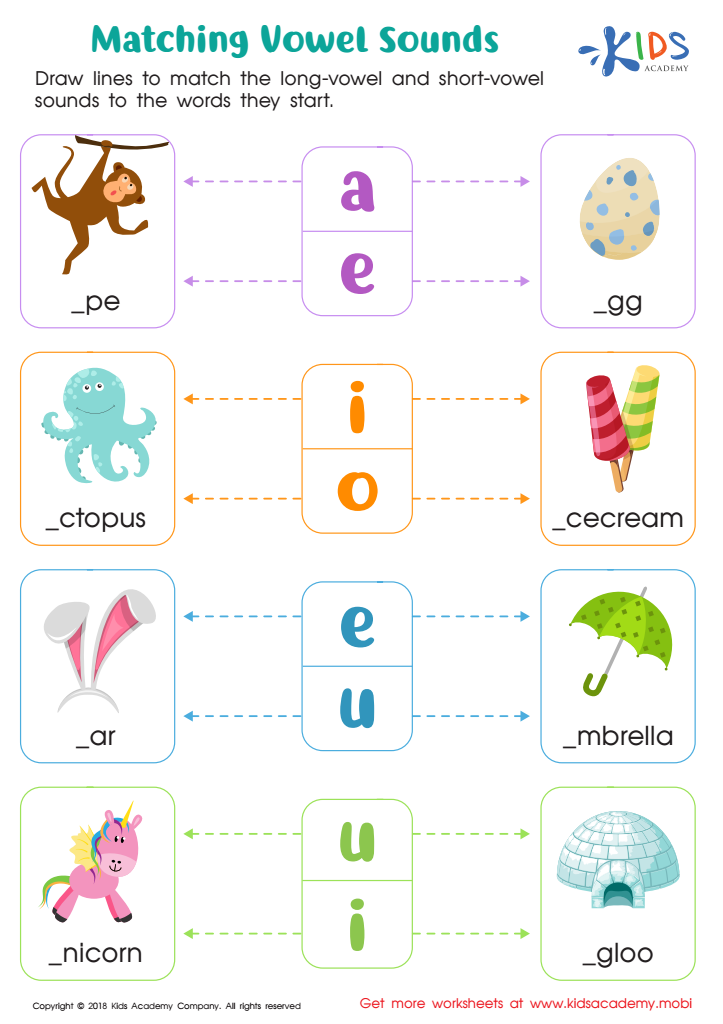
Matching Vowel Sounds Worksheet
Teach your child phonics with a fun worksheet! Ask your child to name a vowel sound and listen if it's long or short. Differentiating between long and short vowel sounds can be tricky, but this matching worksheet makes it easy for kids to understand. Have fun and master phonics - the worksheet will help them understand the difference between long and short vowel sounds!
Matching Vowel Sounds Worksheet
Worksheet

Long and Short U Worksheet
Revised: Spice up your lesson on long and short vowels with this fun printout! Kids read the words "tube" and "tub," then reinforce the sound by coloring in the words and pictures. It's a great way to make phonics class enjoyable!
Download (PDF)
 Assign to My Students
Assign to My Students
Long and Short U Worksheet
Worksheet
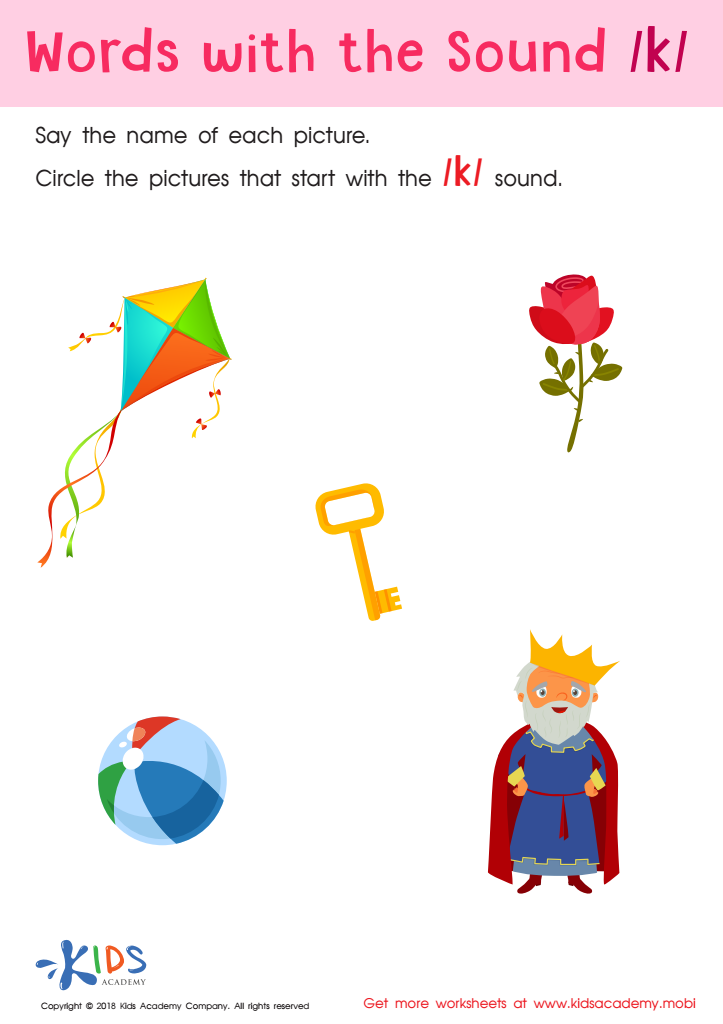
Words with sound k Reading Worksheet
Help your preschooler master the hard "k" sound with this fun worksheet from Kids Academy! Ask your child to say each picture aloud and circle only the pictures that start with "k". This early reading exercise will boost phonics skills and is sure to be loved by your little learner!
Words with sound k Reading Worksheet
Worksheet
Join Kids Academy for Free
Who is primarily going to use this learning content?




.jpg)



Reading proficiency in young children, particularly those aged 3-5, is crucial for their overall development and school readiness. At this stage, children are like sponges, absorbing information and skills they encounter. Strong early reading skills lay the groundwork for future academic success, enhancing vocabulary, comprehension, and critical thinking. Engaging with books during these formative years fosters language development, sparking curiosity and a love for learning.
Parents and teachers play a vital role in cultivating literacy skills. They can create a rich literary environment by sharing stories, singing songs, and engaging in conversations that stimulate cognitive growth. Reading together not only improves language skills but also strengthens the parent-child or teacher-student bond, making learning a fun and interactive experience.
Furthermore, children who develop reading proficiency early are better equipped to navigate the complexities of school curricula, which ultimately reduced the likelihood of falling behind. Investing time and resources into fostering proficient reading skills at this age can transform the educational trajectory of young learners. By prioritizing reading proficiency in children aged 3-5, parents and teachers are setting essential foundations for lifelong learning, enabling children to explore and understand the world around them.







