Uppercase identification Normal Alphabet Worksheets for Ages 3-5
5 filtered results
-
From - To
Discover our engaging Uppercase Identification Normal Alphabet Worksheets, designed specifically for children aged 3-5! These worksheets facilitate an enjoyable learning experience, allowing young learners to master their uppercase letters. Featuring colorful designs and interactive tasks, these resources help develop essential skills in letter recognition, handwriting, and vocabulary. Perfect for use at home or in the classroom, these worksheets build confidence and promote early literacy skills in an accessible way. Let your child explore the world of letters while enhancing their cognitive abilities through fun and stimulating activities. Start their alphabet journey today with our thoughtfully crafted worksheets!
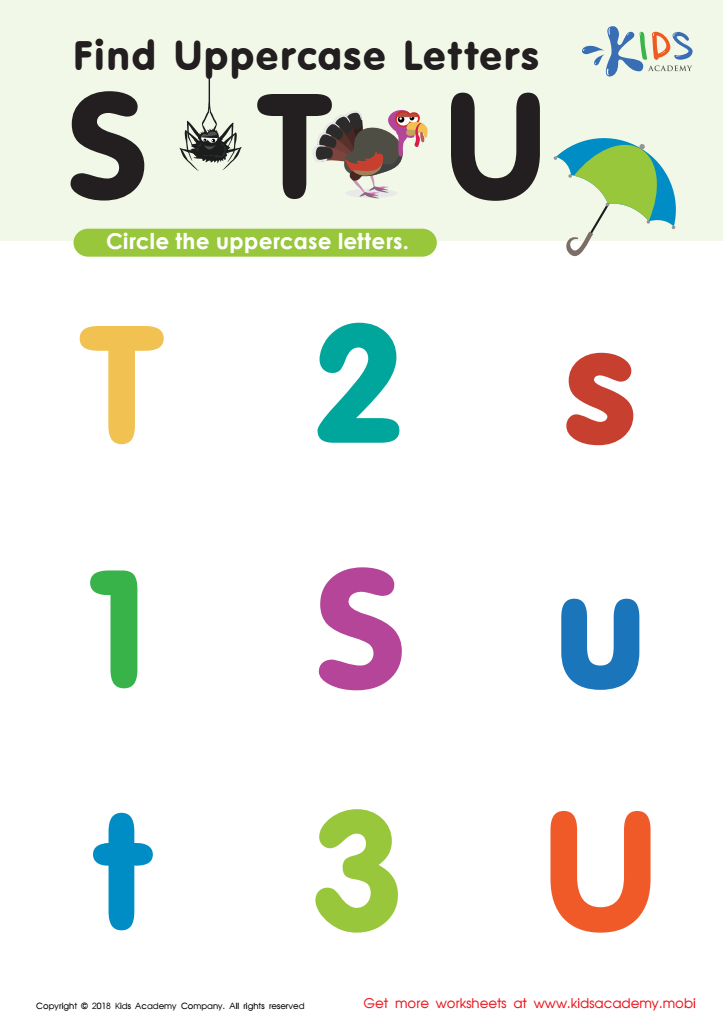
Find Uppercase Letters Worksheet
 Assign to My Students
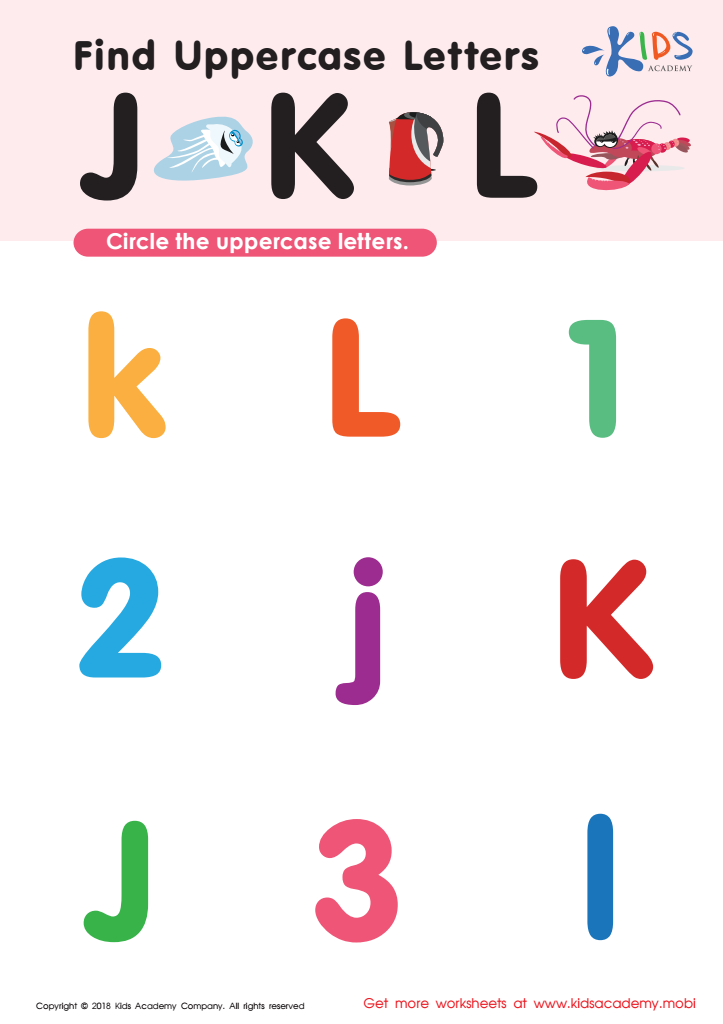
Find Uppercase Letters J, K, and L Worksheet
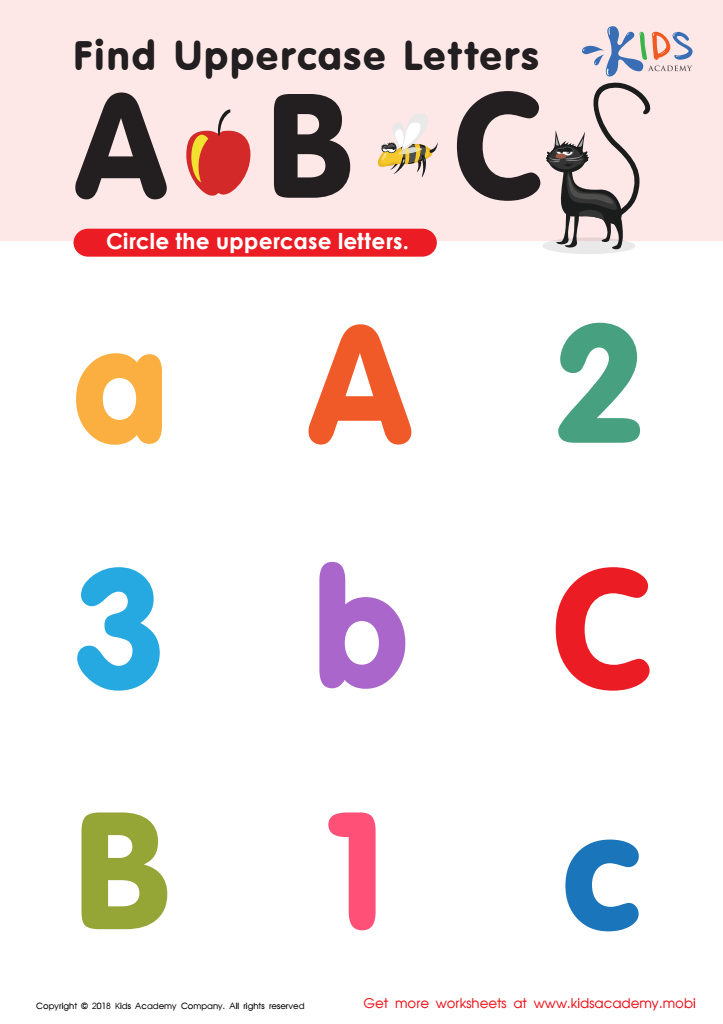
Find Uppercase Letters A, B, and C Worksheet
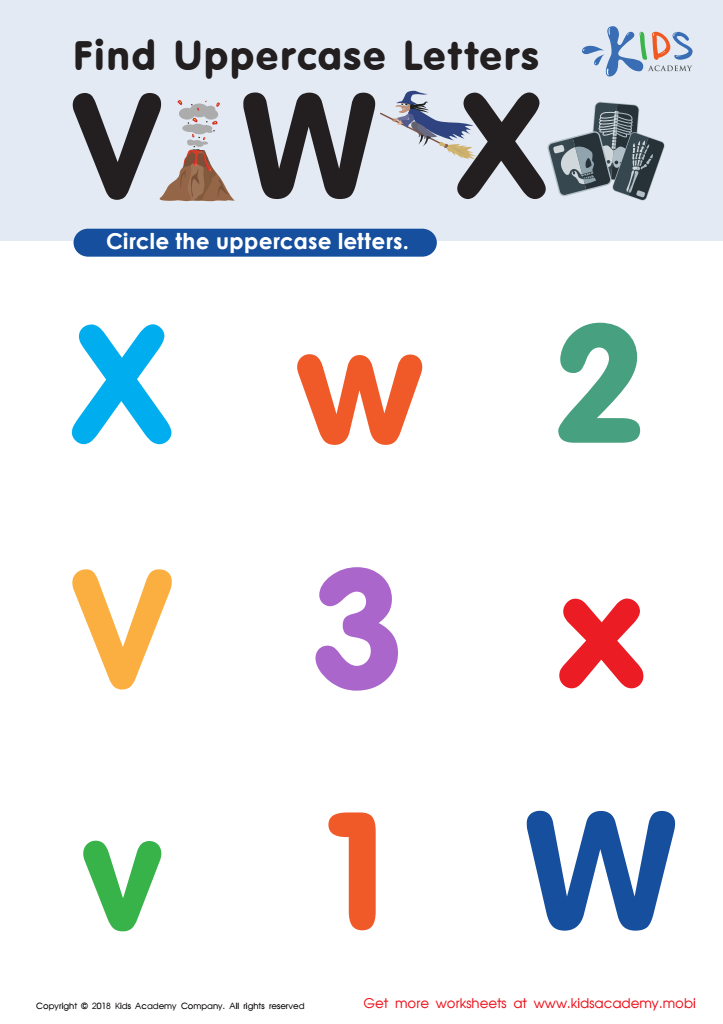
Find Uppercase Letters V, W, X Worksheet
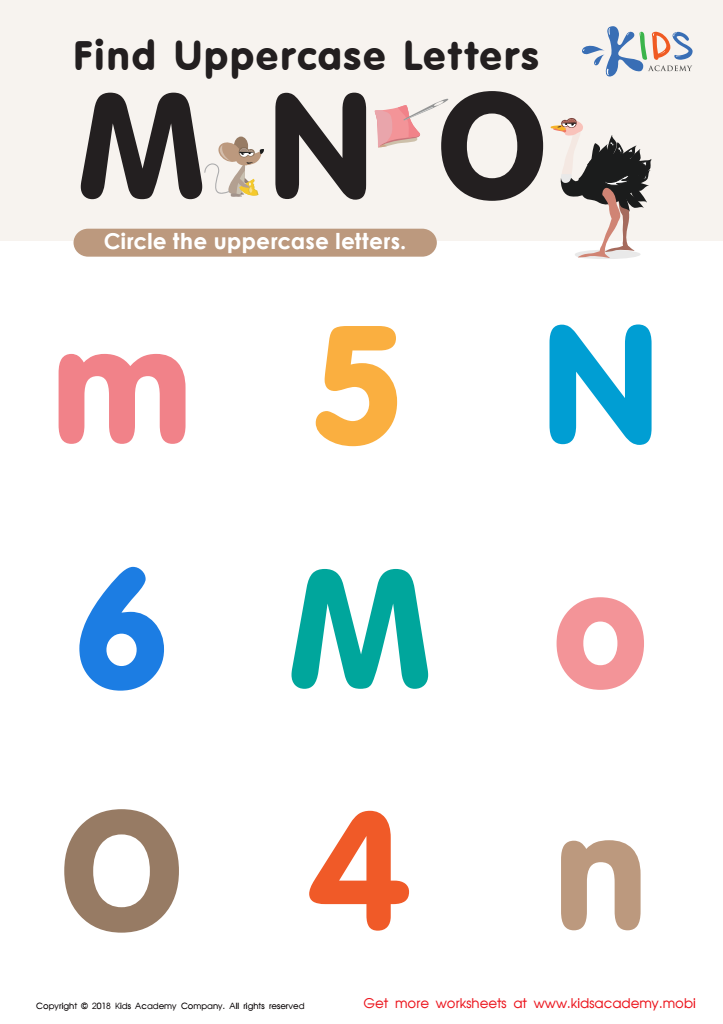
Find Uppercase Letters M, N, and O Worksheet







Understanding uppercase letter recognition is essential for children aged 3-5 as it lays the foundation for literacy development. During this critical stage, children are naturally curious and eager to learn, making it the ideal time to introduce letters and their forms. Uppercase letters are often the first letters children encounter in printed materials, and recognizing them helps to build confidence in their reading and writing skills.
Focusing on uppercase letters supports children in identifying their names and familiar words, providing a meaningful context for their learning. Moreover, when children grasp uppercase identification, they often experience quick rewards, such as family recognition or praise, boosting their self-esteem and motivation to learn.
Additionally, teaching uppercase letters can aid cognitive development by promoting fine motor skills when writing these letters, offering opportunities for creative activities like drawing or crafting. Supporting uppercase identification also ensures a smoother transition to lowercase letters as children progress. In essence, emphasizing uppercase identification not only enhances literacy skills but also cultivates an environment of curiosity and achievement in both academic and social settings, setting the stage for lifelong learning.







