Alphabetical order understanding Normal Letter Recognition Worksheets for Ages 3-5
3 filtered results
-
From - To
Explore our engaging Alphabetical Order Understanding Normal Letter Recognition Worksheets designed for children ages 3-5. These worksheets provide a fun and interactive way for young learners to develop essential letter recognition skills while mastering the concept of alphabetical order. With vibrant illustrations and age-appropriate activities, kids will enjoy sorting letters and enhancing their vocabulary. Our resources not only promote cognitive development but also foster fine motor skills through tracing and drawing exercises. Perfect for homeschooling or classroom settings, these worksheets lay a strong foundation for future literacy skills, making learning enjoyable and effective. Start your child’s alphabet journey today!

Letter G Tracing Page

Letter J Coloring Sheet
 Assign to My Students
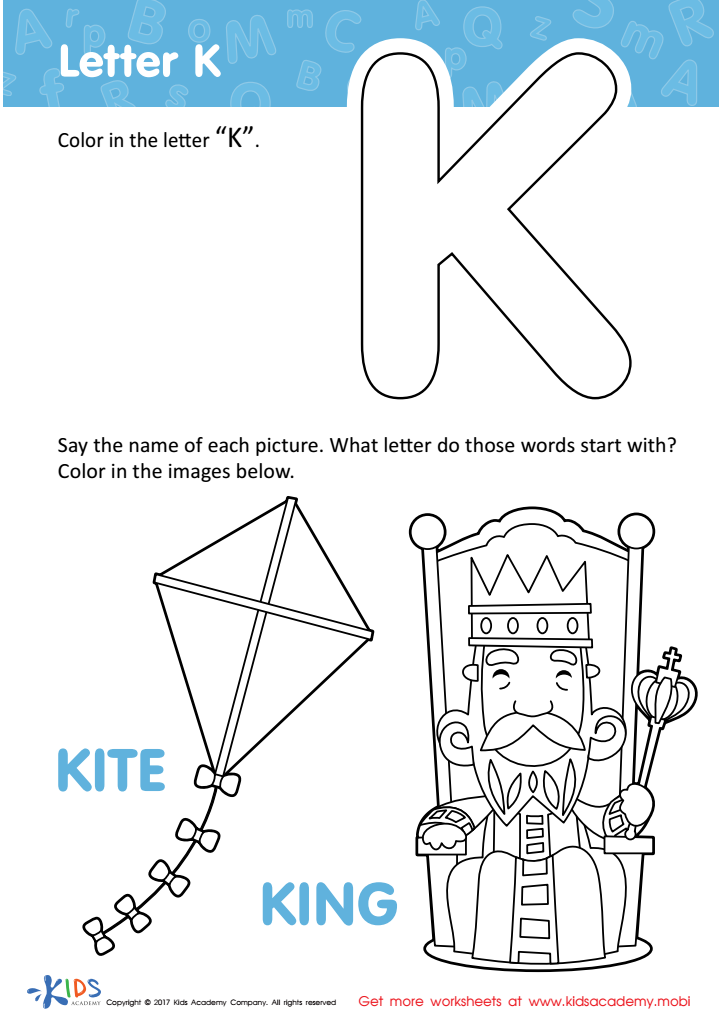
Letter K Coloring Sheet
Assign to My Students








Understanding alphabetical order and normal letter recognition is crucial for children aged 3-5 as it lays the groundwork for literacy development. At this early stage, children are honing their ability to identify and differentiate letters, which is essential for reading and writing. Recognizing the alphabet helps children make connections between sounds and letters, enabling them to decode words as they progress in their literacy skills.
By learning the alphabetical order, children can develop organizational skills and adapt to systems that will be important later in life, such as sorting, categorizing, and using reference materials like dictionaries and encyclopedias. Furthermore, mastering letter recognition fosters confidence in children, making them more willing to engage with letters and words in their environment, such as on signs, menus, and books.
Parents and teachers play a pivotal role in reinforcing these skills through playful activities, songs, and engaging games that encourage exploration and learning. This foundational knowledge is not just about memorizing letters; it enhances cognitive development, critical thinking, and problem-solving abilities, setting children on a pathway to academic success. Overall, fostering alphabetical order understanding and letter recognition equips children with essential tools for communication and lifelong learning.








