Visual discrimination skills Normal Letter Recognition Worksheets for Ages 3-5
5 filtered results
-
From - To
Enhance your child's visual discrimination skills with our engaging Normal Letter Recognition Worksheets tailored for ages 3-5. These worksheets are designed to help young learners identify and differentiate between letters, fostering essential literacy skills in a fun and interactive way. Through varied exercises, children will practice recognizing uppercase and lowercase letters, improving their attention to detail and enhancing their reading readiness. Our user-friendly format allows for easy printing and versatile use at home or in the classroom. Make learning enjoyable and effective with our thoughtfully crafted resources that empower early learners to develop a strong foundation in letter recognition!
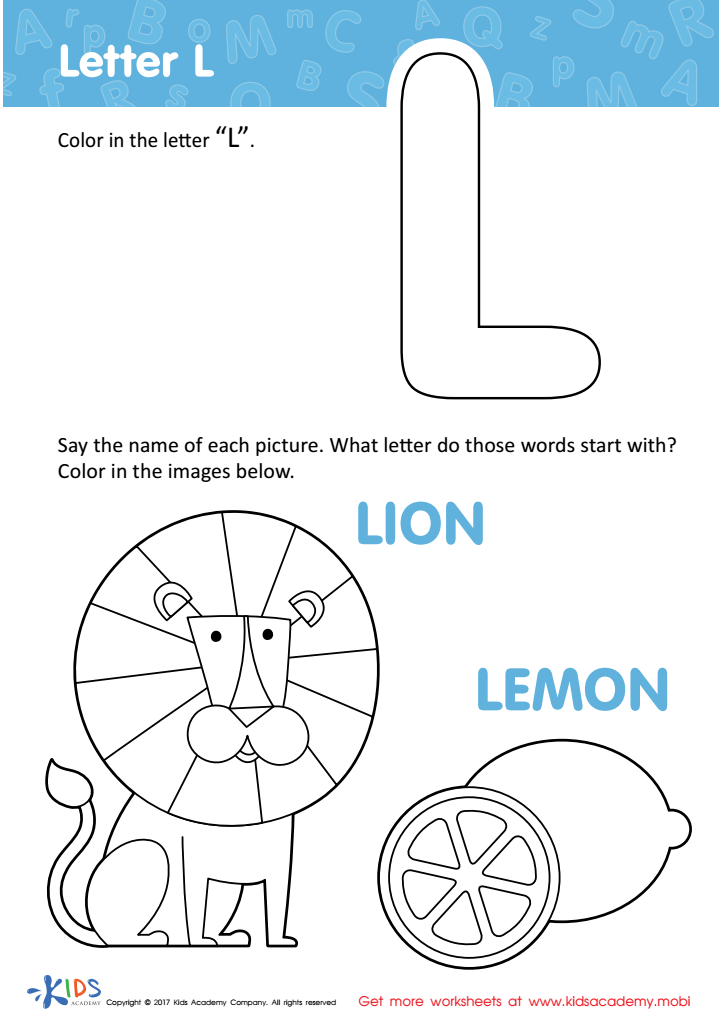
Letter L Coloring Sheet
 Assign to My Students
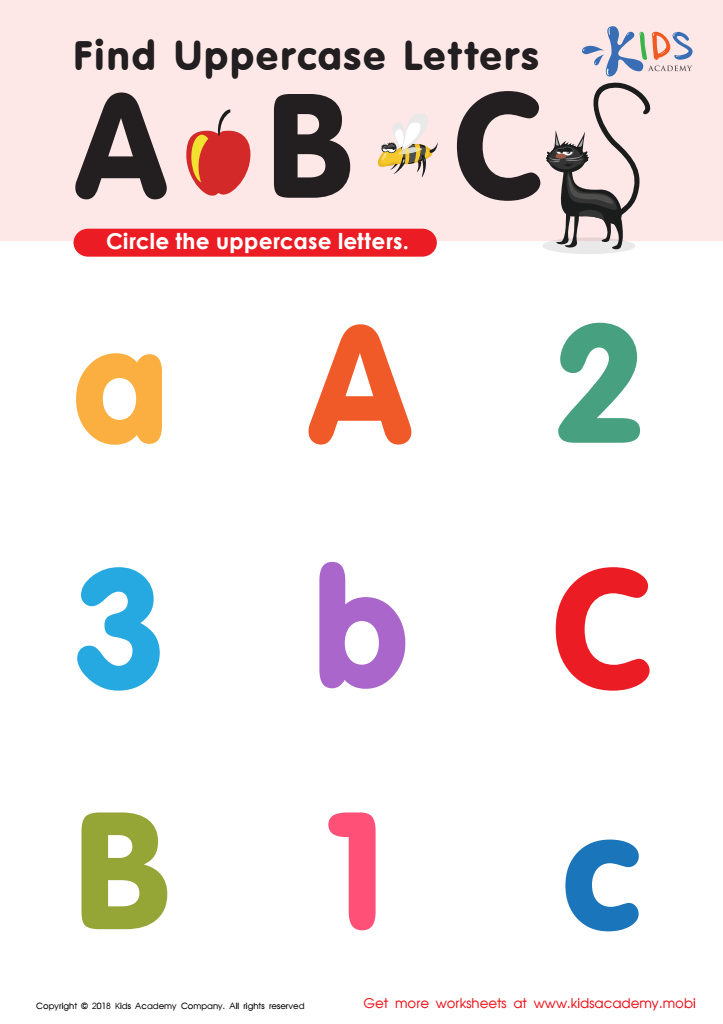
Find Uppercase Letters A, B, and C Worksheet
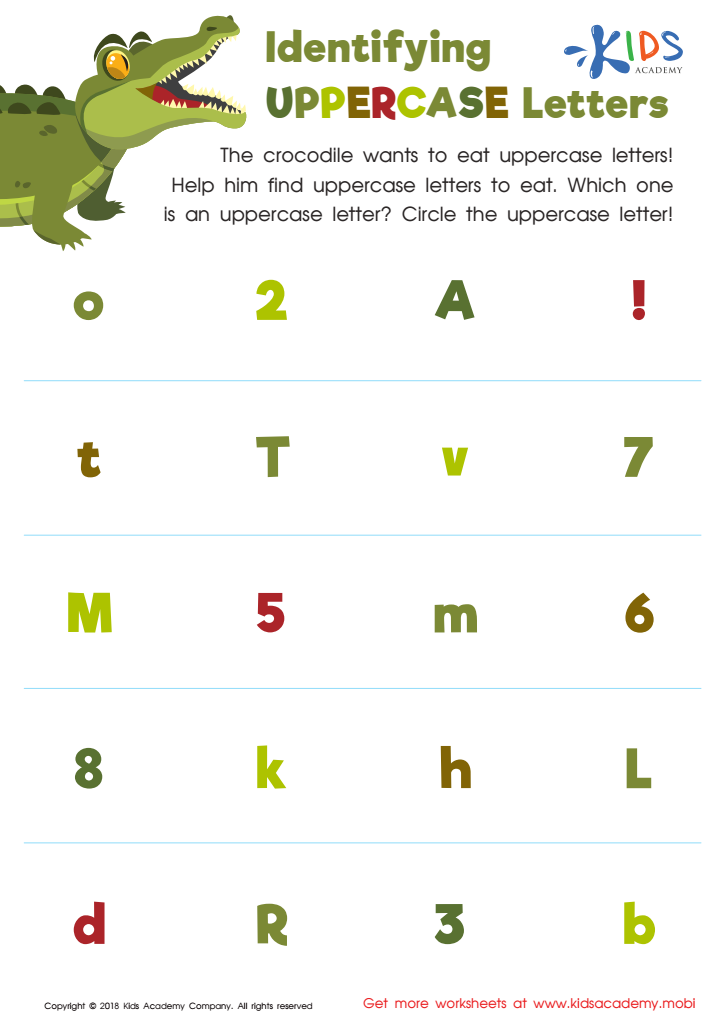
Identifying Uppercase Letters Worksheet
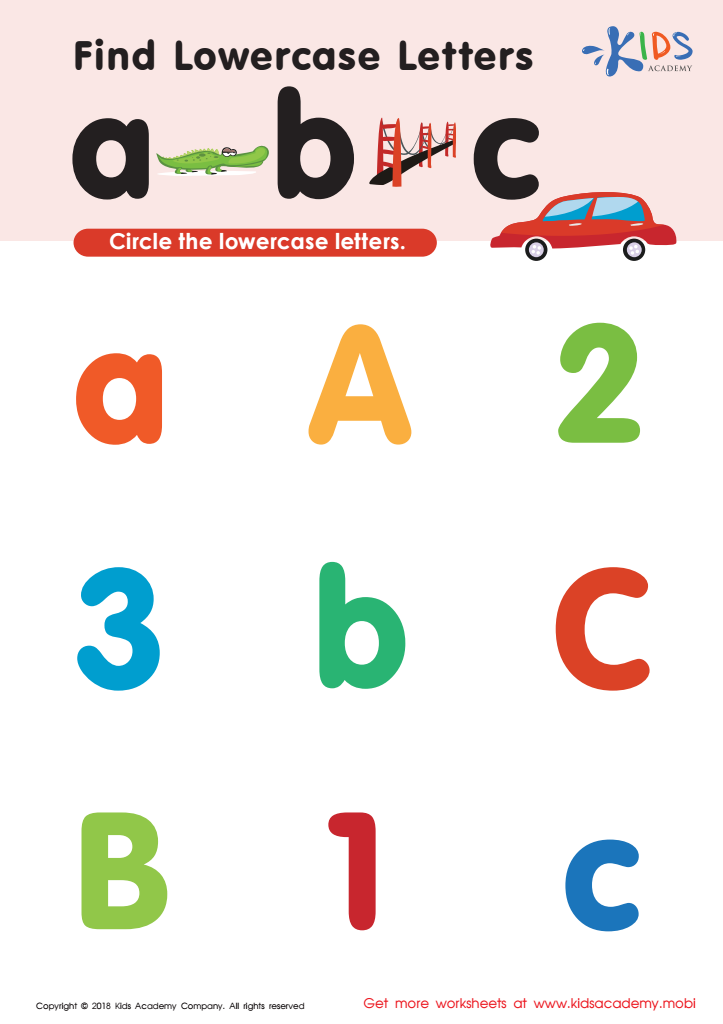
Find lowercase letters a b c Worksheet
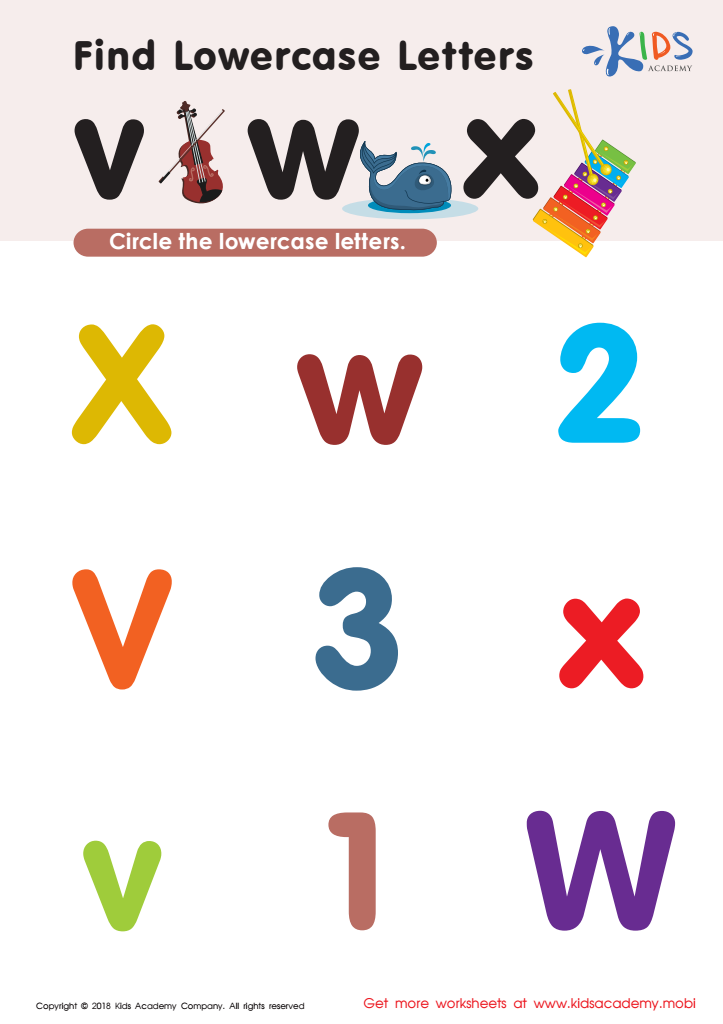
Find Lowercase Letters v w x Worksheet








Visual discrimination skills, particularly normal letter recognition, are crucial for ages 3-5 as these skills form the foundational building blocks for literacy. At this early stage, children start to differentiate between letters, shapes, and symbols, essential for recognizing printed text. Parents and teachers should care about these skills because they are directly linked to a child's reading and writing abilities. When children can identify and discriminate between different letters, they are more likely to succeed in learning to read, which is a pivotal life skill.
Additionally, strong visual discrimination leads to better comprehension and retention of information. For instance, recognizing the difference between similar letters, such as “b” and “d,” helps mitigate common reading errors that can hinder a child's confidence and academic progress. Engaging activities focused on visual discrimination—like matching games, puzzles, and letter recognition activities—can stimulate a child's cognitive abilities and improve their observational skills.
By nurturing these skills early on, parents and teachers foster a love for reading and learning, setting the stage for successful educational experiences in the future. Investing in visual discrimination skills not only benefits literacy development but also promotes critical thinking and problem-solving abilities essential for lifelong learning.








