Reading comprehension Normal Long Vowels Worksheets for Ages 3-5
4 filtered results
Difficulty Level
Grade
Age
-
From - To
Subject
Activity
Standards
Discover our engaging collection of "Reading Comprehension Normal Long Vowels Worksheets for Ages 3-5," designed to enhance early literacy skills in young learners. Through interactive activities and colorful illustrations, these worksheets help kids recognize and understand long vowel sounds, crucial for developing fluent reading abilities. Each activity focuses on strengthening comprehension, promoting phonemic awareness, and boosting vocabulary. Perfect for preschool and kindergarten kids, our easy-to-follow worksheets ensure a fun and educational experience. Empower your child's reading journey and build a solid foundation for literacy with these thoughtfully crafted learning tools. Visit us today to get started!
Favorites
With answer key
Interactive
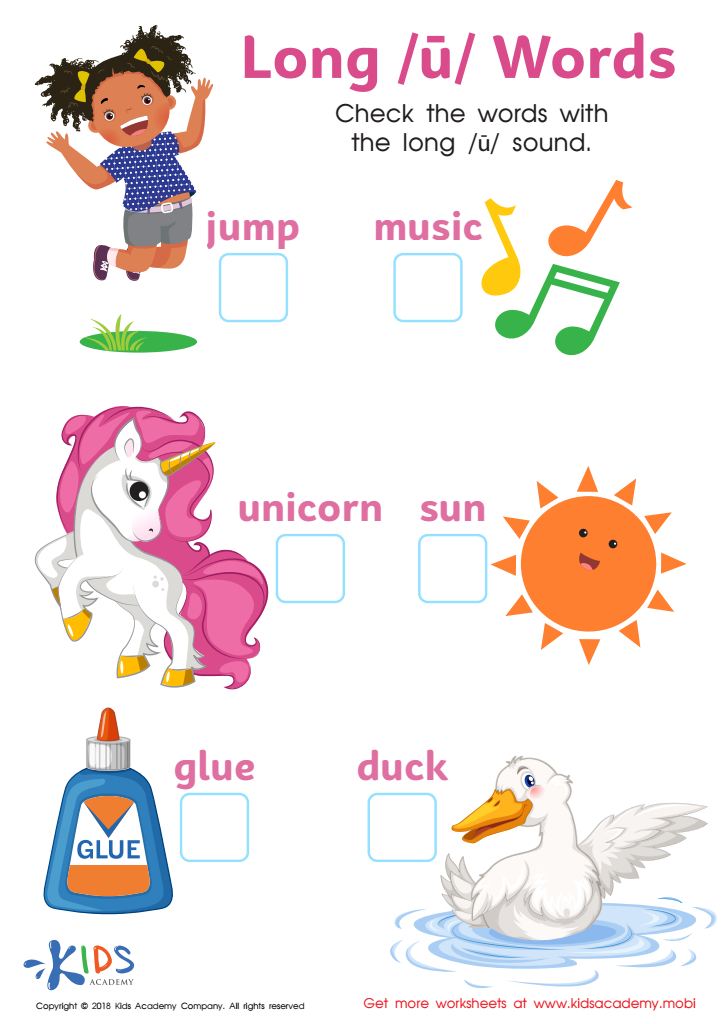
Long U Words Reading Worksheet
Emerging readers will love this free worksheet! It's a great way to practice distinguising between long and short vowel sounds, while identifying high-frequency words. They'll also get to develop fine motor skills and gain confidence in decoding and reading skills.
Long U Words Reading Worksheet
Worksheet
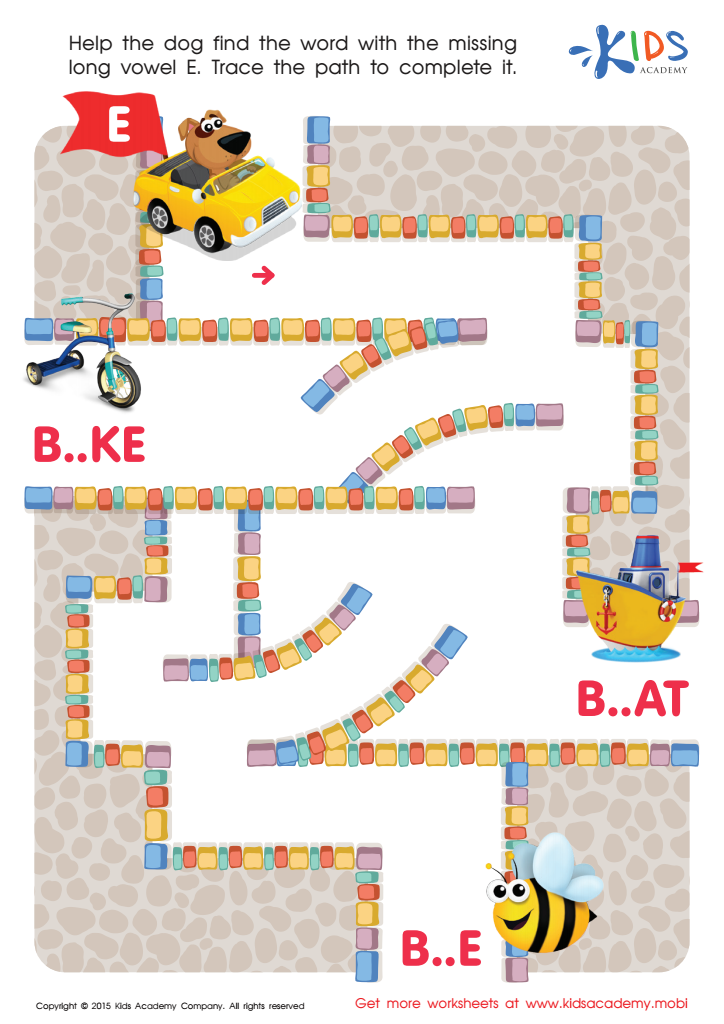
Long Vowel Sound E Worksheet
Practice distinguishing long and short vowel sound E with this free printable! Kids must complete the word “bee” by tracing the maze and adding the missing letter E. Remind them to say the word aloud to help sharpen their phonics ear. Get more phonics fun with the vowel sound E here.
Long Vowel Sound E Worksheet
Worksheet
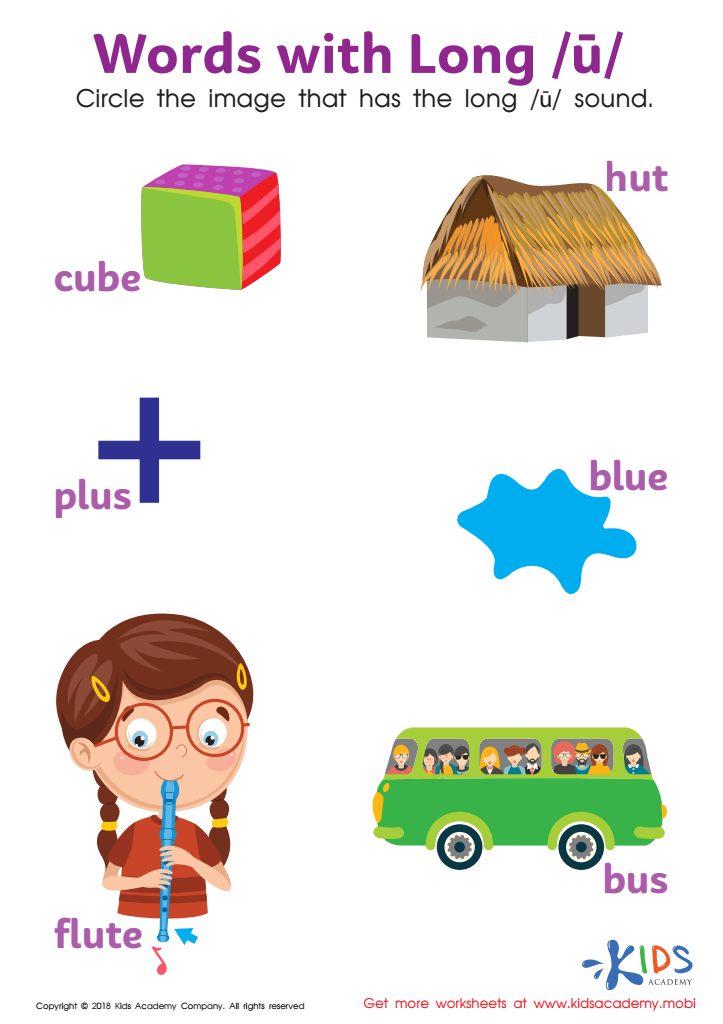
Words with Long U Reading Worksheet
Help your new reader master vowel recognition with this fun worksheet. By using picture clues and practicing fine motor skills, they'll learn to differentiate between words with the long and short «u» sound. Your learner will also get to practice vowel discrimination in high-frequency words. It's a great way to learn the importance of vowels in reading!
Words with Long U Reading Worksheet
Worksheet
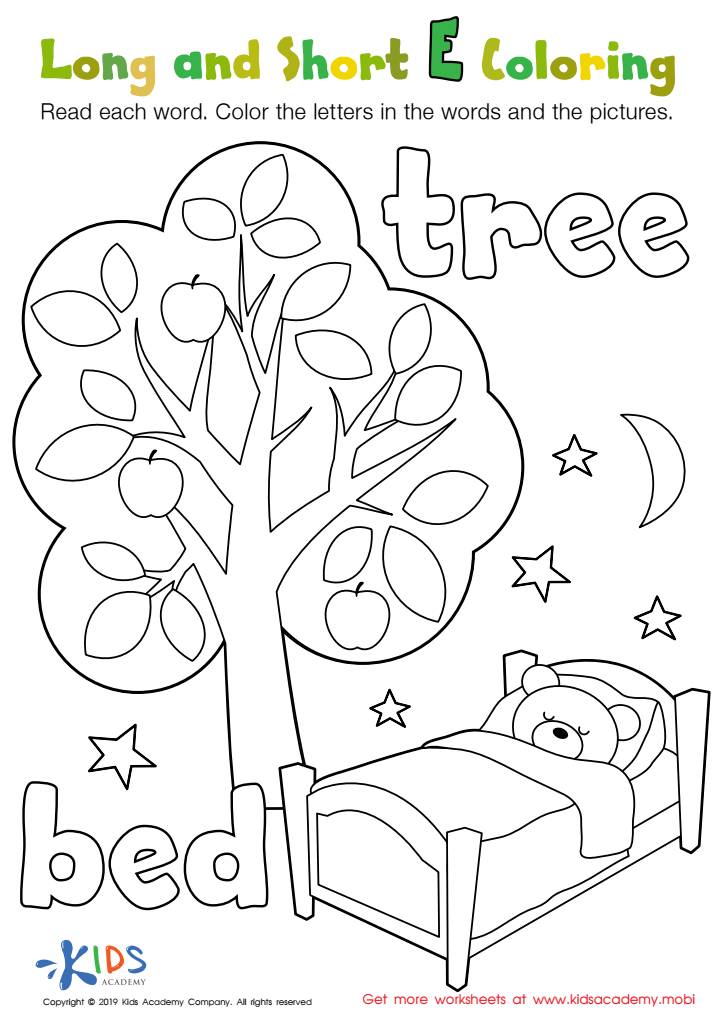
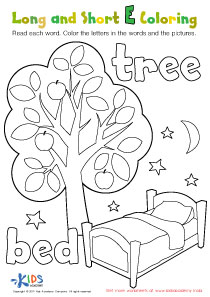
Long and Short E Worksheet
This fun printout makes learning phonics enjoyable for Grade 3 students. Get them to read the words “tree” and “bed” to recognize the different sounds of the letter “E”. After hearing the words they can color the words and the pictures to understand differences between long and short vowels.
Download (PDF)
 Assign to My Students
Assign to My Students
Long and Short E Worksheet
Worksheet
Join Kids Academy for Free
Who is primarily going to use this learning content?



Understanding reading comprehension and normal long vowels are integral components of the literacy development for children aged 3-5. At this tender age, young learners are in their "sensitive period" for language, poised to absorb linguistic skills rapidly. Engaging with reading comprehension enhances their ability to process and understand text, cultivating critical thinking and fostering a lifelong love for reading.
Normal long vowels, which include long 'a', 'e', 'i', 'o', and 'u', play a crucial role in a child's early phonetic development. Recognizing and pronouncing these sounds correctly lays the groundwork for spelling and word formation. For instance, understanding the difference between "mad" and "made" (with the long vowel sound) helps children grasp not only pronunciation but also the meaning of words in context.
Parents and teachers can bridge the leap from recognizing simple letters and sounds to building more complex words and sentences by focusing on these areas. Interactive reading sessions, phonetic games, and consistent reinforcement can make learning both fun and effective. This foundational knowledge not only prepares children for more advanced literacy skills but boosts their confidence, communication abilities, and academic success in various subjects. Consequently, investing time and effort in these aspects during ages 3-5 offers lasting educational benefits.