
Reading proficiency Normal Phonics Worksheets for Ages 3-5
3 filtered results
Difficulty Level
Grade
Age
-
From - To
Subject
Activity
Standards
Enhance your child's reading skills with our Normal Phonics Worksheets for ages 3-5! These engaging resources are designed to foster early literacy through fun activities that focus on phonics, alphabet recognition, and sound-letter correspondence. Our worksheets promote reading proficiency by helping young learners practice essential skills while learning at their own pace. Featuring vibrant illustrations and diverse exercises, they make learning enjoyable and effective. Perfect for both home and classroom use, these worksheets support children in developing a strong foundation in reading. Start your child's literacy journey today and watch their confidence grow as they become budding readers!
Favorites
With answer key
Interactive
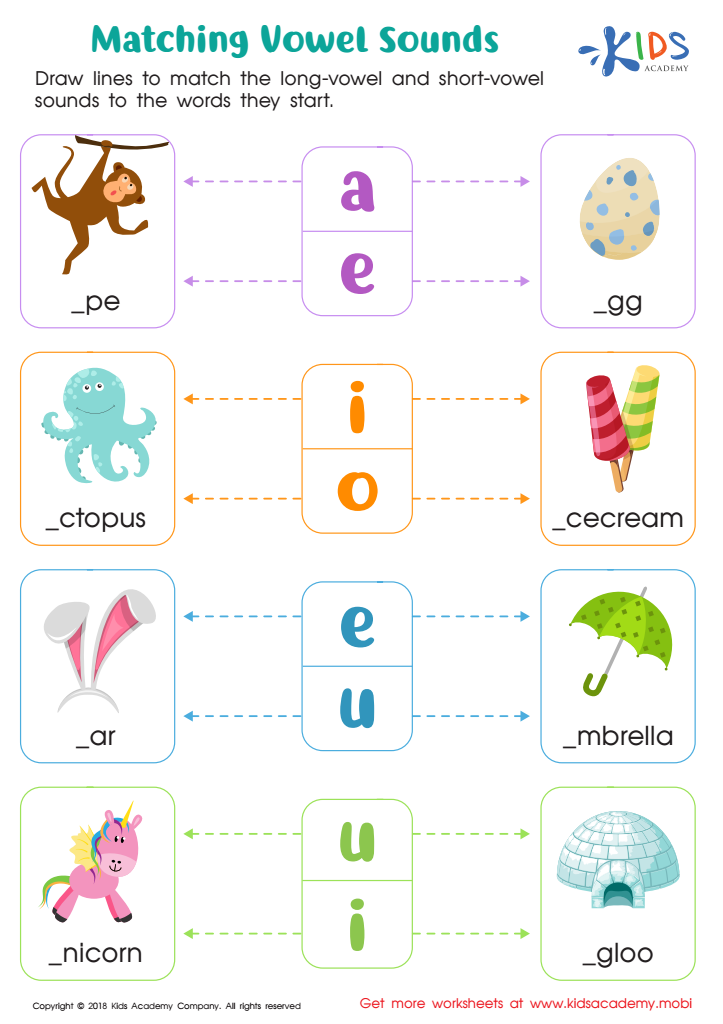
Matching Vowel Sounds Worksheet
Teach your child phonics with a fun worksheet! Ask your child to name a vowel sound and listen if it's long or short. Differentiating between long and short vowel sounds can be tricky, but this matching worksheet makes it easy for kids to understand. Have fun and master phonics - the worksheet will help them understand the difference between long and short vowel sounds!
Matching Vowel Sounds Worksheet
Worksheet

Long and Short U Worksheet
Revised: Spice up your lesson on long and short vowels with this fun printout! Kids read the words "tube" and "tub," then reinforce the sound by coloring in the words and pictures. It's a great way to make phonics class enjoyable!
Download (PDF)
 Assign to My Students
Assign to My Students
Long and Short U Worksheet
Worksheet
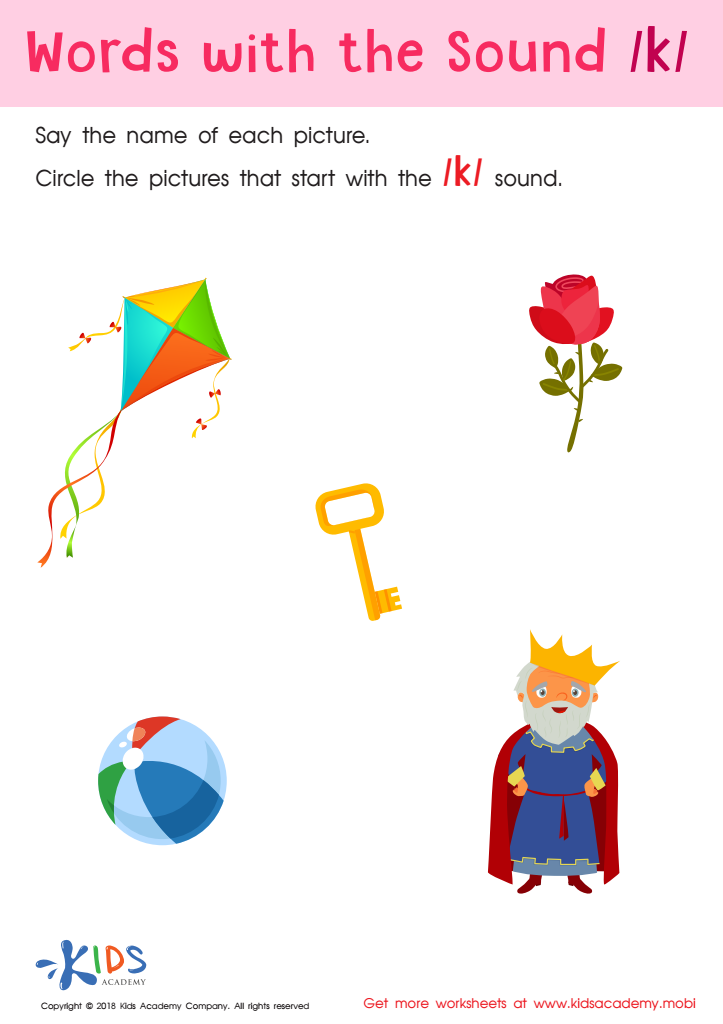
Words with sound k Reading Worksheet
Help your preschooler master the hard "k" sound with this fun worksheet from Kids Academy! Ask your child to say each picture aloud and circle only the pictures that start with "k". This early reading exercise will boost phonics skills and is sure to be loved by your little learner!
Words with sound k Reading Worksheet
Worksheet
Join Kids Academy for Free
Who is primarily going to use this learning content?








Reading proficiency through normal phonics for ages 3-5 is crucial for early childhood development and sets the foundation for lifelong learning. At this age, children's brains are primed for language acquisition, and exposure to phonics helps them understand the relationship between sounds and letters, enabling them to decode words effectively. Teachers and parents should care about this because phonics instruction enhances children's vocabulary, comprehension, and fluency, which are critical for their overall academic success.
Moreover, proficiency in reading reduces the risks of future educational gaps. Early readers develop confidence and a love for learning, which leads to better engagement in school settings. Without a strong foundation in phonics, children are more likely to struggle with reading in later grades, potentially leading to long-term literacy issues.
Furthermore, nurturing a child's reading skills fosters communication and critical thinking abilities, essential tools for navigating everyday life. By prioritizing phonics education, parents and teachers can bridge the gap between struggling and thriving readers, ensuring every child is equipped with the skills needed to succeed in their educational journey and beyond. Engaging in phonics together creates shared moments of learning, strengthening the parent-child or teacher-student bond as well.







