Sound recognition Normal Phonics Worksheets for Ages 3-5
4 filtered results
-
From - To
Introduce your preschooler to the world of phonics with our Sound Recognition Normal Phonics Worksheets for Ages 3-5. Carefully designed to engage young minds, our worksheets help children identify and recognize common sounds, laying the foundation for successful reading. Each activity fosters listening skills and sound differentiation, tailored to the educational needs of early learners. Perfect for classroom use or at-home practice, these colorful and fun worksheets make learning enjoyable for toddlers and preschoolers. Set your child on the path to literacy with our expertly crafted phonics resources. Visit Kids Academy to download and start today!
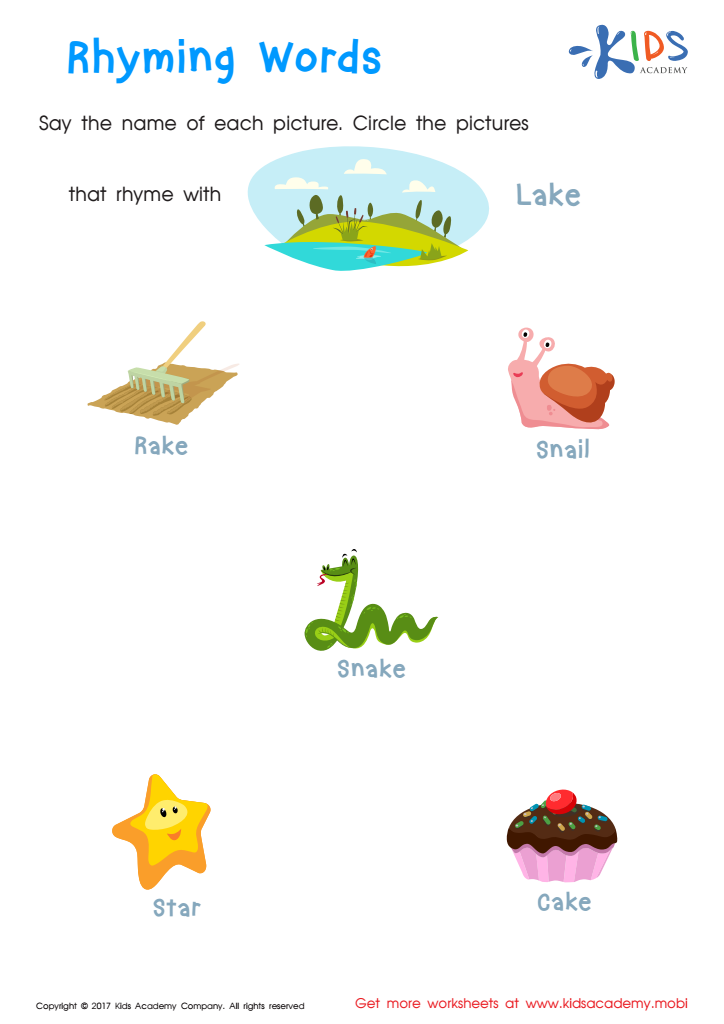
Rhyming Words Rhyming Worksheet
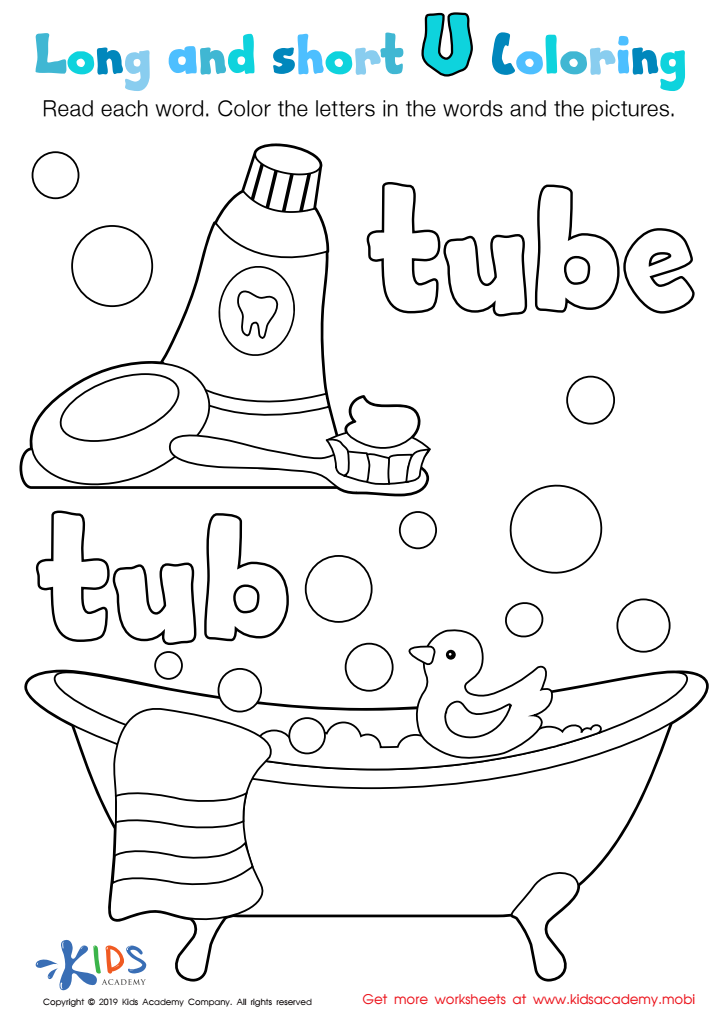
Long and Short U Worksheet
 Assign to My Students
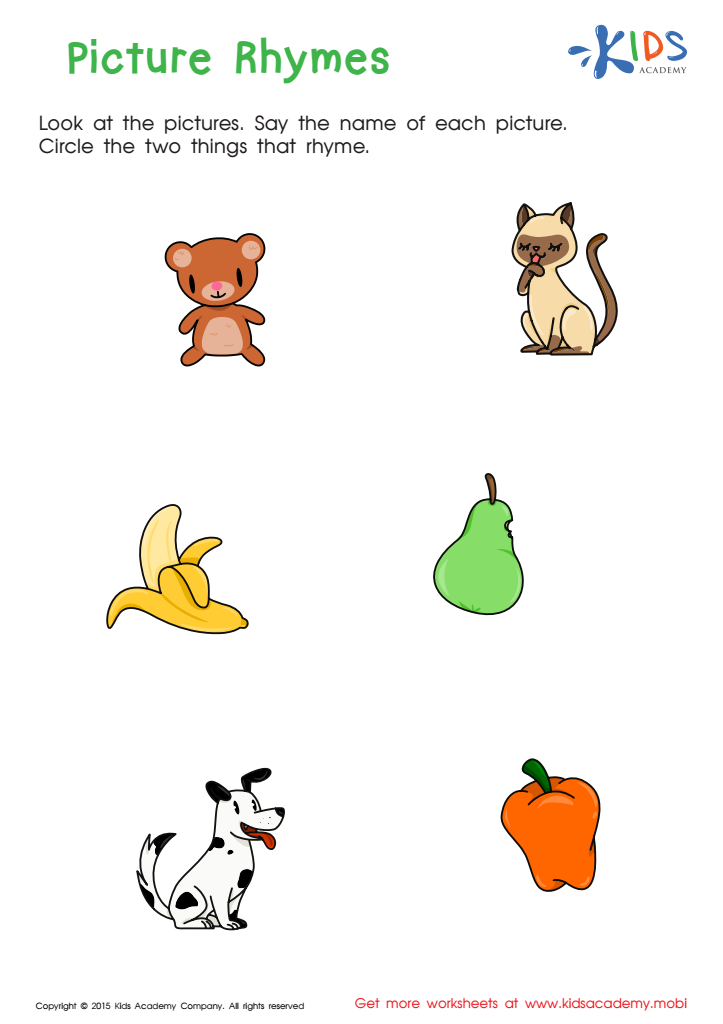
First Words: Picture Rhymes Worksheet
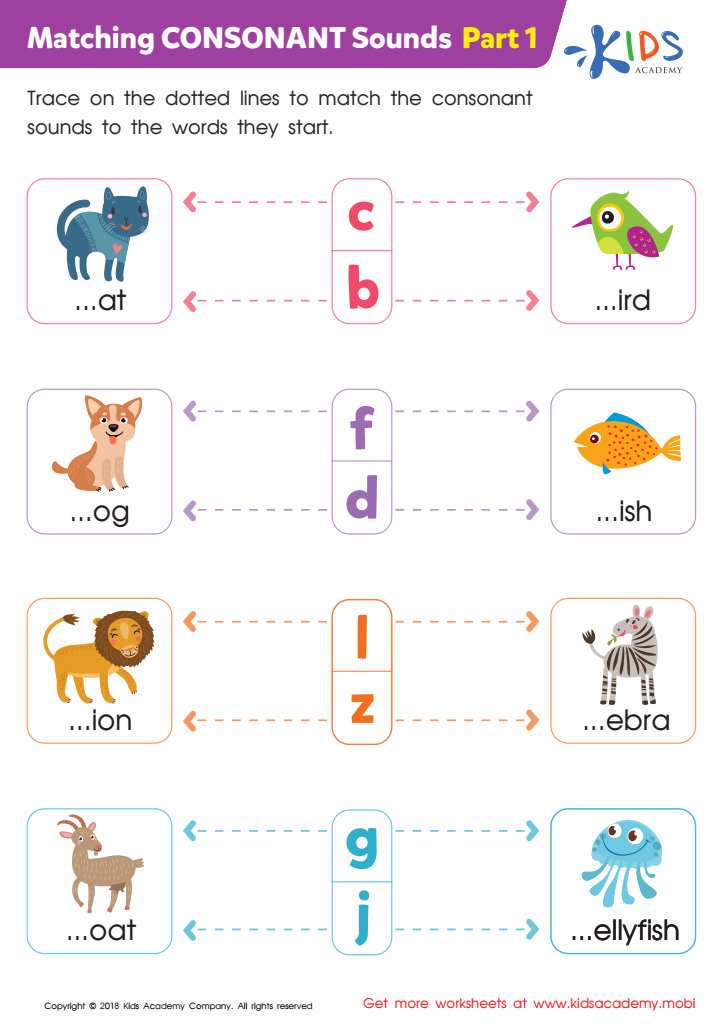
Matching Consonant Sounds: Part 1 Worksheet








Sound recognition and normal phonics play a foundational role in early childhood education, and parents and teachers should prioritize them for numerous reasons. For children aged 3-5, these skills are critical to developing future reading and writing abilities. During this stage, young brains are highly receptive to language acquisition, which forms the cornerstone for later literacy skills. By recognizing sounds and understanding phonics, children learn to associate letters with their corresponding sounds, a crucial step toward decoding words.
Early phonics education creates a robust foundation for reading fluently and comprehending text efficiently. Children who obtain these skills early are often better prepared for kindergarten and beyond, setting them on a path for academic success. Furthermore, sound recognition and phonics are closely tied to children’s ability to spell and write, enabling them to communicate more effectively.
Phonics also aids in vocabulary development; as children learn to decode words, they naturally expand their vocabulary. Additionally, success in these early literacy skills boosts a child's confidence, fostering a positive attitude towards learning. Lastly, these early skills are linked with better emotional and social outcomes, as children who read well can engage more meaningfully with both educational materials and their peers. Therefore, emphasizing sound recognition and normal phonics from ages 3-5 is vital for a child's overall development and academic growth.







