Rhyming skills development Normal Rhyming Worksheets for Ages 3-5
3 filtered results
-
From - To
Enhance your child's early literacy with our Rhyming Skills Development Worksheets, designed specifically for ages 3-5. These engaging worksheets foster a love for language by introducing young learners to the joyful world of rhymes. Each activity focuses on building phonemic awareness, improving vocabulary, and encouraging sound recognition through fun exercises and playful themes. The colorful and appealing designs capture children's interest, making learning enjoyable. Perfect for home or classroom use, our worksheets provide crucial foundational skills that set the stage for future reading success. Start nurturing your child’s rhyming abilities today and watch them flourish in their language journey!
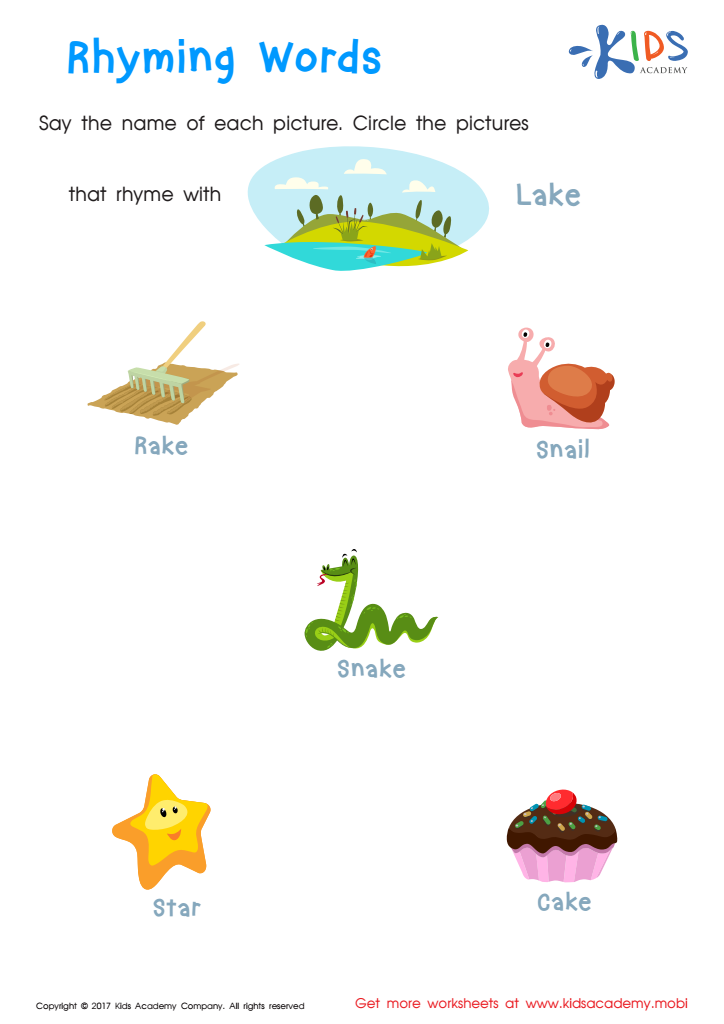
Rhyming Words Rhyming Worksheet
 Assign to My Students
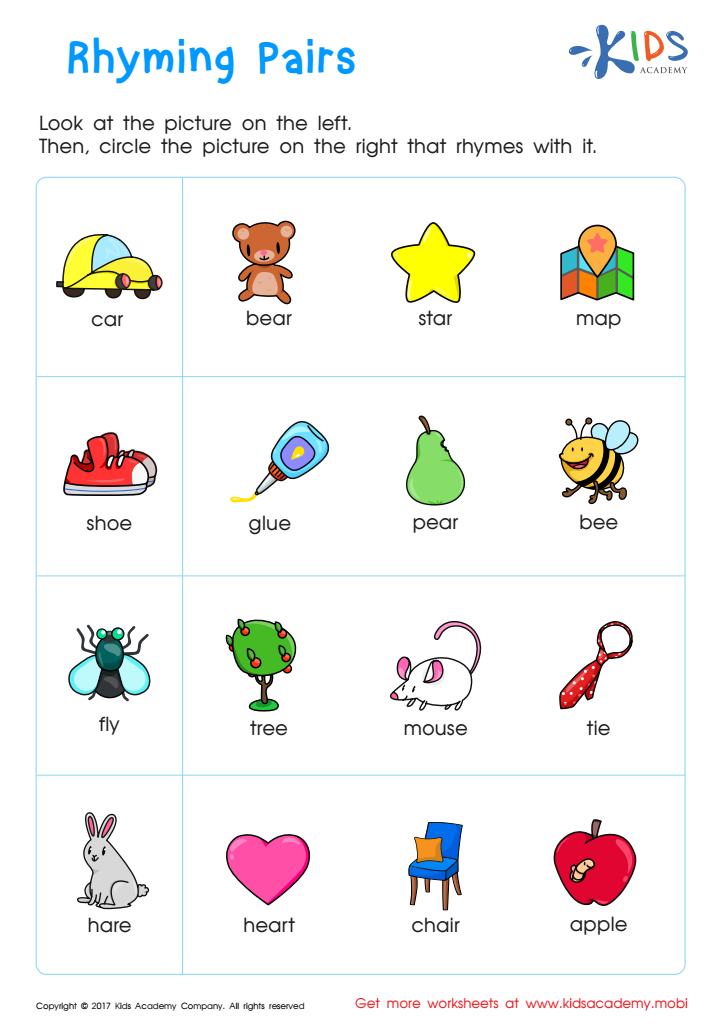
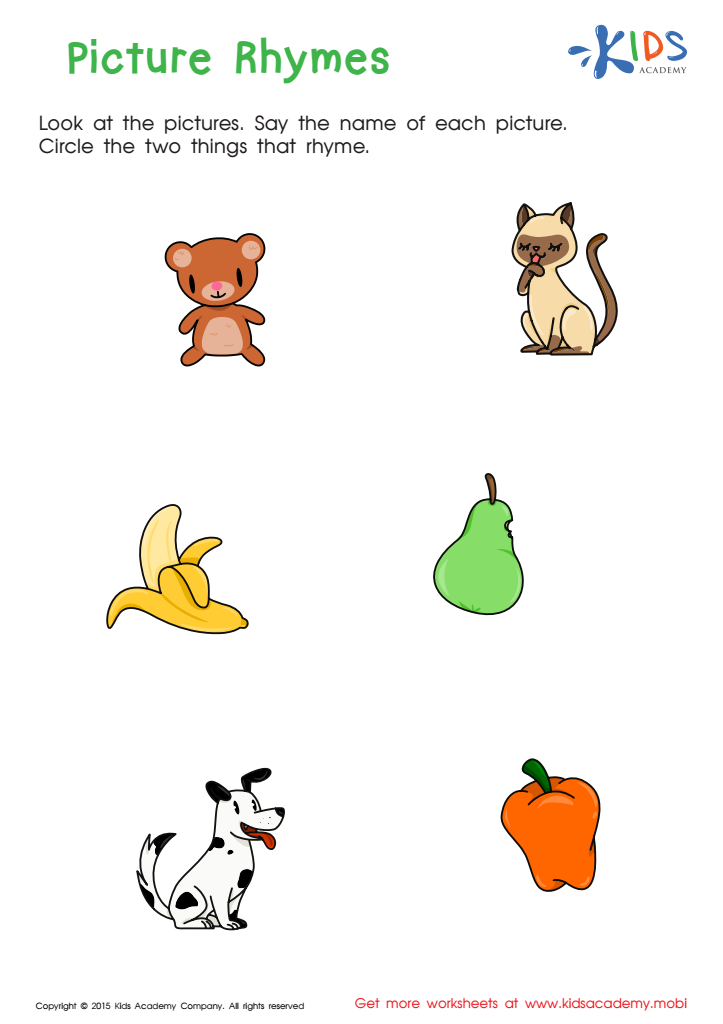
First Words: Picture Rhymes Worksheet








Rhyming skills are essential for children aged 3-5 as they form the foundation for literacy and language development. Early exposure to rhyming helps kids develop phonemic awareness, which is the ability to hear and manipulate sounds in spoken words. This skill is crucial for learning to read and write, making it an important focus for parents and teachers.
When children engage with rhymes, they become more familiar with the sounds of language, enhancing their vocabulary and promoting auditory discrimination. Fun rhyming activities and stories make learning interactive and enjoyable, encouraging a love for reading from an early age. Additionally, rhyming games often involve repetition and rhythm, reinforcing memory and cognitive skills.
Furthermore, rhyming fosters social skills as children participate in group activities, taking turns and sharing suggestions. It can also stimulate their imagination and creativity as they play with language. By nurturing rhyming skills, parents and teachers equip children with essential literacy tools, setting the stage for future academic success. Ultimately, promoting normal rhyming activities in early childhood is a crucial step in fostering a strong foundation for lifelong learning and communication.






