Phonics Skills Normal Short Vowels Worksheets for Ages 3-5
3 filtered results
-
From - To
Discover engaging Phonics Skills Worksheets focused on normal short vowels, designed specifically for children ages 3-5. Our worksheets are tailored to enhance foundational reading skills through fun and interactive activities. Kids will learn to recognize and pronounce short vowel sounds while engaging with colorful illustrations and age-appropriate exercises. Perfect for early learners, these worksheets foster literacy development and boost confidence in reading. With a variety of activities to choose from, parents and educators can easily incorporate these resources into their teaching routine. Start your child’s phonics journey today and watch their reading skills blossom!
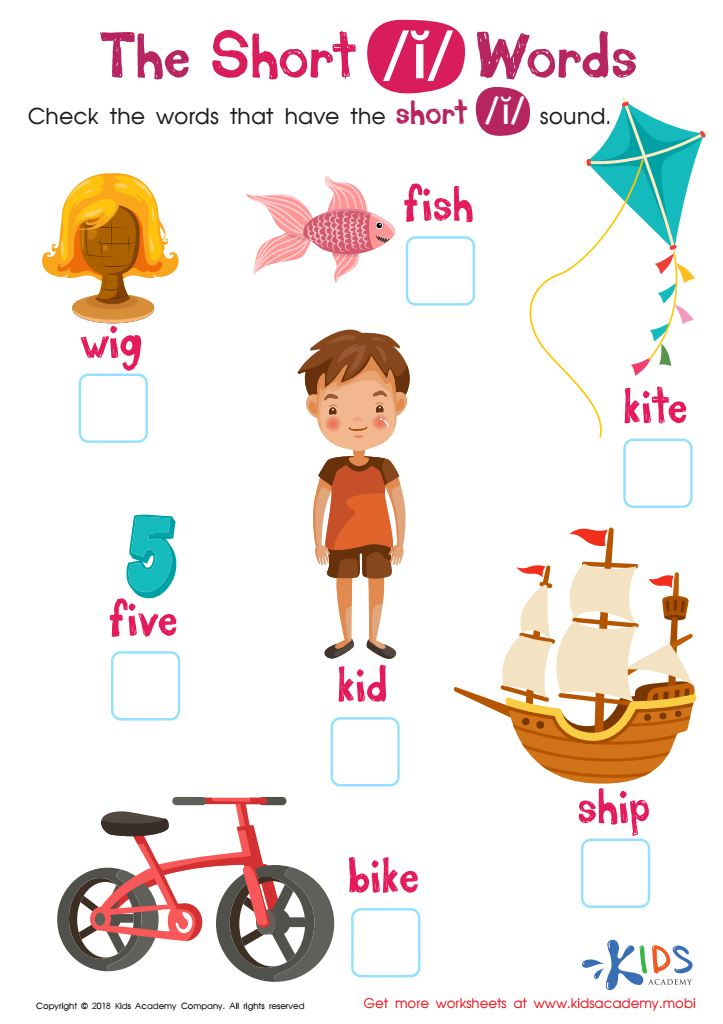
The Short I Words Reading Worksheet
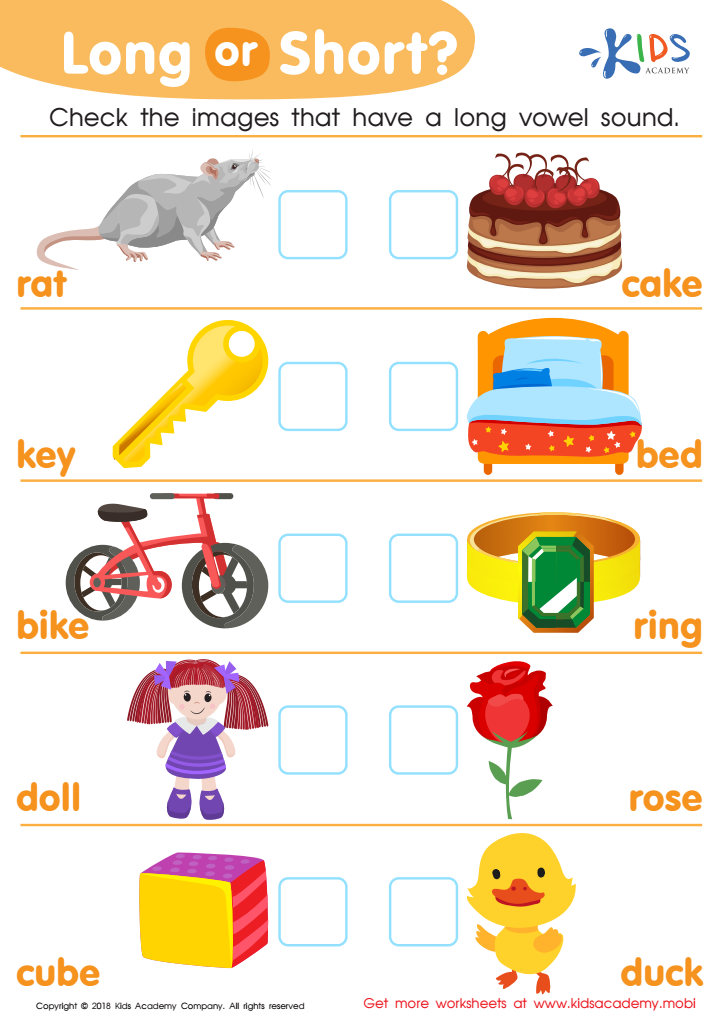
Long or Short Reading Worksheet
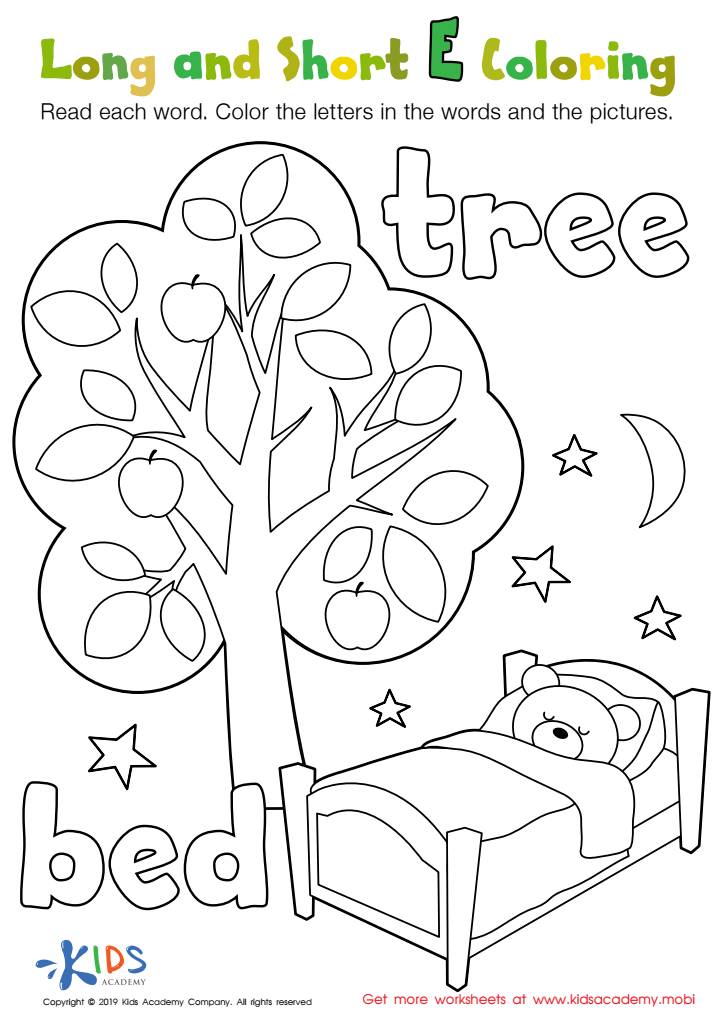
Long and Short E Worksheet
 Assign to My Students



Phonics skills, particularly mastering normal short vowels, are essential for early childhood literacy development in children ages 3-5. Understanding short vowel sounds lays the foundational building blocks for reading and writing, which are critical for academic success.
Children start recognizing letters and their associated sounds, helping them decode words. For instance, differentiating between sounds in words like "cat," "bed," and "pig" equips children with the ability to blend sounds into coherent words. This sounding-out technique fosters confidence and independence in reading.
Moreover, when parents and teachers prioritize phonics, they enhance children's vocabulary and comprehension skills. Short vowels appear frequently in simple words that children encounter, helping them master the foundational elements of phonetic awareness. The playful practice enhances not just reading skills but also cognitive and auditory skills as children learn to listen carefully to sounds.
Engaging children in phonics through songs, games, and interactive activities also cultivates a love for reading. Thus, focusing on phonics skills, especially normal short vowels, is fundamental in shaping a child's future literacy skills and overall educational journey. For these reasons, parents and teachers should prioritize phonics as a key component of early education.