Alphabet familiarity Normal Uppercase Letters Worksheets for Ages 3-5
4 filtered results
-
From - To
Introducing our Alphabet Familiarity Normal Uppercase Letters Worksheets, specially designed for children ages 3 to 5! These engaging worksheets focus on helping young learners recognize and familiarize themselves with uppercase letters. Each activity incorporates fun graphics and interactive elements that captivate young minds, making learning enjoyable. As children trace, color, and match uppercase letters, they develop essential pre-reading skills foundational for their educational journey. Our worksheets are print-friendly and perfect for at-home or classroom use, offering a productive way to enhance letter recognition and boost confidence. Explore our collection and help your little ones embark on their literacy adventure today!
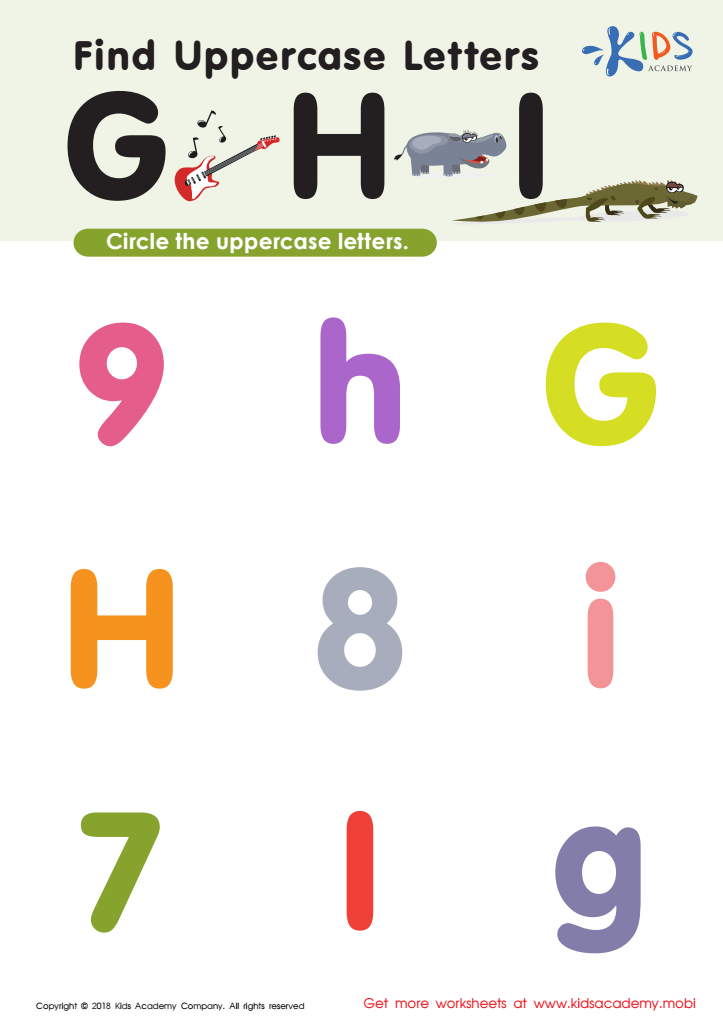
Find Uppercase Letters G, H, and I Worksheet
 Assign to My Students
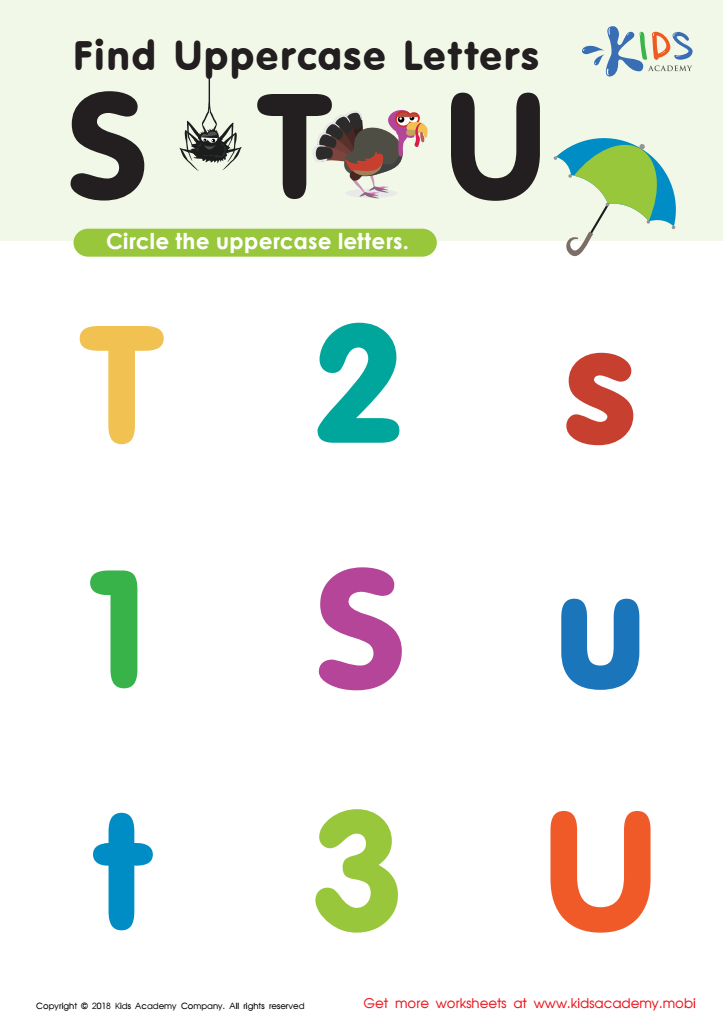
Find Uppercase Letters Worksheet
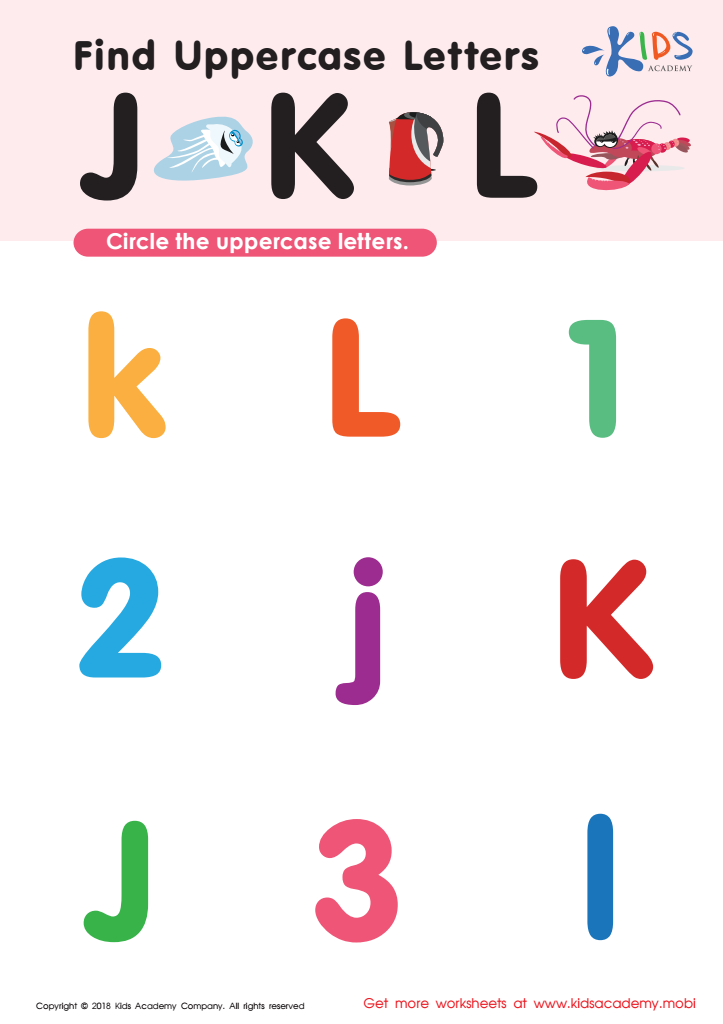
Find Uppercase Letters J, K, and L Worksheet

Find Uppercase Letters A, B, and C Worksheet








Familiarity with uppercase letters is crucial for children aged 3-5 as it lays the foundation for literacy development. During this formative stage, children are naturally curious about language and begin to recognize and identify letters, which is essential for their reading and writing skills. Uppercase letters are often the first letters that children encounter, especially in books and signs, making them a focal point of early learning.
Understanding uppercase letters enhances children’s phonological skills, allowing them to associate letters with their corresponding sounds. This recognition helps children grasp the basics of phonics, a significant component of early reading proficiency. Additionally, familiarization with alphabet letters aids in developing fine motor skills, as children practice writing and forming these letters.
Moreover, strong alphabet knowledge can boost children's confidence in their writing abilities, encouraging them to express their thoughts and ideas creatively. Teachers and parents should prioritize fun, engaging activities—like letter games, songs, and interactive reading—that promote letter recognition. By fostering alphabet familiarity in early childhood, adults set the stage for successful reading and writing experiences in the future, ultimately contributing to enhanced academic and social-emotional growth.