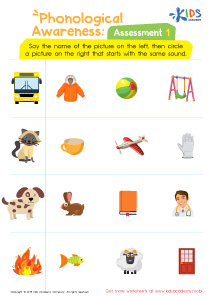
Reading comprehension Normal Vowels Worksheets for Ages 3-5
12 filtered results
Difficulty Level
Grade
Age
-
From - To
Subject
Activity
Standards
Enhance your child's early literacy skills with our Reading Comprehension Normal Vowels Worksheets, specially designed for ages 3-5. These engaging resources focus on building essential reading comprehension abilities while familiarizing young learners with normal vowels. Each worksheet provides interactive exercises and colorful illustrations, making learning fun and effective. As children practice identifying and using vowels in simple sentences, they develop a strong foundation in reading. Perfect for at-home learning or classroom activities, our worksheets cater to varying skill levels. Start your child's reading journey today and nurture their curiosity while fostering a love for literature with our thoughtfully crafted worksheets!
Favorites
With answer key
Interactive
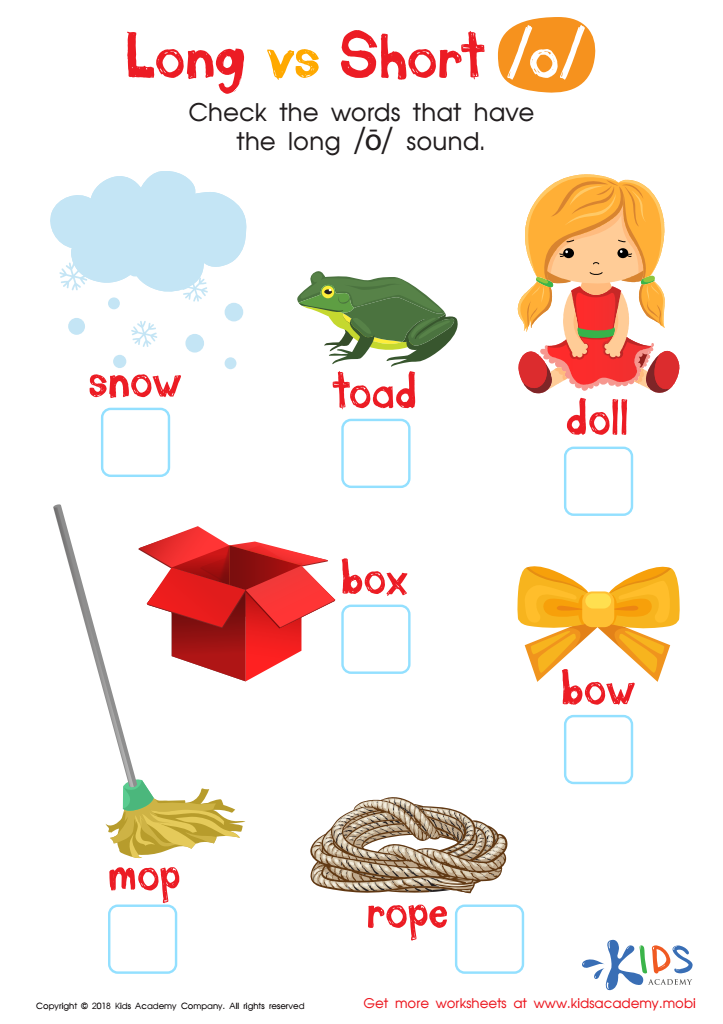
Long vs Short O Reading Worksheet
Help your child learn to identify the long and short «o» sound with this colourful worksheet. Guide them as they spot words with the long or short «o» sound. With practice, your child will find it easier to tell the difference between the two.
Long vs Short O Reading Worksheet
Worksheet
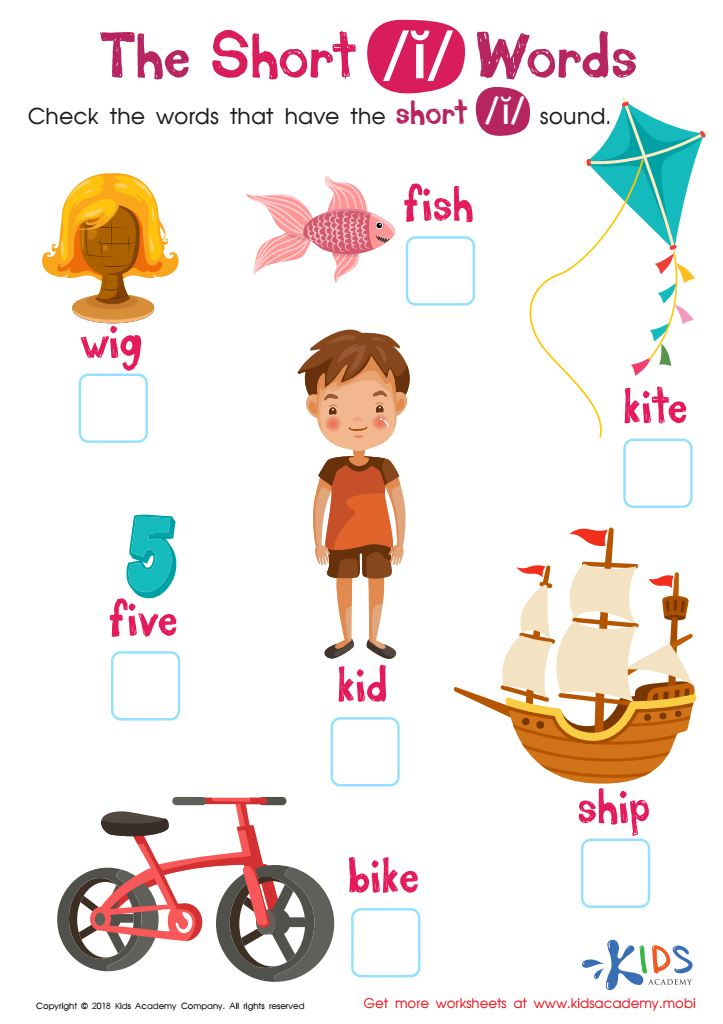
The Short I Words Reading Worksheet
Teach your kindergartner phonics with this printout worksheet! It introduces the short «i» sound and helps them differentiate and articulate sounds and letters of the alphabet. With practice, your child will soon find it easy to classify sounds into long and short vowels.
The Short I Words Reading Worksheet
Worksheet
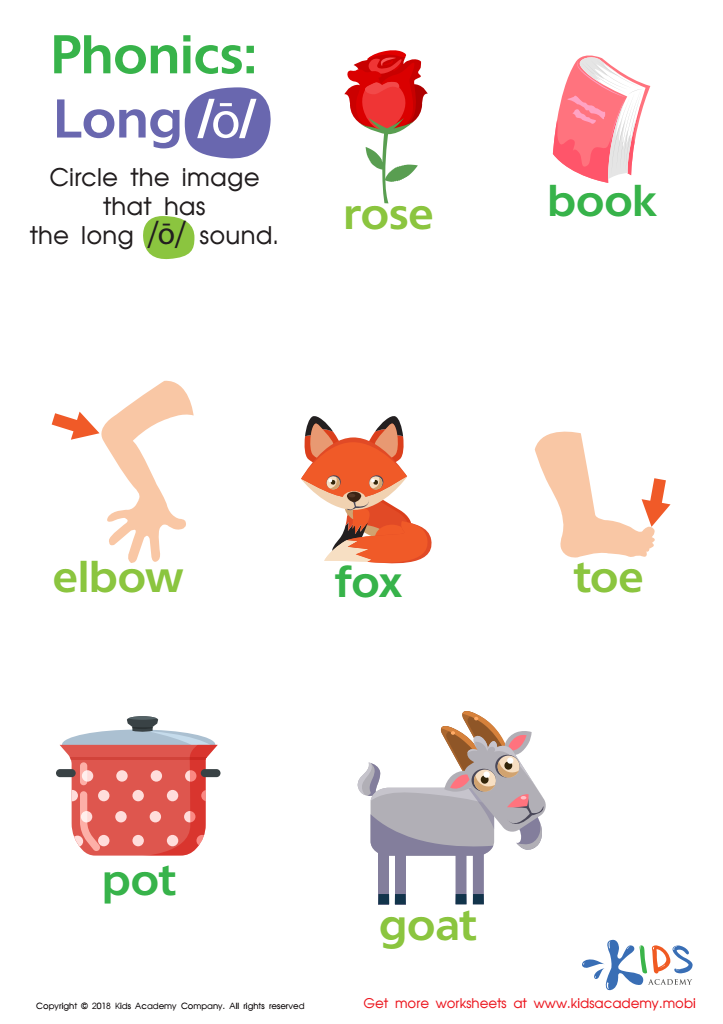
Phonics Long O Reading Worksheet
Are you ready to help your child learn the phonics long «o» sound? This worksheet is designed to aid them in getting familiar with the sound. After completing the exercise, your child should be able to differentiate letters, and recognize words with the long «o» sound. Encourage them to circle the images that have the sound.
Phonics Long O Reading Worksheet
Worksheet
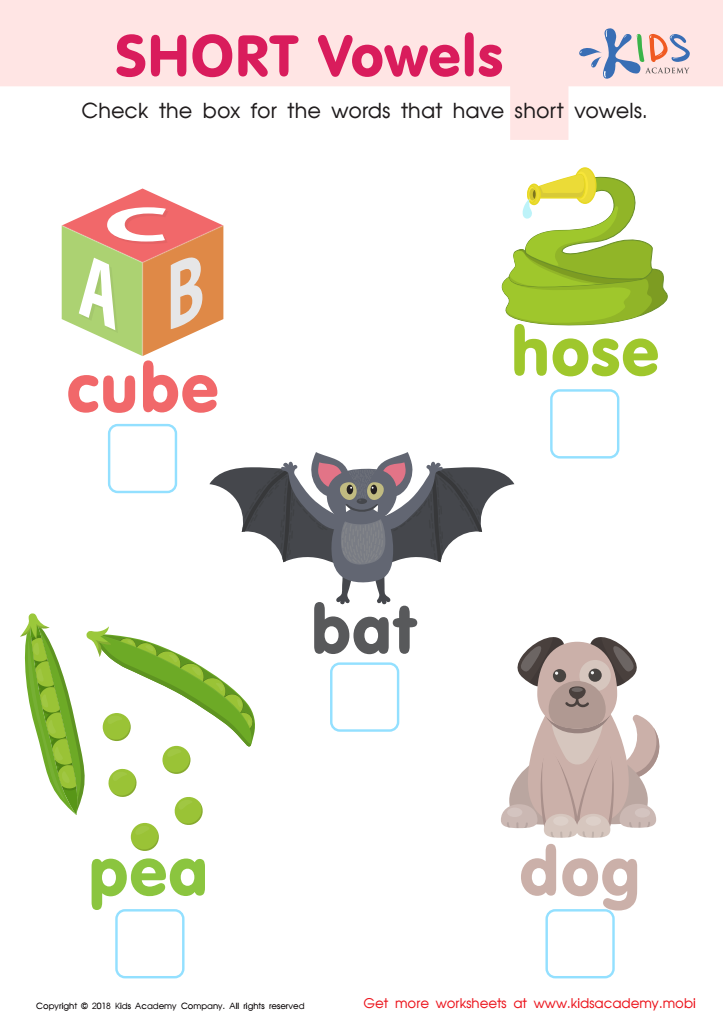
short vowels Worksheet
Say "dog" and notice how long it takes to pronounce the vowel. Is it short or long? Compare it to "pea" and use this worksheet to quickly assess your child's mastery. Have them name each picture and listen for the vowel sounds. Only check the boxes for words with short vowel sounds.
short vowels Worksheet
Worksheet
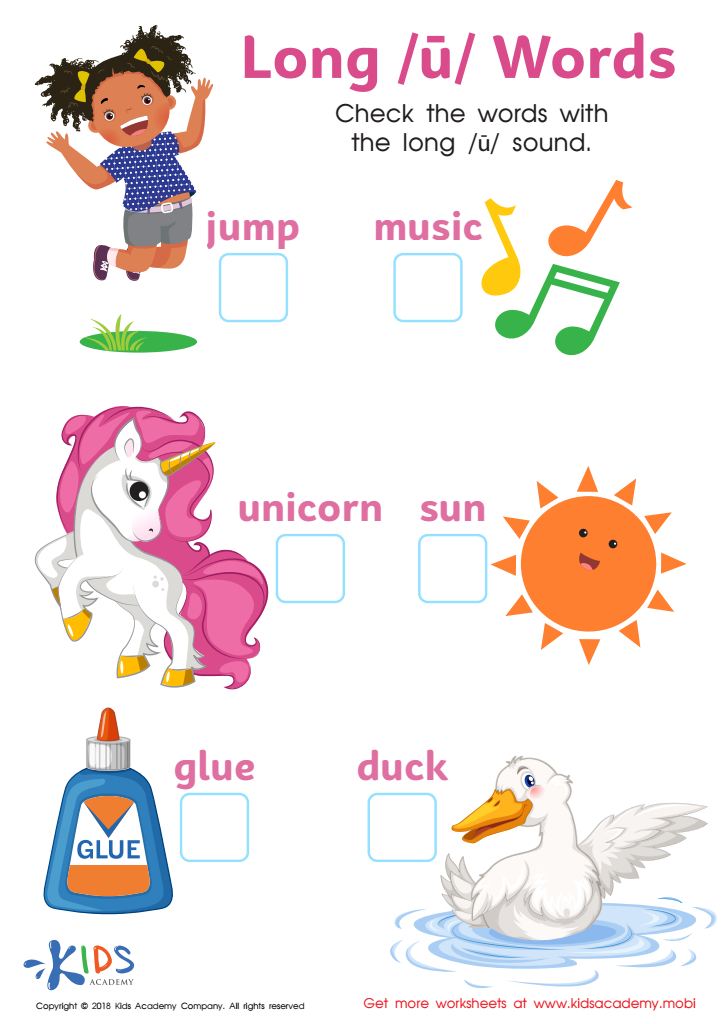
Long U Words Reading Worksheet
Emerging readers will love this free worksheet! It's a great way to practice distinguising between long and short vowel sounds, while identifying high-frequency words. They'll also get to develop fine motor skills and gain confidence in decoding and reading skills.
Long U Words Reading Worksheet
Worksheet
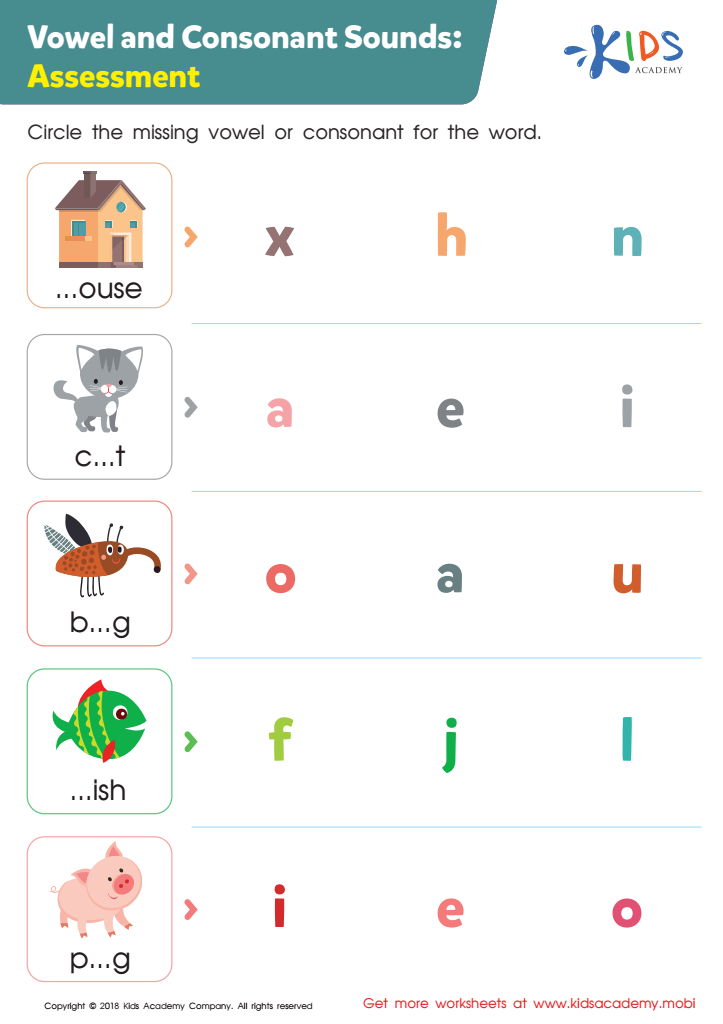
Vowel and Consonant Sounds: Assessment Worksheet
Test young elementary students on vowel and consonant sounds with this friendly phonics assessment worksheet. Get kids to name each image and look at the word underneath. Ask them to sound out the word, then circle the missing letter to complete. This will help assess their knowledge and skills!
Vowel and Consonant Sounds: Assessment Worksheet
Worksheet
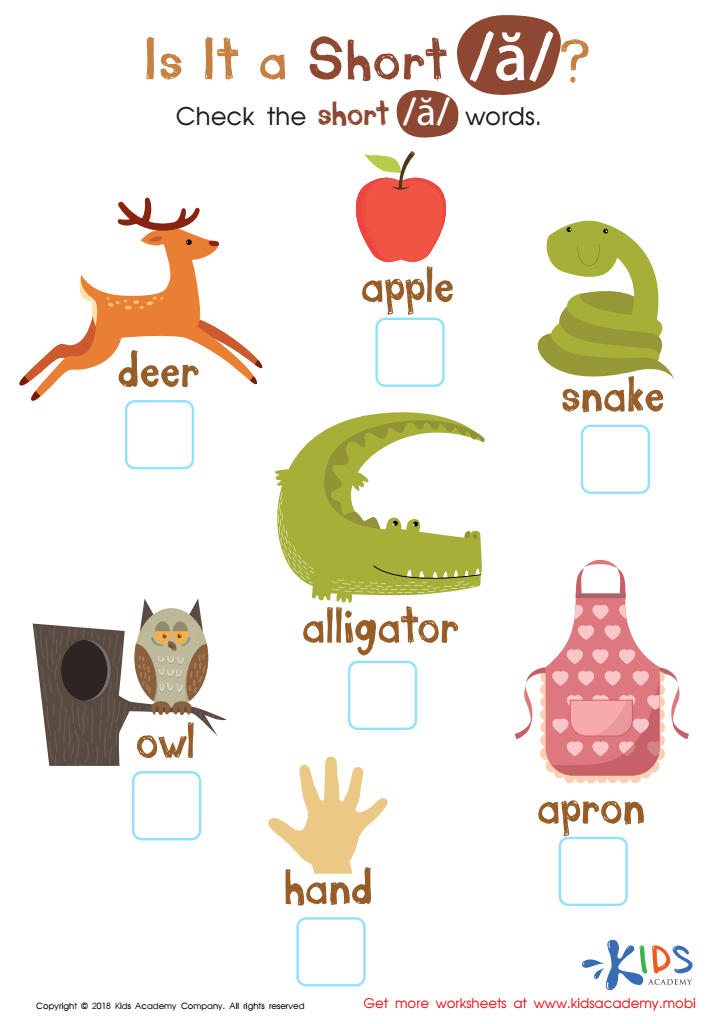
Is It Short A? Reading Worksheet
Struggling readers may have difficulty distinguishing short from long vowels. With this fun PDF worksheet, they practice identifying the corresponding short «ă» by naming each picture and ticking the right boxes. It's a great way to work on decoding and fluency skills!
Is It Short A? Reading Worksheet
Worksheet
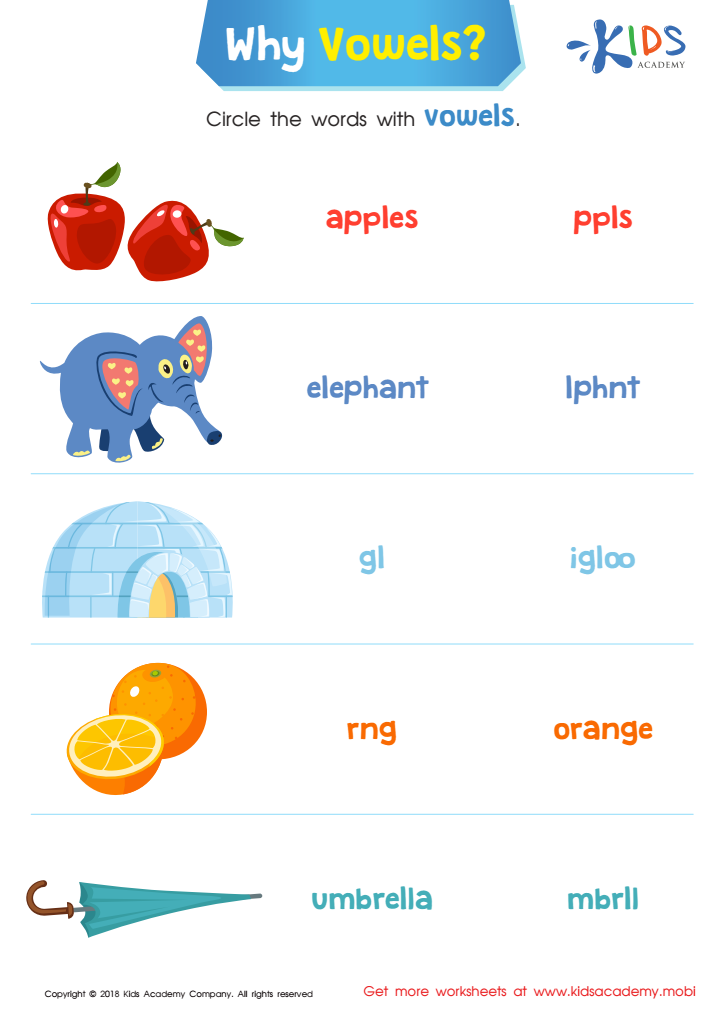
Why Vowels? Reading Worksheet
This worksheet teaches kids to spell words with vowels. It features familiar pics for them to recognize, and they practice fine motor skills by circling the correct spelling. It's an enjoyable way for kids to learn how to spell and promote reading skills.
Why Vowels? Reading Worksheet
Worksheet
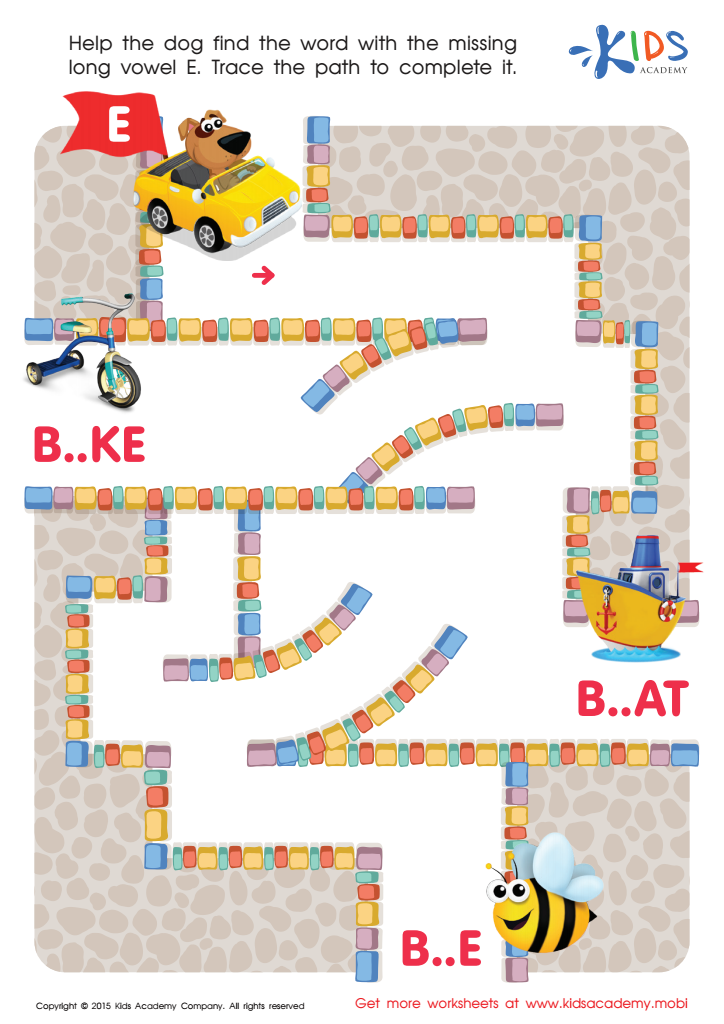
Long Vowel Sound E Worksheet
Practice distinguishing long and short vowel sound E with this free printable! Kids must complete the word “bee” by tracing the maze and adding the missing letter E. Remind them to say the word aloud to help sharpen their phonics ear. Get more phonics fun with the vowel sound E here.
Long Vowel Sound E Worksheet
Worksheet
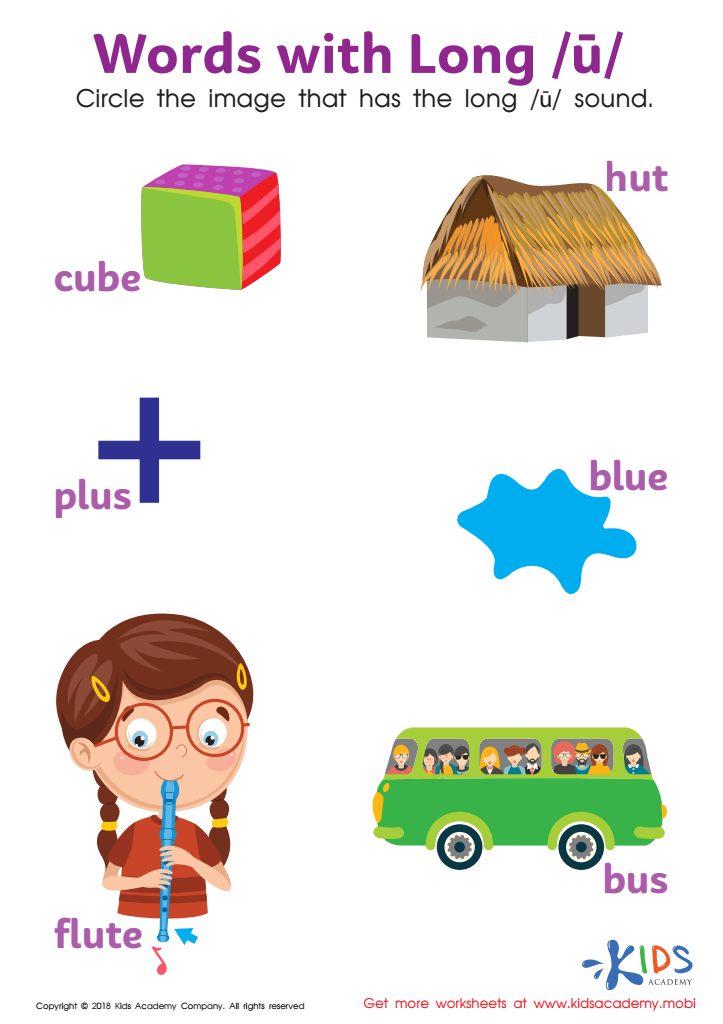
Words with Long U Reading Worksheet
Help your new reader master vowel recognition with this fun worksheet. By using picture clues and practicing fine motor skills, they'll learn to differentiate between words with the long and short «u» sound. Your learner will also get to practice vowel discrimination in high-frequency words. It's a great way to learn the importance of vowels in reading!
Words with Long U Reading Worksheet
Worksheet

Long and Short E Worksheet
This fun printout makes learning phonics enjoyable for Grade 3 students. Get them to read the words “tree” and “bed” to recognize the different sounds of the letter “E”. After hearing the words they can color the words and the pictures to understand differences between long and short vowels.
Download (PDF)
 Assign to My Students
Assign to My Students
Long and Short E Worksheet
Worksheet
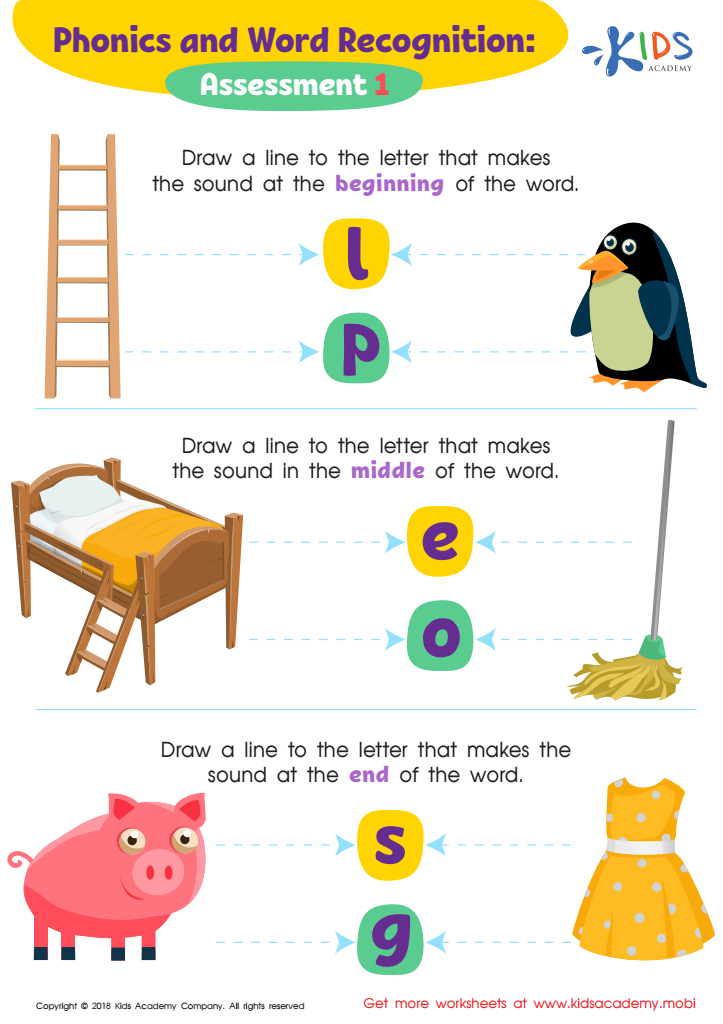
Phonics and Word Recognition: Assessment 1 ELA Worksheet
This fun worksheet tests your child's sound recognition skills for each part of a word. Ask your child to name each image and trace the line to match it with the corresponding letter. Listen for beginning sounds on 1st, middle sounds on 2nd, and ending sounds on 3rd. Encourage learning with this colorful and interactive activity!
Phonics and Word Recognition: Assessment 1 ELA Worksheet
Worksheet
Join Kids Academy for Free
Who is primarily going to use this learning content?





Reading comprehension and the understanding of normal vowels are foundational elements in early literacy development for children aged 3-5. At this crucial stage, children's brains are rapidly developing, and they are absorbing fundamental language skills that form the basis for their future learning.
Understanding normal vowels is essential because vowels are the building blocks of words. When children grasp how vowels function within words, they are better equipped to decode them. Strong reading comprehension skills enhance children's ability to understand stories, follow narratives, and engage in meaningful conversations. This not only boosts their academic success but also fosters a love for reading.
Moreover, focusing on reading comprehension helps children make connections with what they read to their personal experiences, enhancing their critical thinking and cognitive skills. Teachers and parents play a vital role in creating a supportive environment through interactive reading, engaging activities, and questioning that encourages deeper understanding.
Investing in these early reading skills helps ensure children are prepared for future educational challenges, setting a solid foundation for lifelong learning. By prioritizing reading comprehension and vowel recognition, educators and parents can significantly impact a child’s confidence, literacy development, and enthusiasm for reading.