Sequencing Skills Normal Worksheets for Ages 3-5
3 filtered results
-
From - To
Enhance your child's critical thinking and storytelling abilities with our Sequencing Skills Normal Worksheets for ages 3-5. These interactive and engaging worksheets are designed to develop early childhood sequencing skills, helping young learners understand the logical order of events. Through fun and colorful activities, kids will arrange pictures, practice temporal concepts, and build a strong foundation for reading comprehension. Perfect for parents and educators, these printables make learning enjoyable and effective. Download now and watch your child’s cognitive abilities flourish as they embark on a sequencing adventure!
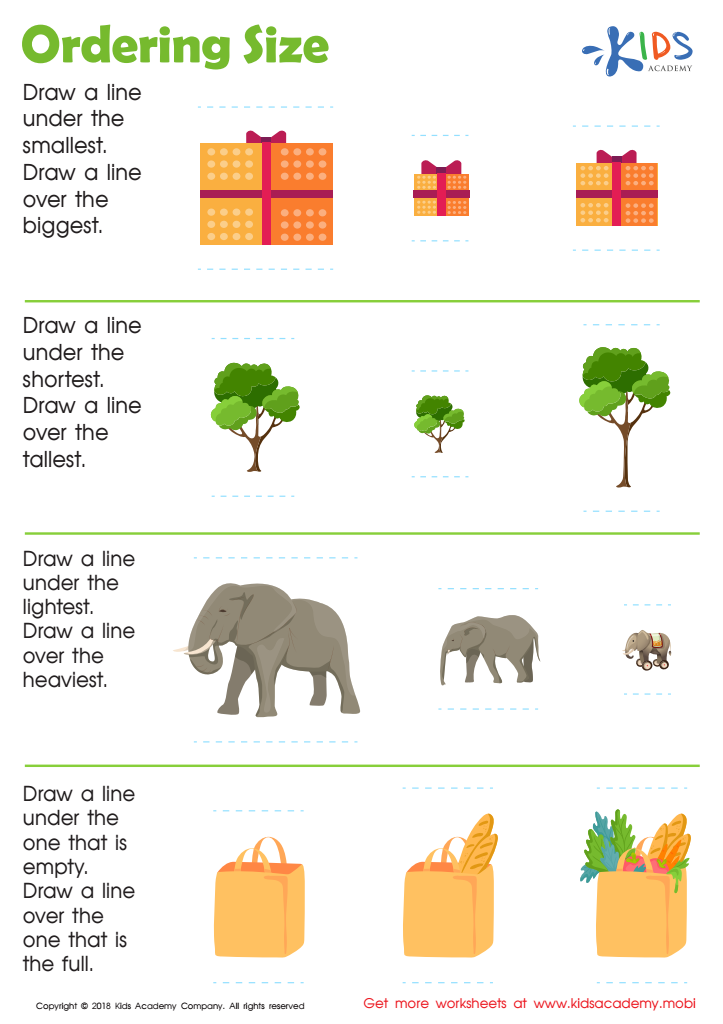
Ordering Size Worksheet
 Assign to My Students
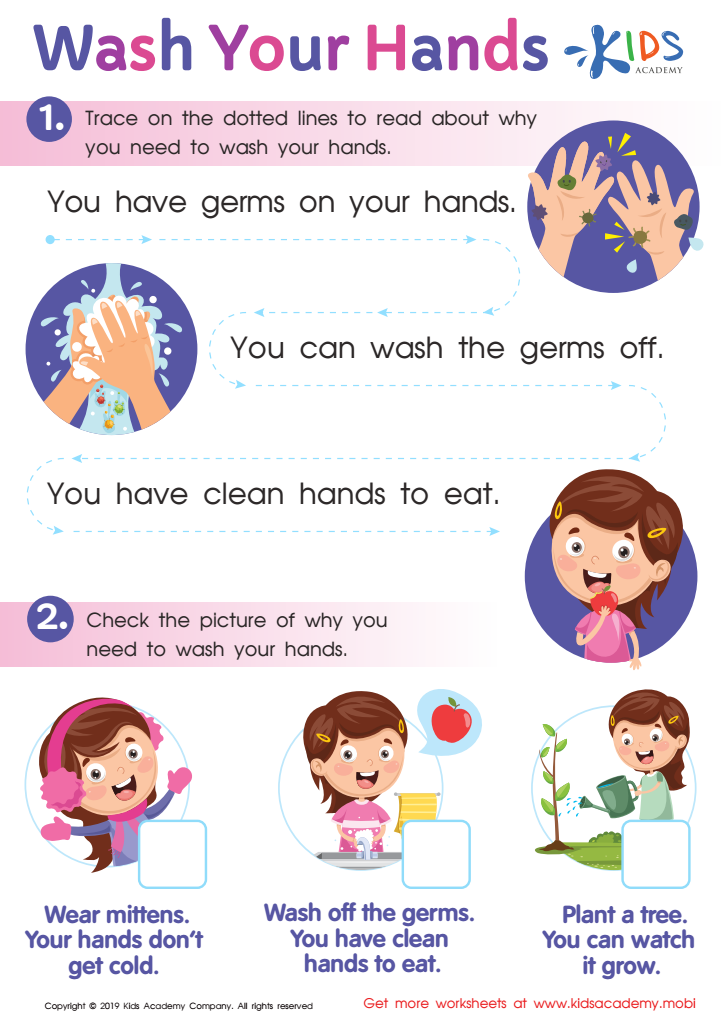
Wash Your Hands Worksheet
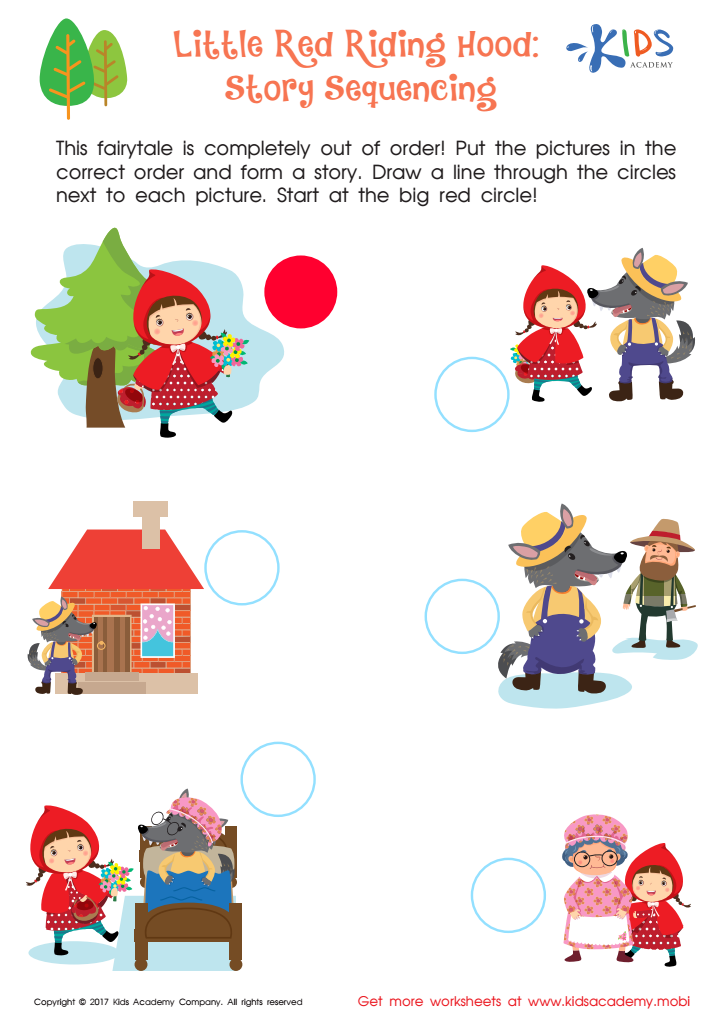
Story Sequencing Printable



.jpg)



Parents and teachers should prioritize sequencing skills for children aged 3-5 because these foundational abilities play a critical role in their overall cognitive development. Sequencing involves understanding and organizing events, actions, or objects in a particular order, which is crucial for early literacy and numeracy skills. For instance, being able to follow a storyline or put counting objects in the right sequence sets the stage for reading and mathematical proficiency.
In addition, sequencing aids in developing logical thinking and problem-solving skills. When children learn to sequence, they begin to understand cause and effect relationships and how to predict outcomes based on the order of events. This enhances their comprehension in various academic subjects and daily activities.
Moreover, strong sequencing skills also impact social and communication abilities. Effective storytelling and conversation rely on putting ideas and actions in a logical order, which helps children convey their thoughts clearly and understand others better.
By fostering sequencing skills through activities like storytelling, ordering daily routines, and playing sequence-related games, parents and teachers provide children with the essential tools for academic success and effective communication. Hence, focusing on this aspect of development during the ages of 3-5 sets a solid foundation for future learning and social interactions.








