Spelling practice Normal Worksheets for Ages 3-5 - Page 2
25 filtered results
-
From - To
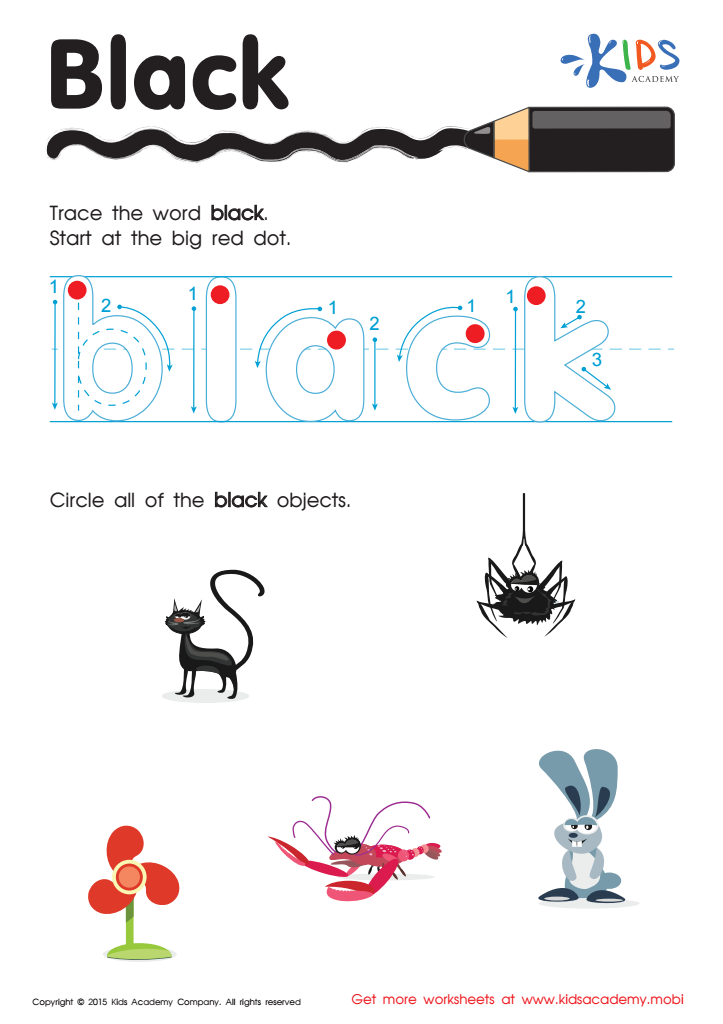
Black Tracing Color Words Printable
 Assign to My Students








Spelling practice for young children aged 3-5 is essential for several developmental reasons. This stage is critical for language acquisition and cognitive growth, and early exposure to spelling can significantly boost these skills. First, spelling helps children establish foundational literacy skills, allowing them to recognize letters and sounds, which is a precursor to reading. When children practice spelling, they engage in phonemic awareness, enhancing their ability to decode words.
Additionally, spelling activities promote fine motor skills as children learn to write letters and words. This process not only helps them with literacy but also supports their overall physical development. Moreover, spelling practice encourages auditory skills, as children learn to listen attentively to the sounds of letters and words.
Engaging in spelling activities also fosters cognitive skills such as memory and concentration. As children learn to form words, they develop problem-solving abilities and critical thinking. Beyond academic benefits, spelling practice can build confidence, as children take pride in their accomplishments, setting a positive tone for future learning experiences.
In conclusion, incorporating spelling activities into the daily routines of young children lays the groundwork for successful reading and writing, making it an important focus for parents and educators alike.








