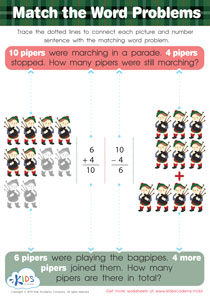
Problem-Solving Skills Normal Addition Worksheets for Ages 3-5
4 filtered results
-
From - To
Enhance your child's problem-solving skills with our engaging Normal Addition Worksheets designed for ages 3-5. These printable worksheets provide a wonderful opportunity for young learners to explore basic addition concepts in a fun and interactive way. Tailored to promote critical thinking, our activities encourage kids to apply problem-solving strategies as they tackle different addition challenges. Each worksheet is visually appealing and age-appropriate, ensuring children stay motivated and inspired to learn. Perfect for parents and educators looking to support early math development, these resources make learning enjoyable and effective. Download them today and watch your child's math confidence grow!
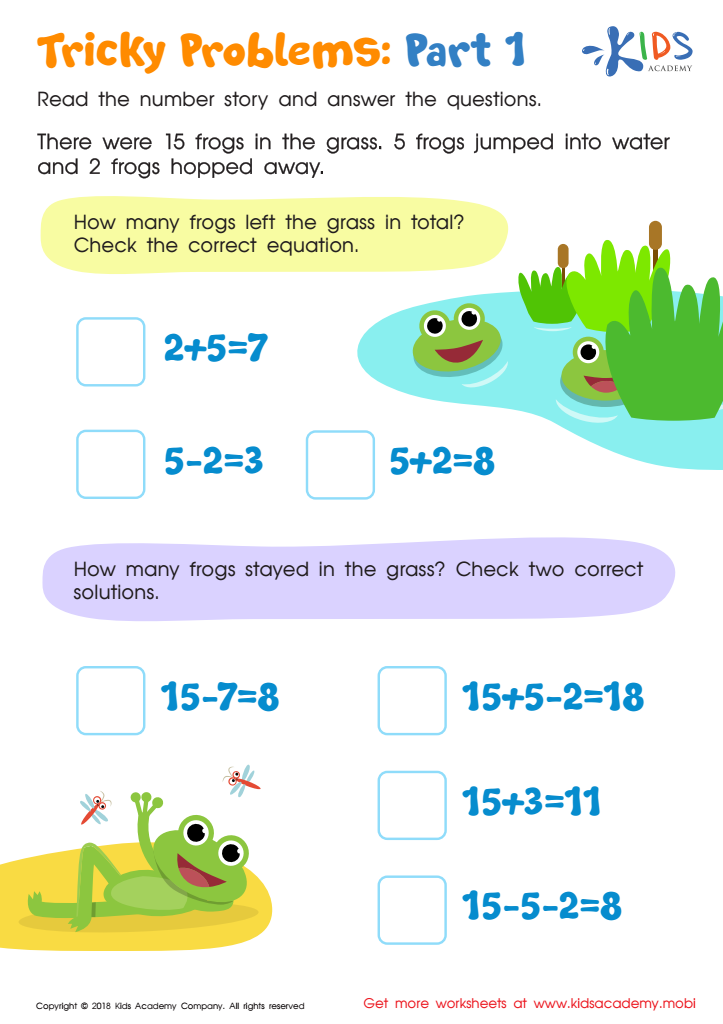
Tricky Problems Worksheet: Part 1
 Assign to My Students
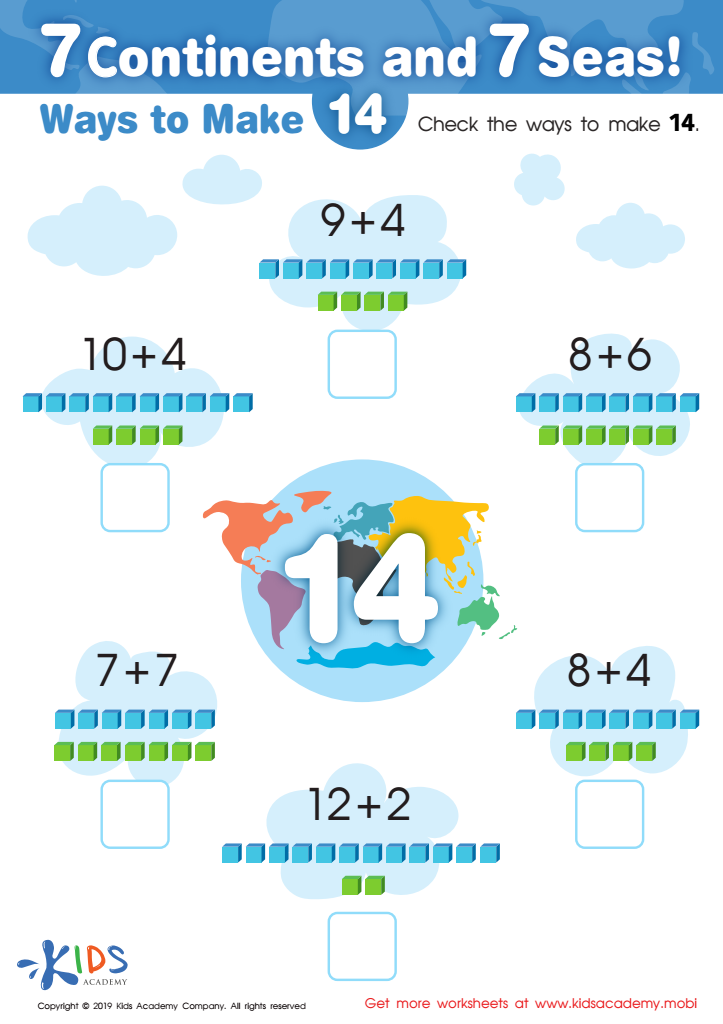
7 Continents and 7 Seas Worksheet
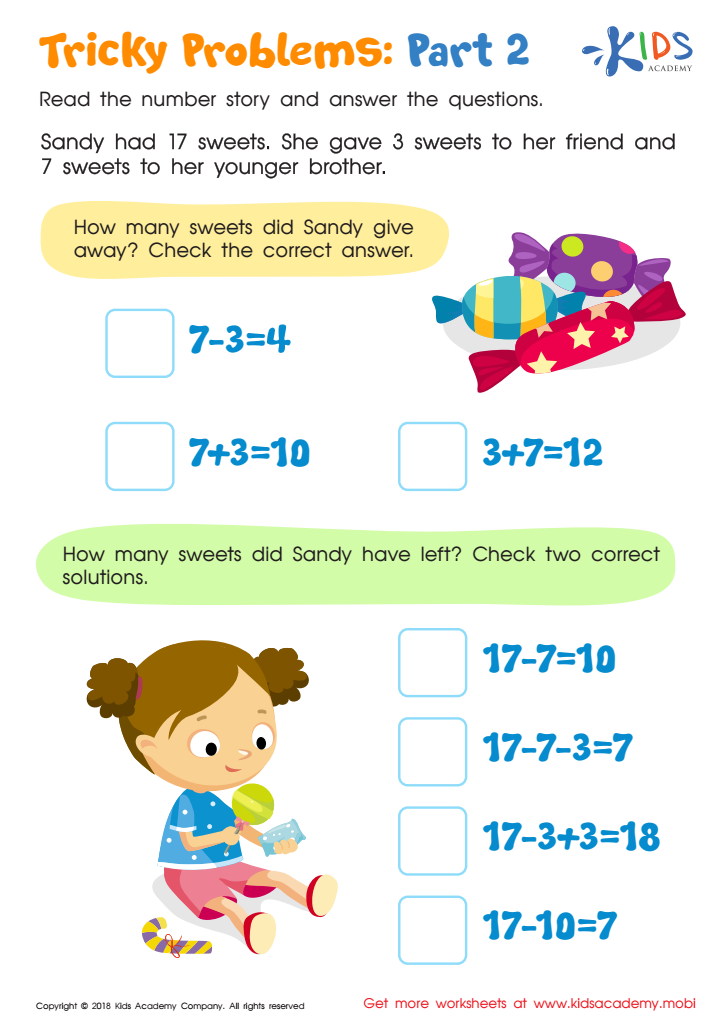
Tricky Problems Worksheet: Part 2
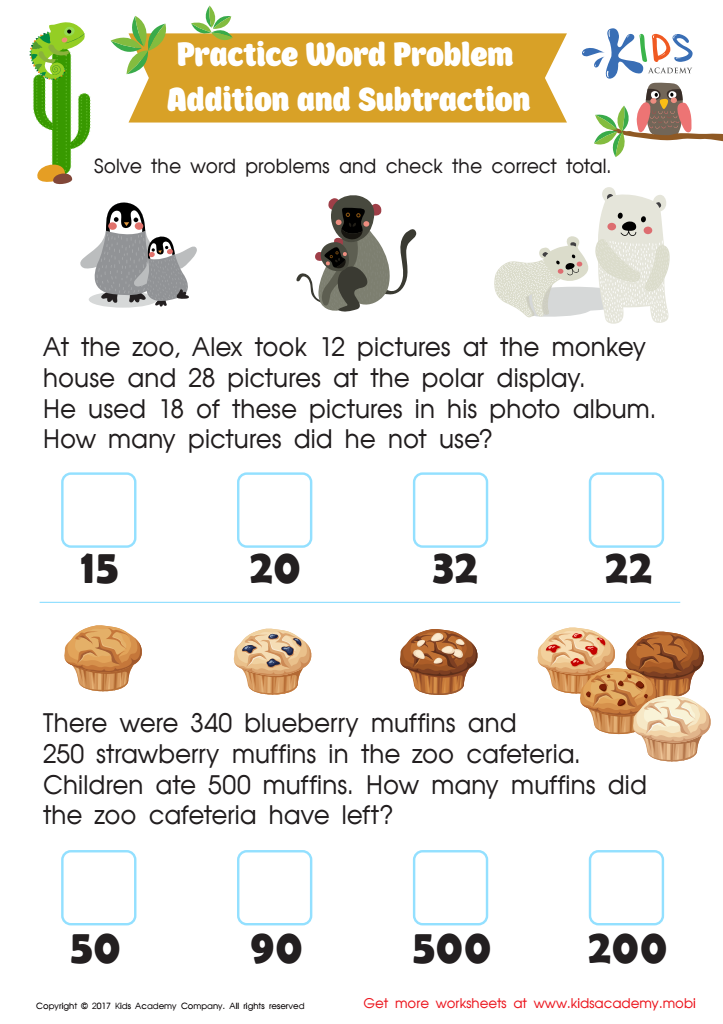
Addition and Subtraction: Word Problems Worksheet








Parents and teachers should care about problem-solving skills in normal addition for children aged 3-5 because these foundational skills are integral to early childhood development and future learning. At this stage, children are naturally curious and eager to explore mathematical concepts. Teaching them problem-solving through addition fosters critical thinking, enhances cognitive abilities, and strengthens their understanding of numbers and relationships in their everyday lives.
As children engage with addition problems, they learn to navigate challenges, adapt their strategies, and develop persistence—key components of effective problem-solving. This encourages a growth mindset, where children see themselves as capable learners. Additionally, early mathematical experiences create a solid base for later subjects, such as subtraction, multiplication, and problem solving in real-world contexts.
Moreover, nurturing these skills collaboratively allows children to work together, developing social skills, communication, and teamwork. Parents and teachers can use fun activities, games, and storytelling to create engaging experiences that make learning enjoyable. Fostering problem-solving skills in addition not only enhances early math proficiency but also builds confidence and resilience, empowering children as they progress in their educational journey. Ultimately, successful problem-solvers today become capable thinkers and innovators tomorrow.