Basic arithmetic skills Normal Math Worksheets for Ages 3-5
3 filtered results
-
From - To
Discover our engaging Normal Math Worksheets designed specifically for children aged 3-5, focusing on building basic arithmetic skills. These worksheets provide a fun and interactive way to introduce young learners to essential math concepts, including addition, subtraction, counting, and number recognition. With colorful illustrations and simple exercises, children will develop a strong foundation in math while enhancing their problem-solving abilities. Ideal for parents and educators, our worksheets encourage hands-on learning and creativity, making math enjoyable for early learners. Explore our collection today and support your child's math journey with easy-to-use, printable resources that foster early academic success!
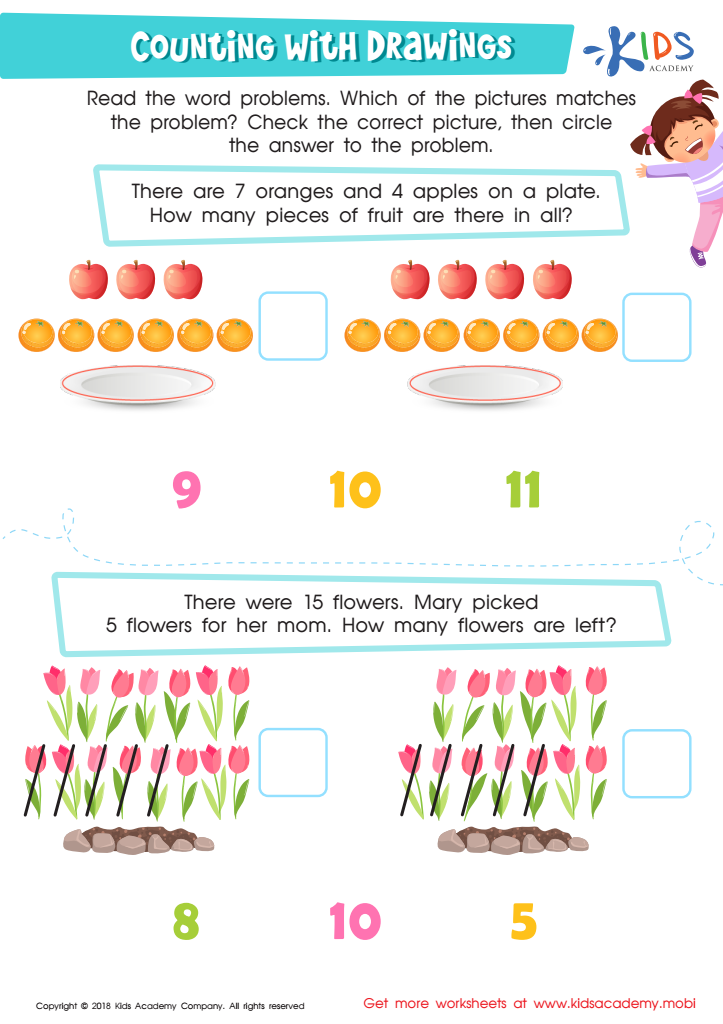
Counting with Drawings: Fruits & Chocolates Worksheet
 Assign to My Students
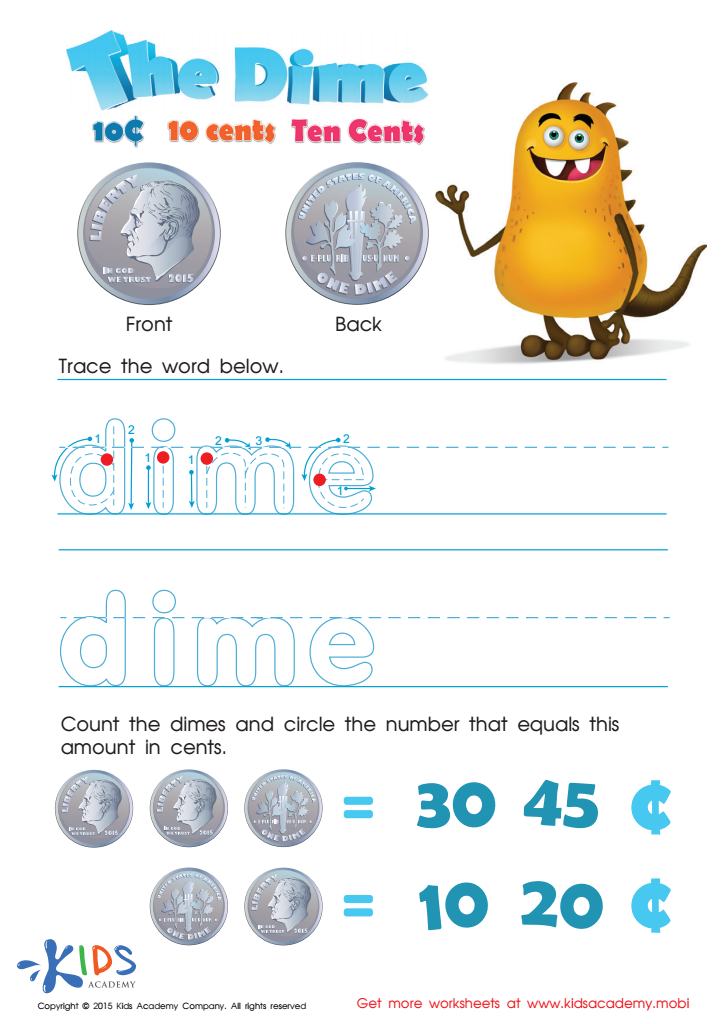
Ten Cents or the Dime Money Worksheet
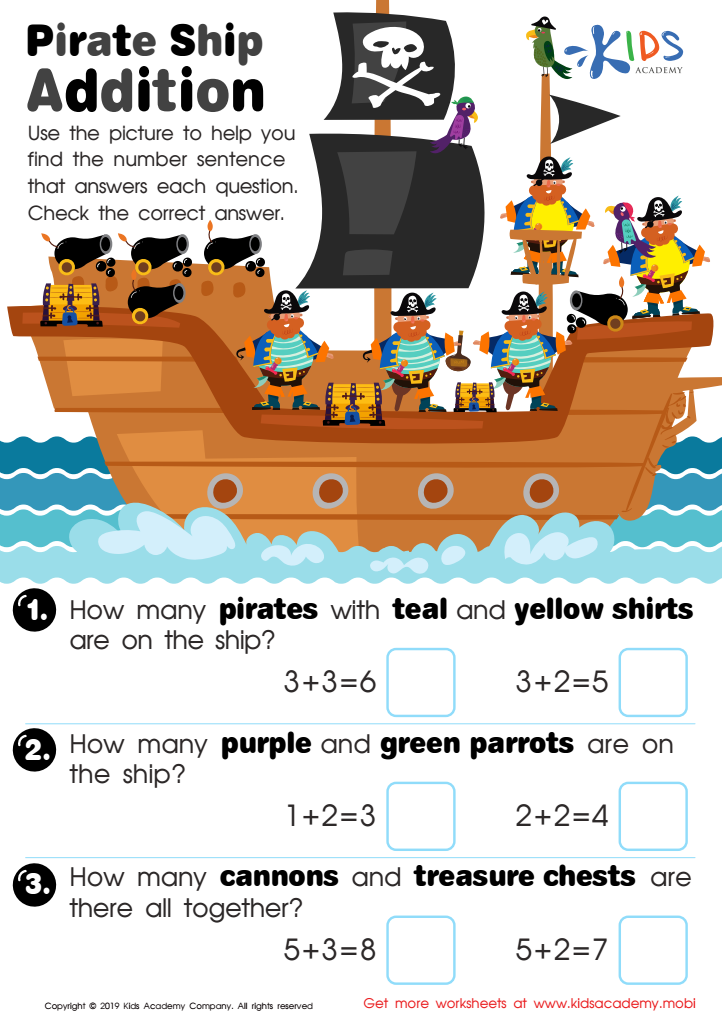
Pirate Ship Addition Worksheet








Basic arithmetic skills are foundational for young learners aged 3-5, making it essential for parents and teachers to emphasize their importance. At this stage, children are naturally curious and eager to engage with the world around them. Introducing foundational math concepts through playful activities can enhance cognitive development and problem-solving skills.
Learning basic arithmetic, such as counting, addition, and subtraction, equips children with the tools to understand everyday situations, like sharing toys or counting snacks. These skills lay the groundwork for more complex mathematical concepts they'll encounter later in school. Furthermore, early math competence is closely linked to lifelong learning attitudes; children who master these skills early on often develop a positive mindset towards math subjects in the future.
Additionally, engaging in arithmetic activities fosters critical thinking and spatial reasoning, skills that are valuable across various disciplines. Parents and teachers can create enriching environments through games, storytelling, and hands-on activities, instilling a love for math from an early age. Ultimately, developing basic arithmetic skills nurtures children’s confidence and curiosity, preparing them not just for later academic challenges but for everyday problem-solving and decision-making throughout their lives.








