Understanding directions Normal Math Worksheets for Ages 3-5
3 filtered results
-
From - To
"Understanding Directions Normal Math Worksheets for Ages 3-5" is a fantastic resource for young learners to enhance their math skills while mastering basic direction concepts. These printable worksheets by Kid’s Academy are thoughtfully designed to cater to children aged 3-5, offering engaging activities that help them grasp the fundamentals of following directions. Kids will explore various tasks like identifying left and right, understanding spatial relationships, and completing simple sequences. The engaging and playful exercises foster essential learning skills in a fun, interactive manner, making early math experiences enjoyable and educational for preschoolers. Perfect for homeschooling or supplemental practice!
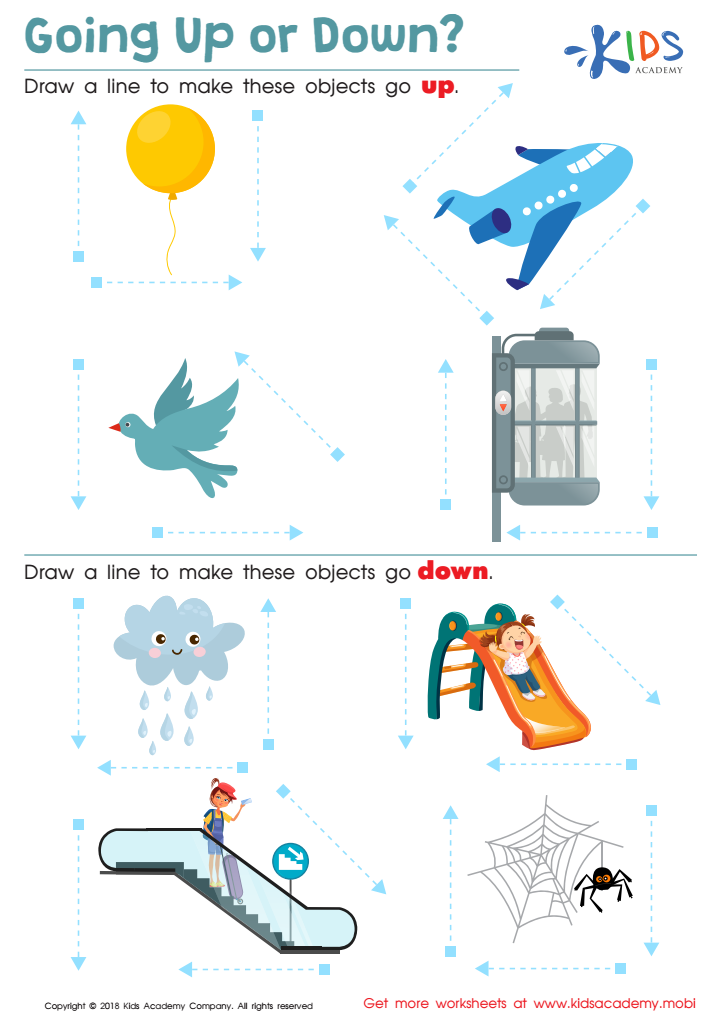
Going up or Down? Worksheet
 Assign to My Students
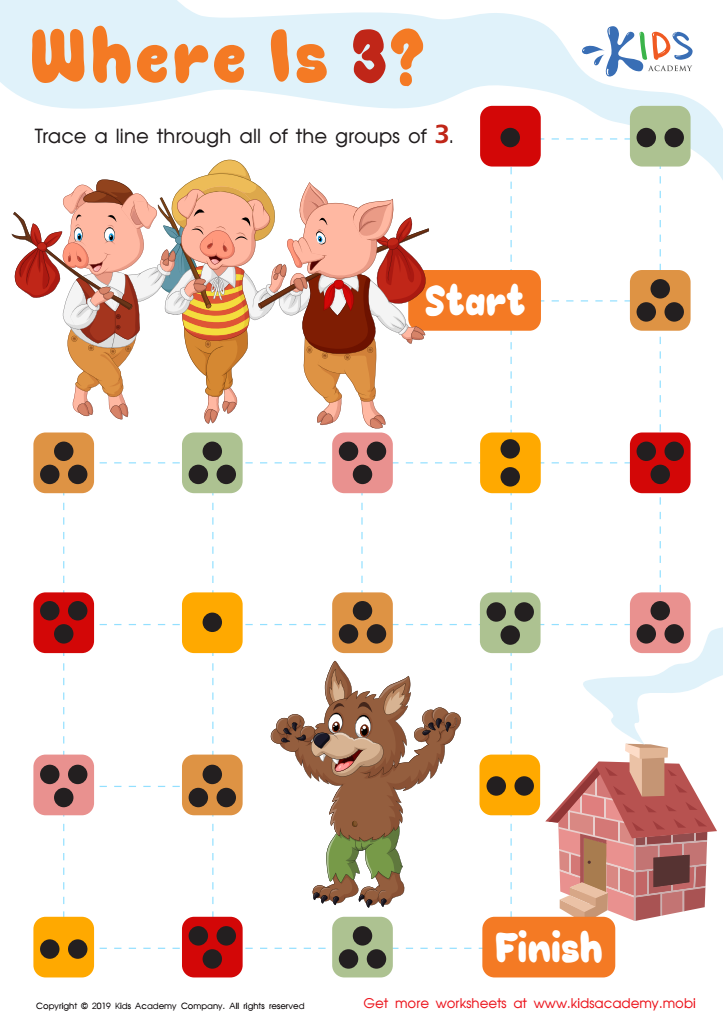
Where Is 3? Worksheet
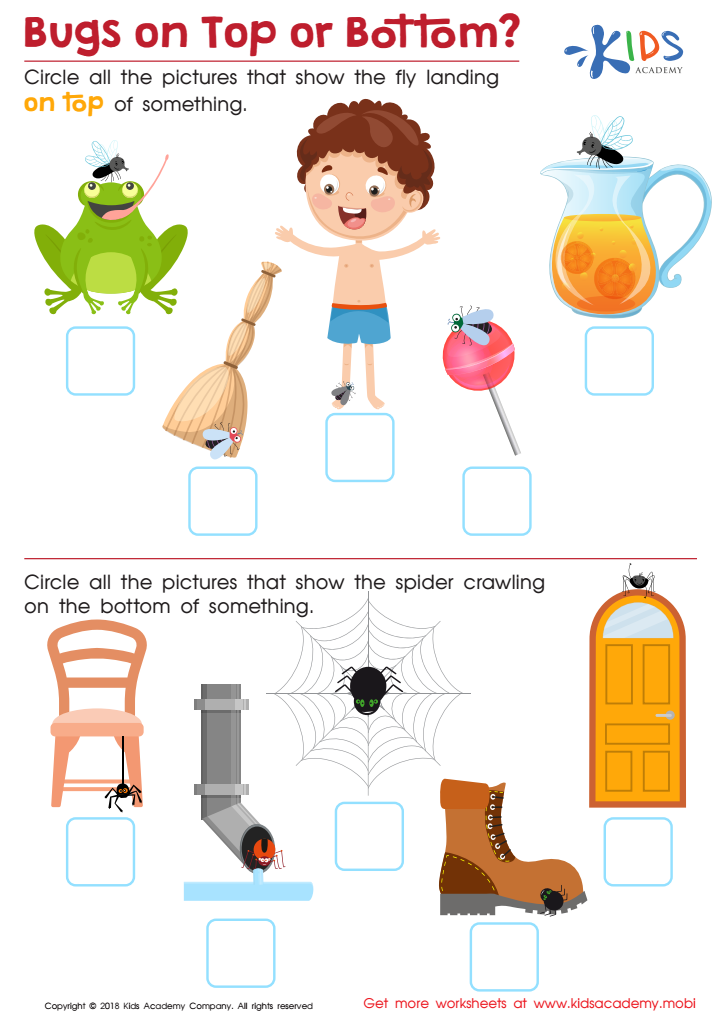
Bugs on Top or Bottom? Worksheet







.jpg)
Understanding directions in normal mathematics is crucial for children aged 3-5 as it lays a foundation for their cognitive and academic development. At this early age, children are developing critical thinking and problem-solving skills which are essential for their later success in school and everyday life. By learning to understand directions, they practice following steps in a sequence, discerning patterns, and making connections, which underpin mathematical thinking.
Moreover, early math skills, including the ability to understand directions, are strongly linked to later academic performance, not just in math but also in reading and other subjects. Following directions can help with activities such as sorting objects by different attributes, recognizing shapes, and understanding concepts of size and measurement—all fundamental math skills.
For parents and teachers, fostering an environment where following directions is emphasized means engaging in everyday activities that build these skills—like playing simple games, cooking, or tidying up toys. It also means being aware and intentional in using language that guides children through sequences and steps. When children follow directions in a supportive and structured environment, they gain confidence and a sense of achievement, motivating them to tackle more complex tasks in the future. Understanding directions is thus essential for early childhood math readiness which, in turn, supports broad educational success.








