Understanding Quantities Normal Math Worksheets for Ages 3-5
3 filtered results
-
From - To
Explore our "Understanding Quantities Normal Math Worksheets" designed specifically for children ages 3-5. These engaging worksheets focus on developing foundational math skills by introducing young learners to the concept of quantities. With fun illustrations and interactive exercises, children will learn to recognize, compare, and quantify objects in their environment. Our carefully crafted activities not only enhance numerical comprehension but also support cognitive development in early learners. Perfect for at-home learning or classroom use, these worksheets make math enjoyable and accessible for toddlers and preschoolers. Give your child a head start in mathematics with our vibrant and effective resources today!
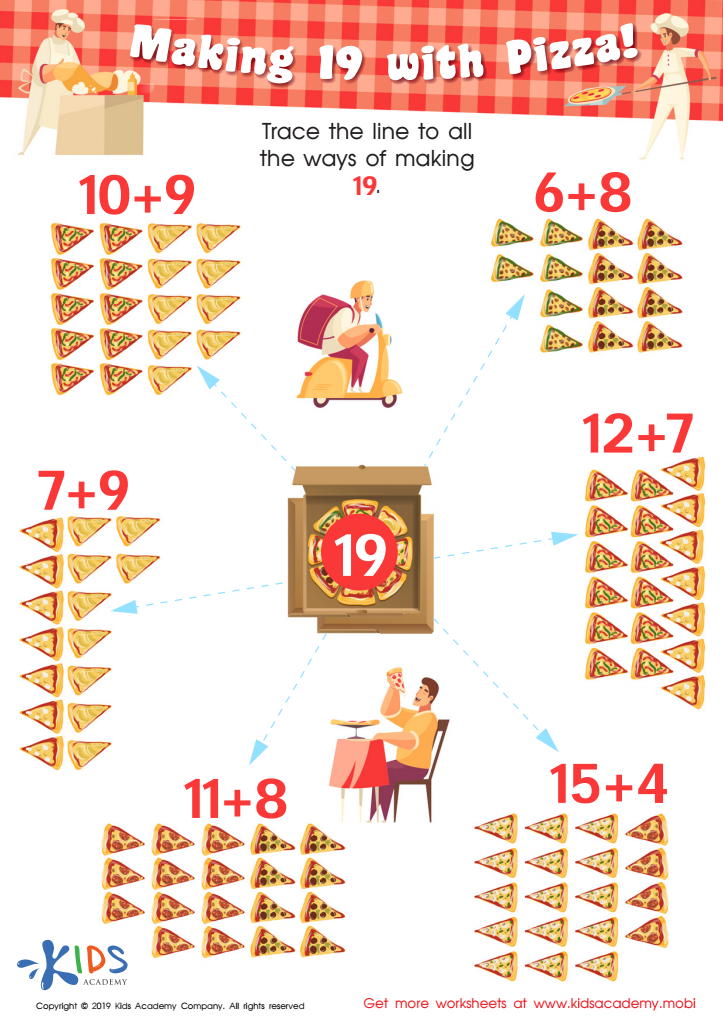
Making 19 with Pizza! Worksheet
 Assign to My Students
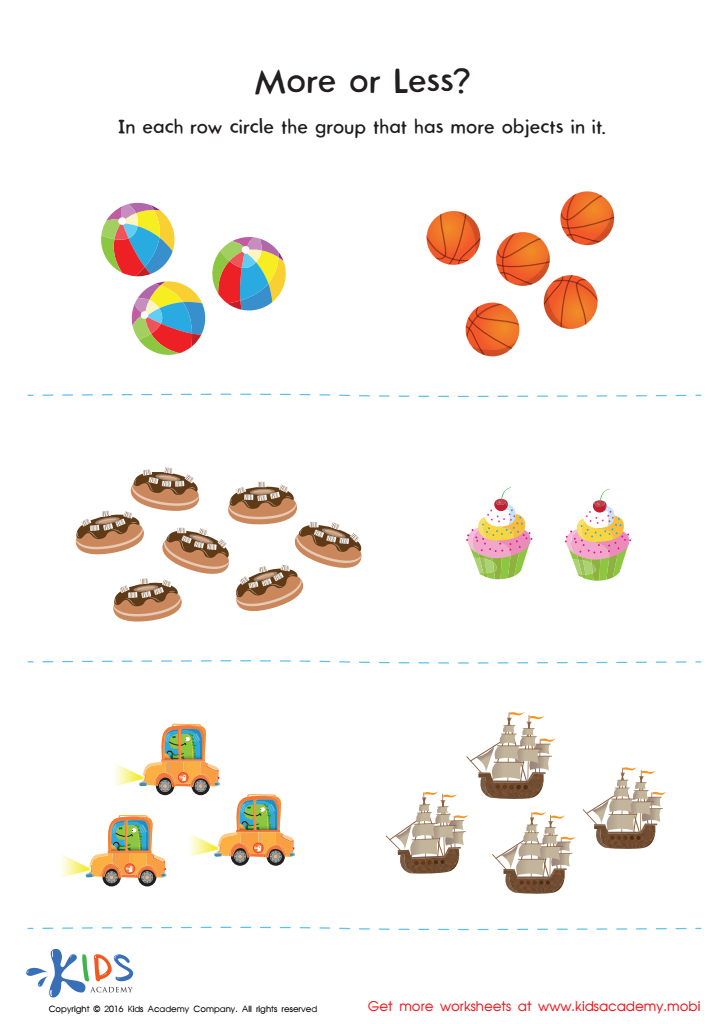
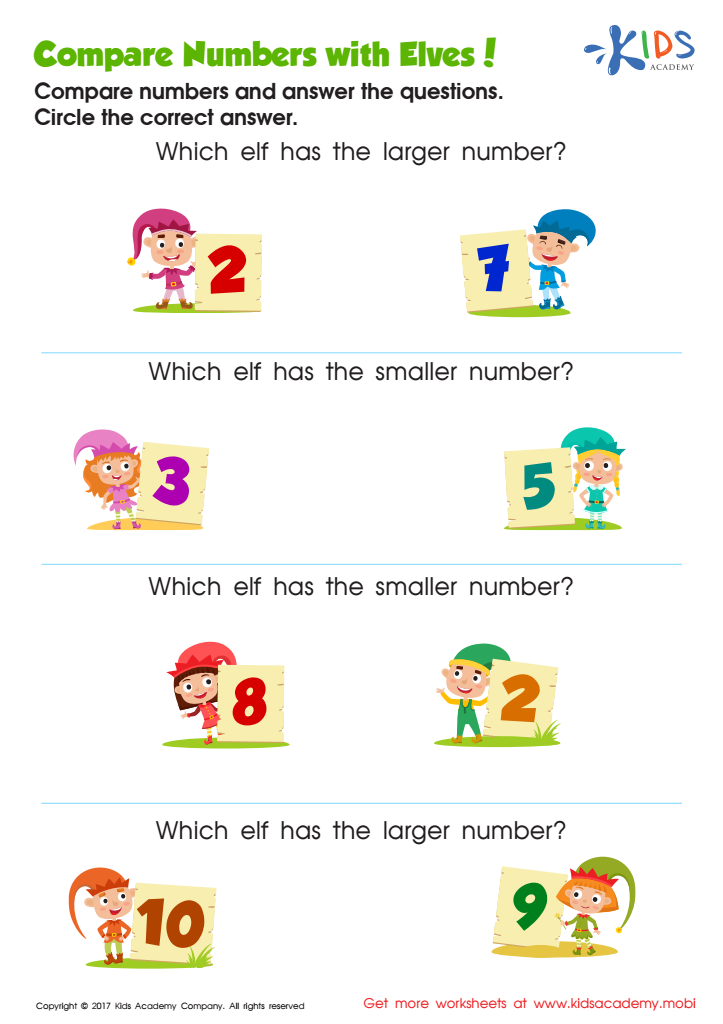
Comparing Numbers Worksheet for Kindergarten








Understanding quantities is a fundamental concept in early childhood math that parents and teachers should prioritize for children aged 3-5. At this age, children are naturally curious and eager to learn, making it a critical time for them to develop foundational mathematical skills. This early introduction to math concepts not only aids in cognitive development but also helps children understand the world around them.
Quantities form the basis for more complex mathematical ideas, promoting logical thinking and problem-solving skills. By engaging in activities that help children recognize and compare different amounts—be it through counting objects, sorting, or simple games—it reinforces their ability to make connections between numbers and real-life situations.
Furthermore, a strong grasp of quantities can ease a child's transition into school and subsequent math-learning stages. It fosters confidence in their abilities, paving the way for positive attitudes toward learning. Additionally, instilling these skills at an early age can help reduce math anxiety later on. Ultimately, by focusing on quantities during these formative years, parents and teachers empower children not just in math but in critical thinking, which is essential for their long-term educational success and personal development.








