Counting skills Normal Numbers 0–10 Worksheets for Ages 3-5
19 filtered results
Difficulty Level
Grade
Age
-
From - To
Subject
Activity
Standards
Help your child build a strong foundation in math with our "Counting Skills Normal Numbers 0–10 Worksheets for Ages 3-5"! These engaging and educational worksheets are designed specifically for young learners to enhance their counting abilities. Featuring colorful graphics and simple activities, kids will have fun while mastering numbers 0-10. Perfect for preschool and kindergarten students, our worksheets support essential skills such as number recognition, sequencing, and basic arithmetic. Set your child up for math success with these handy and enjoyable worksheets. Ideal for both classroom and home use, they are a great addition to any early learning curriculum.
Favorites
With answer key
Interactive
Counting Cupcakes Worksheet
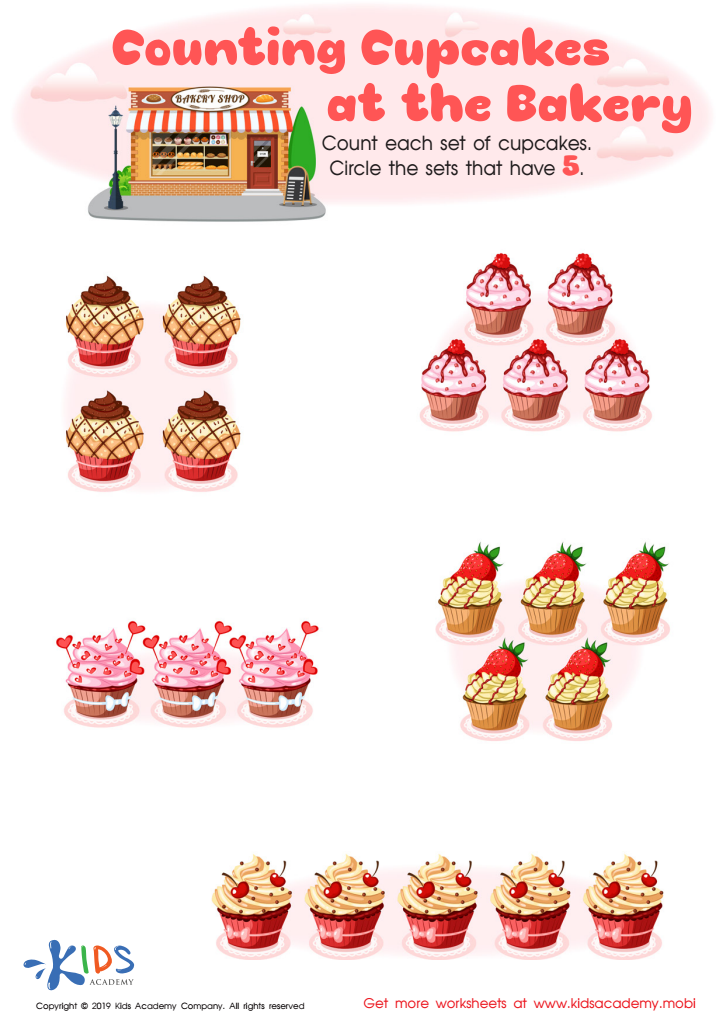
This fun worksheet for preschoolers uses cupcakes to teach counting. Kids must circle the groups of cupcakes that add up to 5. The delicious treats make learning fun and engaging!
 Assign to My Students
Counting Cupcakes Worksheet
Worksheet
Count and Trace 7 – 10 Worksheet
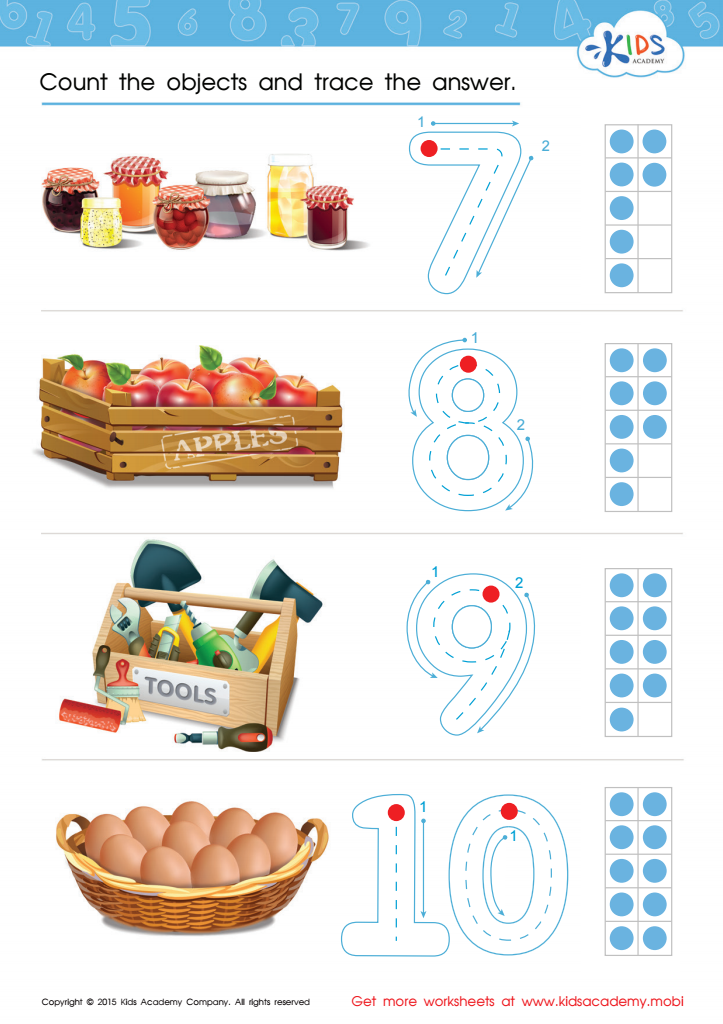
Let your child develop a lifelong love of math with Kids Academy's printable math worksheet based on the innovative Singapore Math method. It uses funny pictures and graphs to help solve math problems. Check out our amazing collection of free printable math worksheets now!
Count and Trace 7 – 10 Worksheet
Worksheet
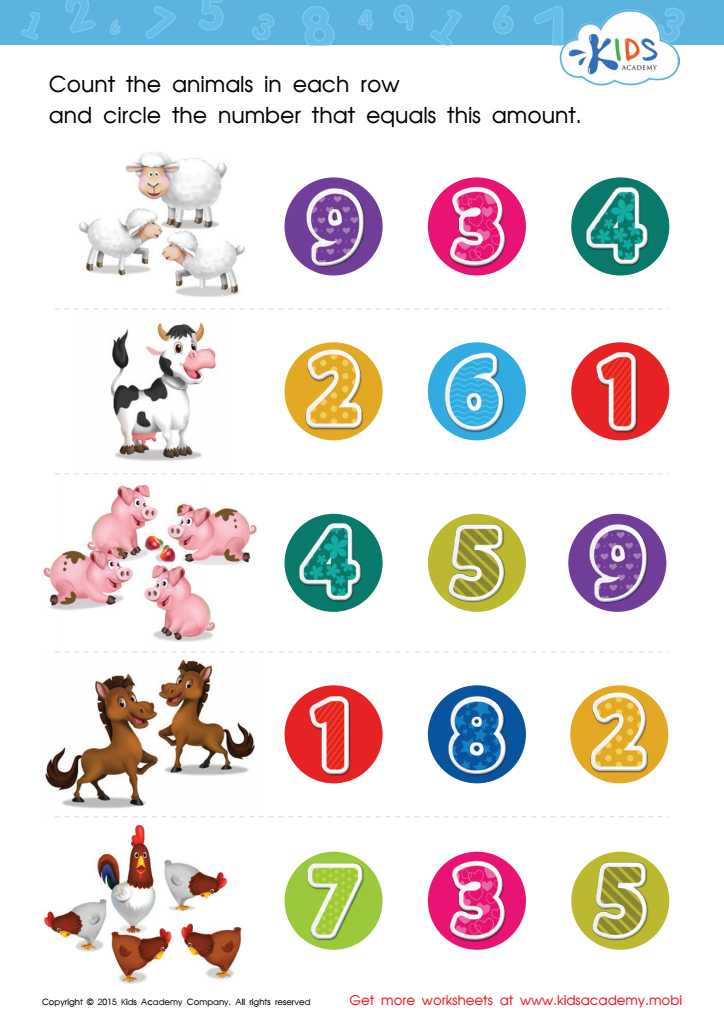
Count and Match 1 – 5 Math Worksheet
Find the colorful worksheet aimed to help your little learner develop their math skills. Count the cute animals and identify the correct numbers based on the Singapore Math method. This worksheet is a fantastic way to start your kid on their mathematical journey.
Count and Match 1 – 5 Math Worksheet
Worksheet
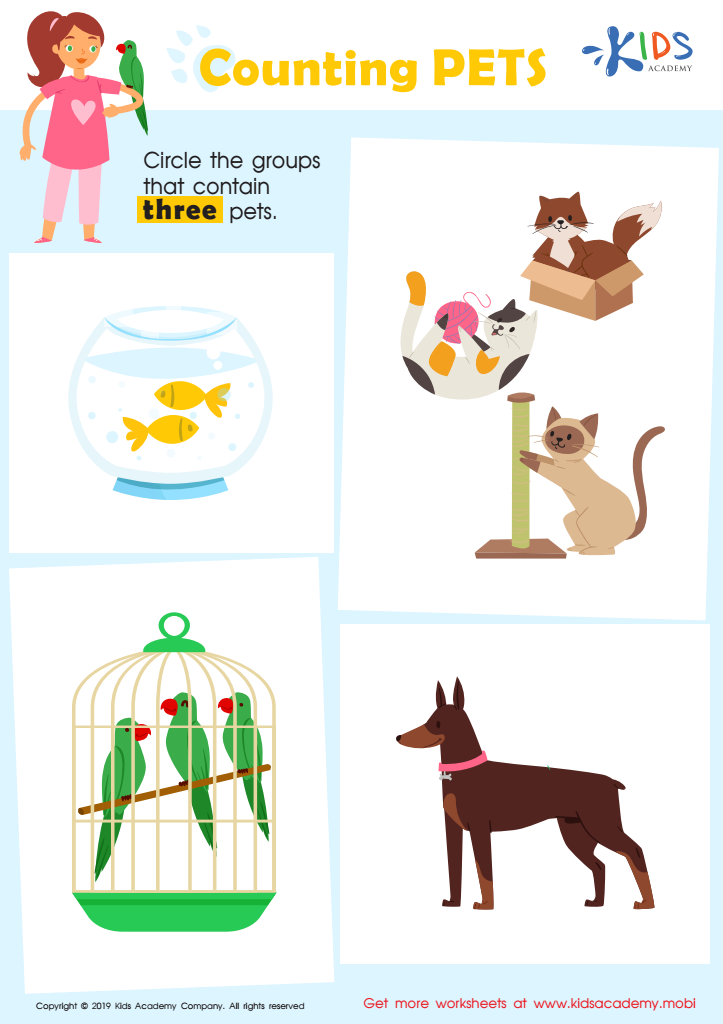
Counting Pets Worksheet
Kids adore their pets, making this free pet counting worksheet the perfect way to combine something they love with math skills. They'll count the number of pets, circle the pictures with three pets, and use one-to-one picture representation to help. This exercise will cultivate their learning and reinforce their love of animals!
Counting Pets Worksheet
Worksheet
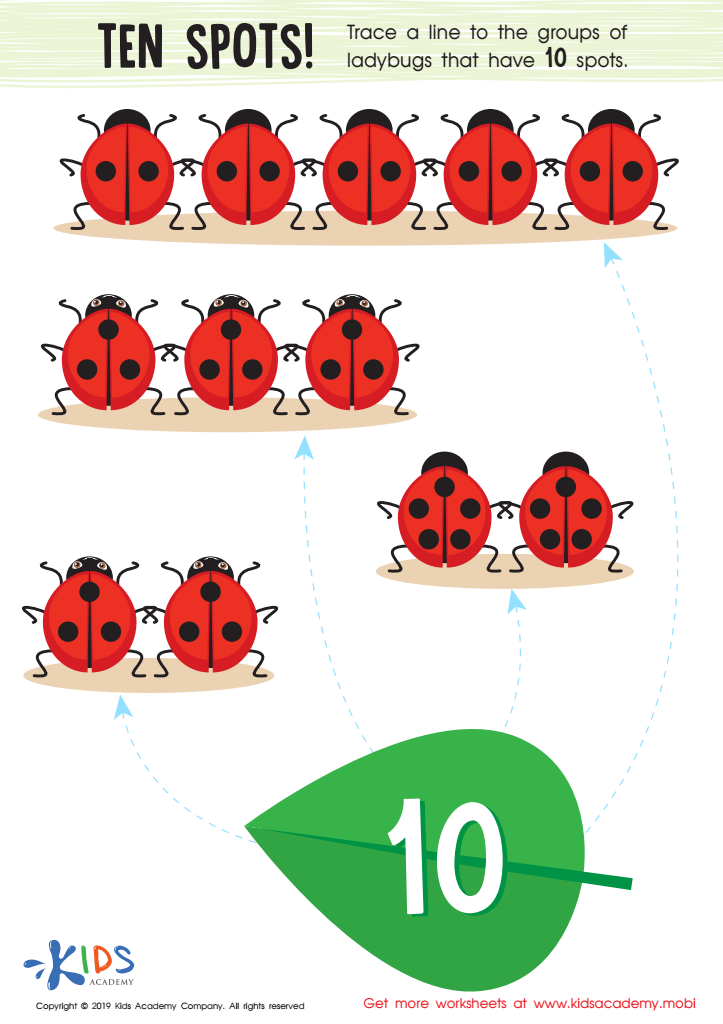
Ten Spots Worksheet
Kids love ladybugs! Ask them to tell you what stands out most--the spots. Show them a picture and help them count the spots. Trace a line to the group with 10 spots for a fun counting lesson.
Ten Spots Worksheet
Worksheet
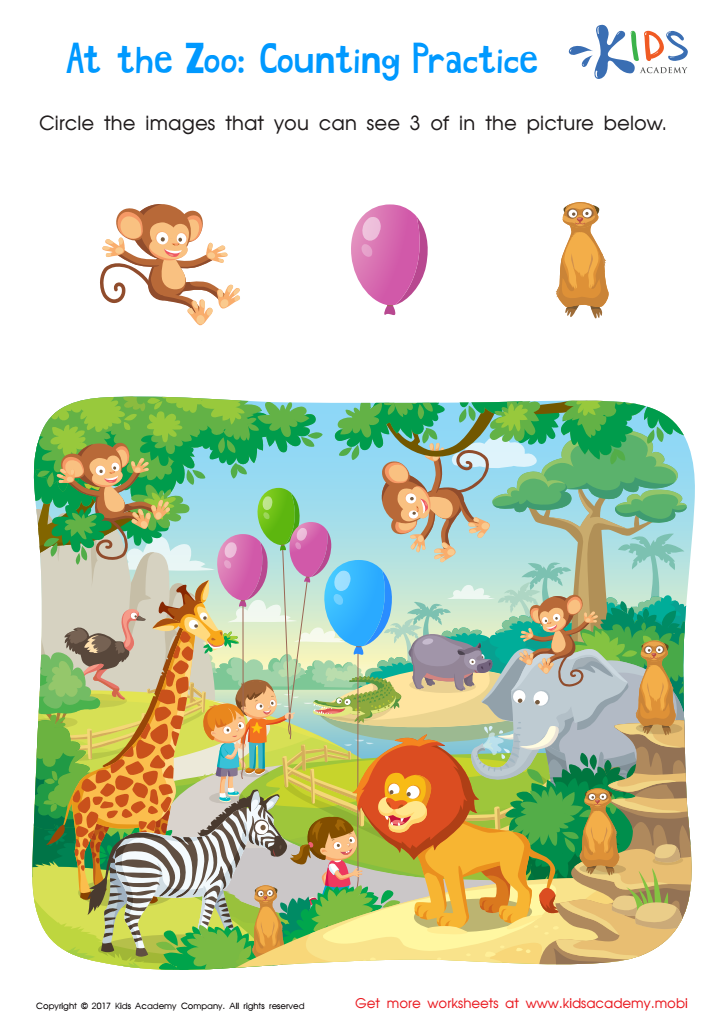
At the Zoo: Counting Practice Worksheet
This zoo-themed worksheet is perfect for practicing early counting skills and following directions. Your child will rule out incorrect answers and use problem solving to find images with duplicates. Fun and educational, this worksheet will get your preschooler ready for early math!
At the Zoo: Counting Practice Worksheet
Worksheet
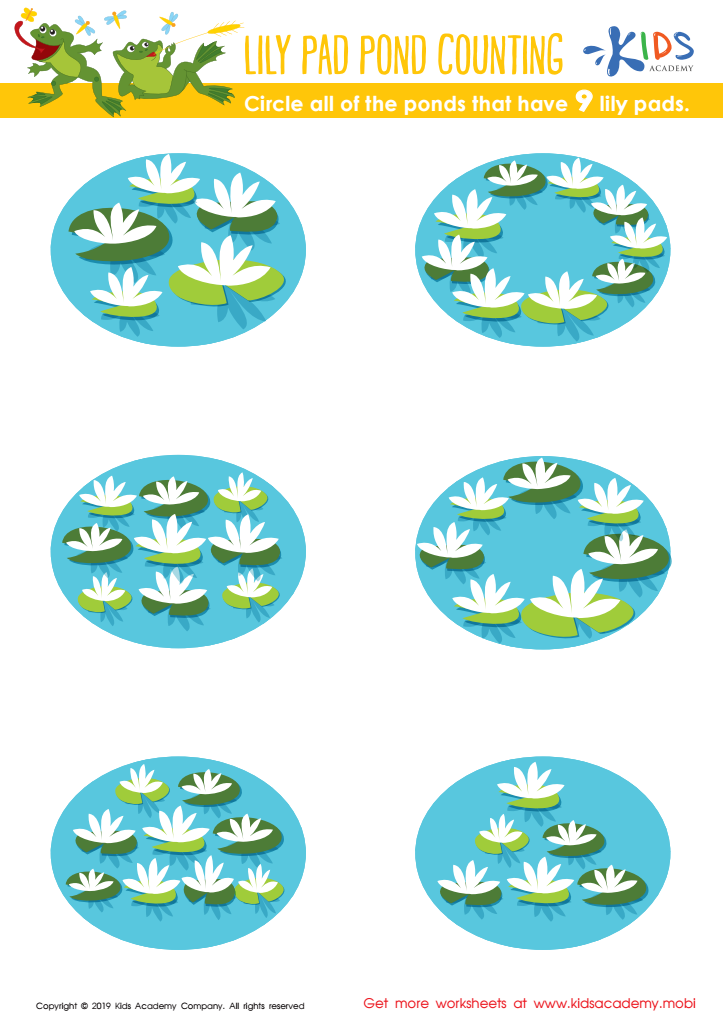
Lily Pad Pond Counting Worksheet
Counting can be fun with this colorful worksheet. Guide and be patient with your kids as they write numbers and count the six groups of lily pads. Help them circle the ponds with 9 lily pads, and watch them learn better and faster.
Lily Pad Pond Counting Worksheet
Worksheet
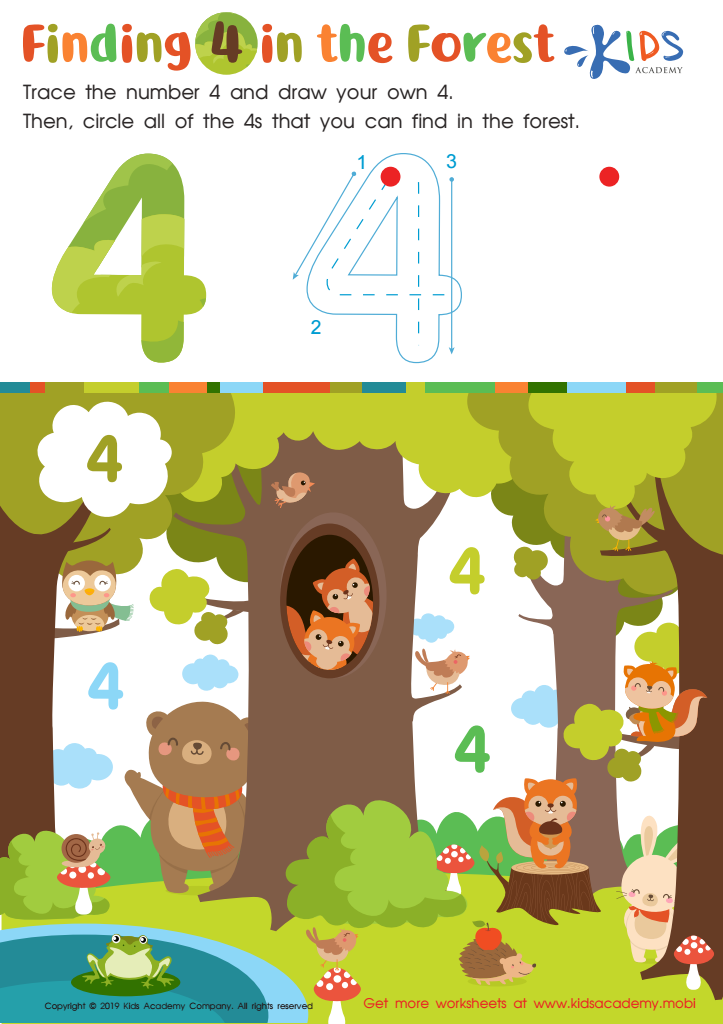
Finding 4 in the Forest Worksheet
Before starting, have your kids count as high as they can. Ask them to identify the setting and point out the 4s. Trace 4 and draw your own. Help your kids circle all the 4s they can find in the forest. How far can they count? How well did they find the hidden 4s?
Finding 4 in the Forest Worksheet
Worksheet
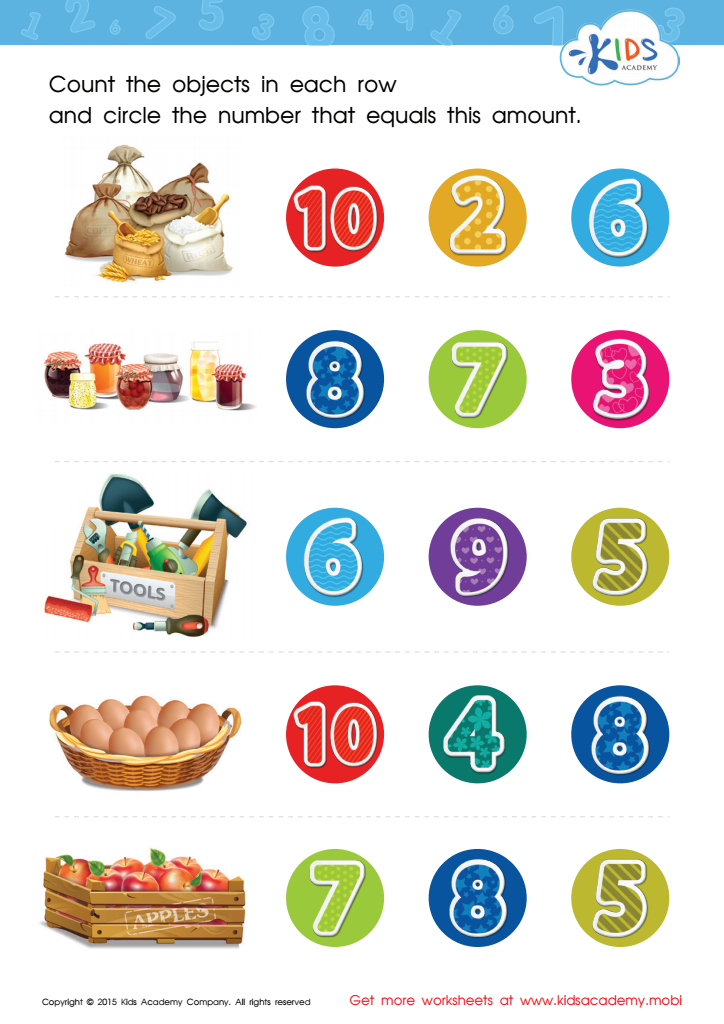
Count and Match 6 – 10 Math Worksheet
Print this fun math worksheet for your kindergartener and help them practice counting up to ten! They'll draw a line from the objects to the correct numbers, visualizing the problem and having fun at the same time. Kids Academy offers more free printable worksheets. Get them now!
Count and Match 6 – 10 Math Worksheet
Worksheet
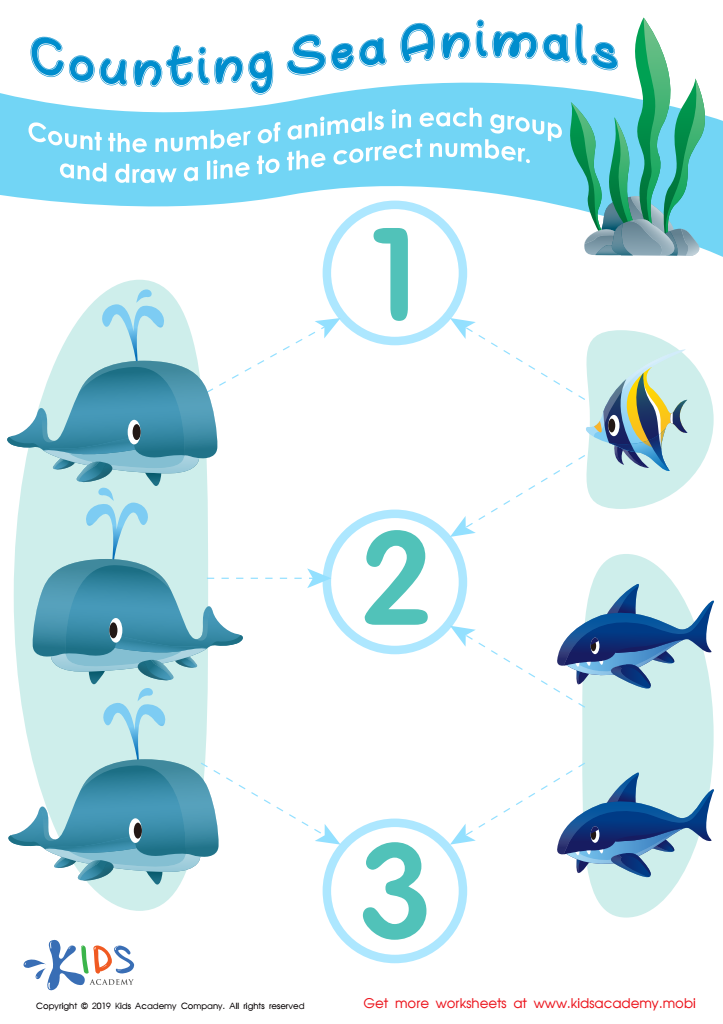
Counting Sea Animals Worksheet
Kids adore sea creatures for their captivating, unknown nature. Let them use this free worksheet to practice counting, where they match numbers to groups of animals. Through traceable lines, they'll easily connect numbers to sea creatures and learn math with vibrant, underwater fun!
Counting Sea Animals Worksheet
Worksheet
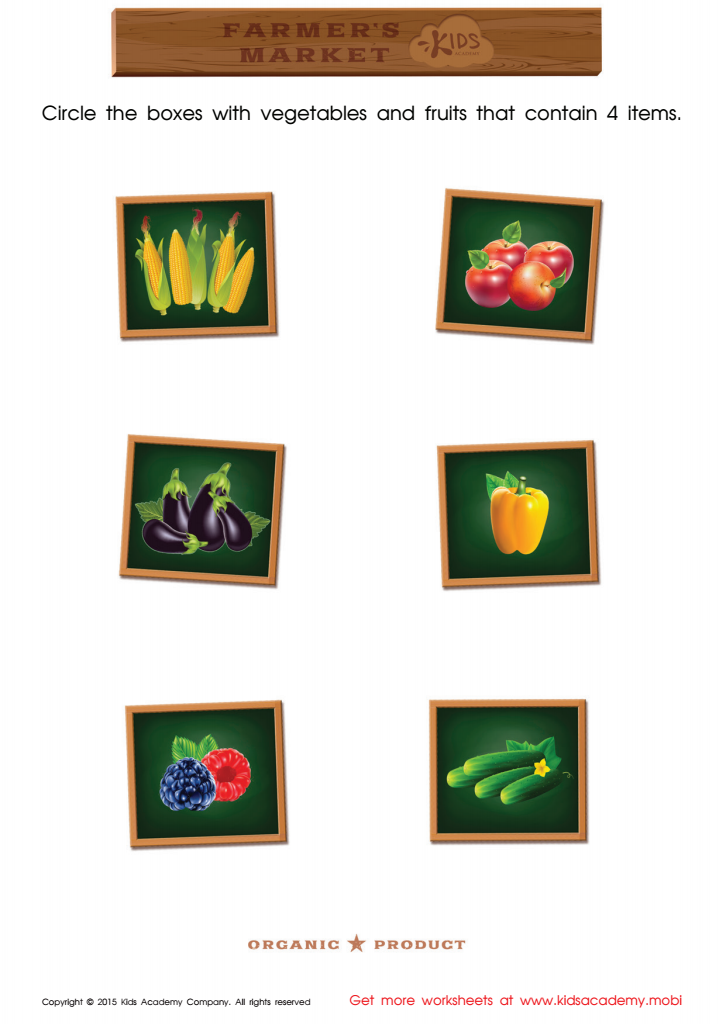
Count and Match Vegetables 2 – 8 Math Worksheet
Download this fun, colorful math worksheet from Kids Academy and help your kid improve their counting skills. Match the boxes to the same number of vegetables, using the pictures to visualize the problem. Get more free printables from Kids Academy by topic.
Count and Match Vegetables 2 – 8 Math Worksheet
Worksheet
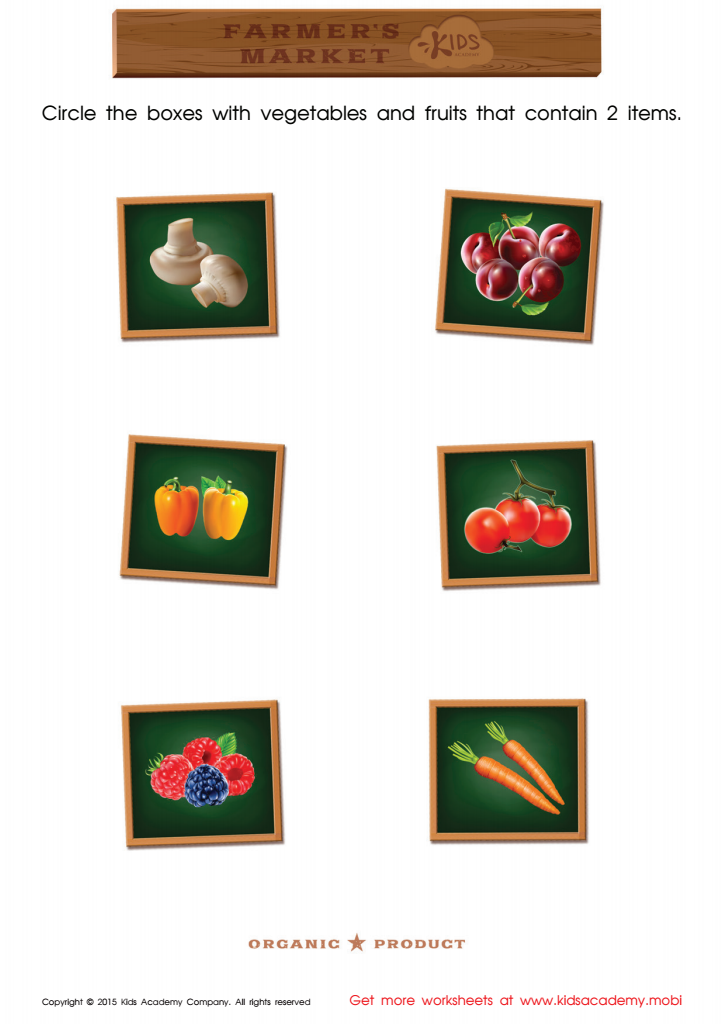
Count and Match Vegetables and Points Math Worksheet
Make your kids excited about math with this free printable kindergarten worksheet! Kids will count up to seven and match boxes with the same number of vegetables. Visualizing the task with this worksheet layout will entertain them while they practice math. Download additional worksheets by topic on Kids Academy.
Count and Match Vegetables and Points Math Worksheet
Worksheet
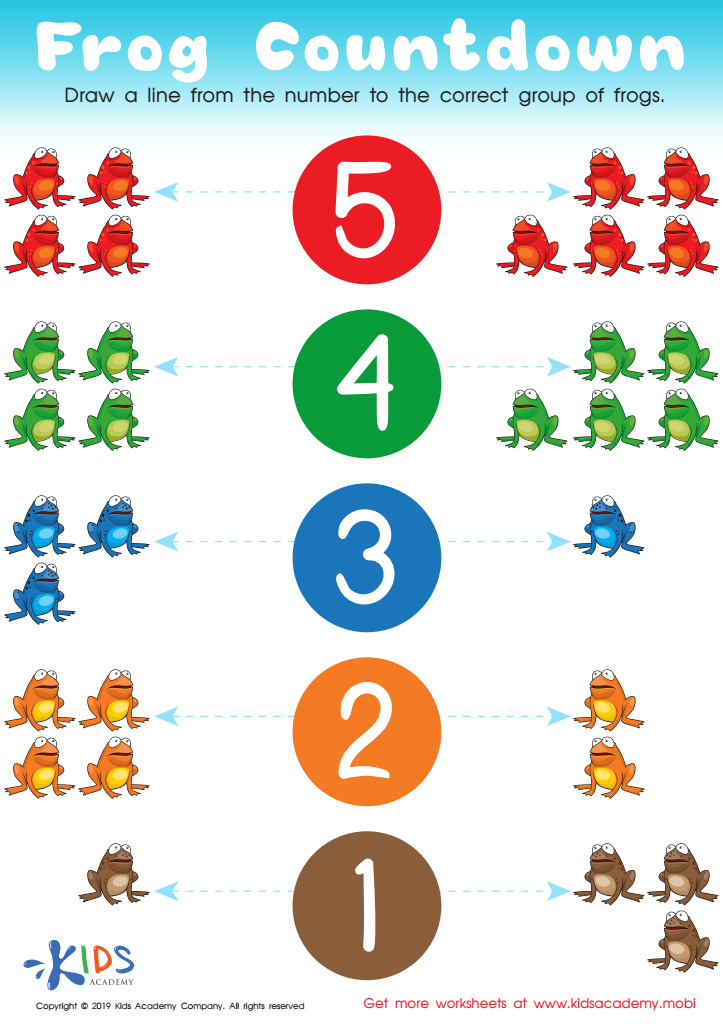
Frog Countdown Worksheet
Make learning fun for kids with traceable printouts! This exercise has kids counting frogs and drawing a line to match the number. Expand their knowledge with activities like this, beyond the basics they learn in school. Help them explore new ways of learning and make it enjoyable.
Frog Countdown Worksheet
Worksheet
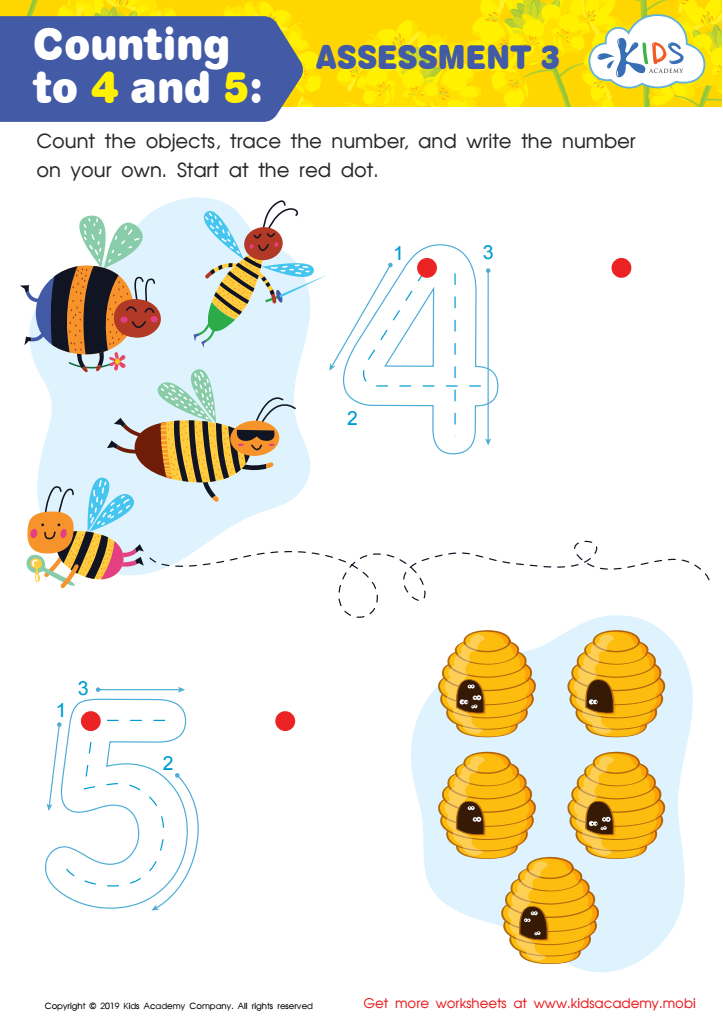
Counting to 4 and 5: Assessment 3 Worksheet
Help your kids learn to count with fun objects and items they like - like the bees in this worksheet. Ask them to count, trace the number, and write it down. Give guidance, starting at the red dot. This is an important first step in math and your kids will love it!
Counting to 4 and 5: Assessment 3 Worksheet
Worksheet
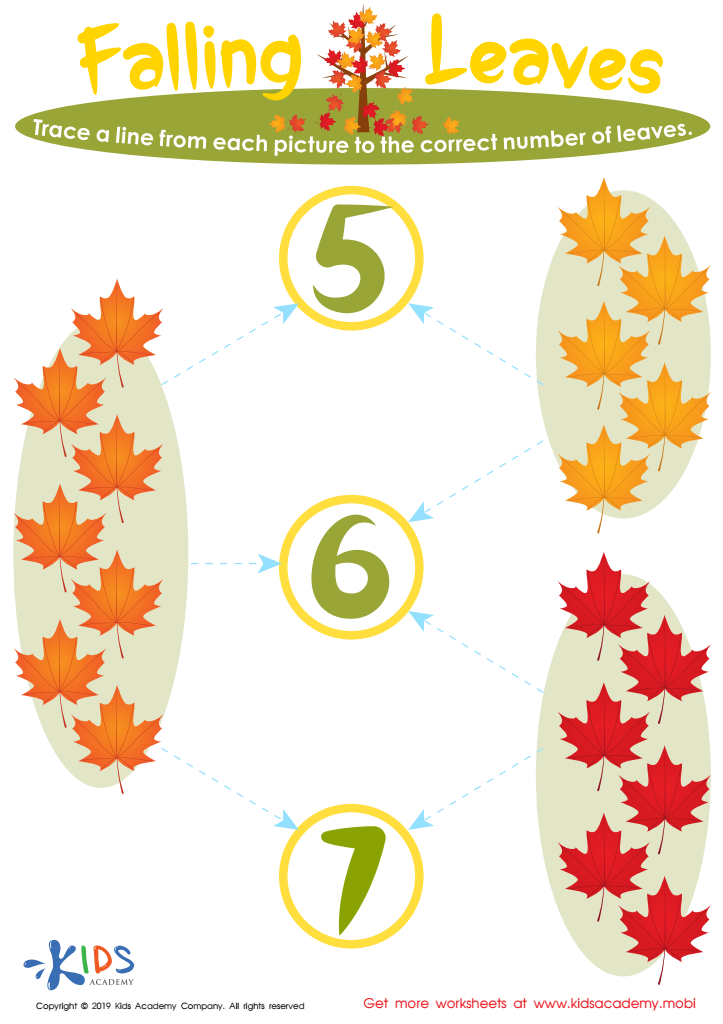
Falling Leaves Worksheet
Do your kids know the seasons? Ask them to name each one, then test their counting skills with a fun worksheet. Have them count from 1 to 10, then trace a line from each picture to the corresponding number of leaves. It's a great way to check their counting ability!
Falling Leaves Worksheet
Worksheet
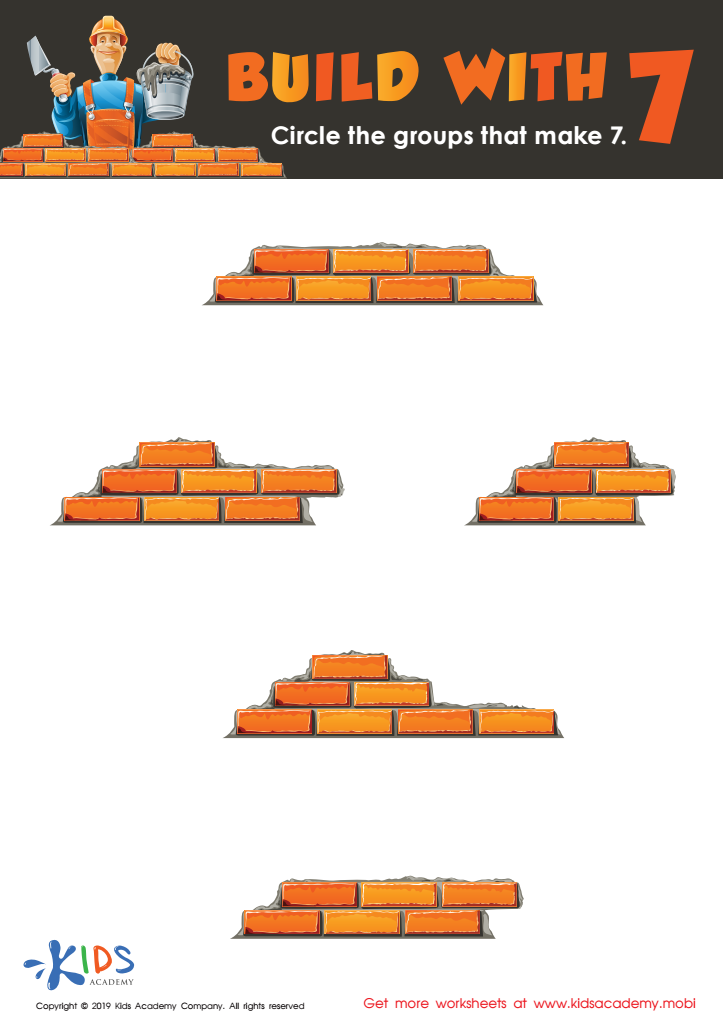
Build with 7 Worksheet
Kids learn best by practicing counting & number sense. This PDF helps them practice with the number 7, using picture representation. When they first start counting, picture representation provides an easy-to-understand & concrete way to remember things. Practice makes perfect!
Build with 7 Worksheet
Worksheet
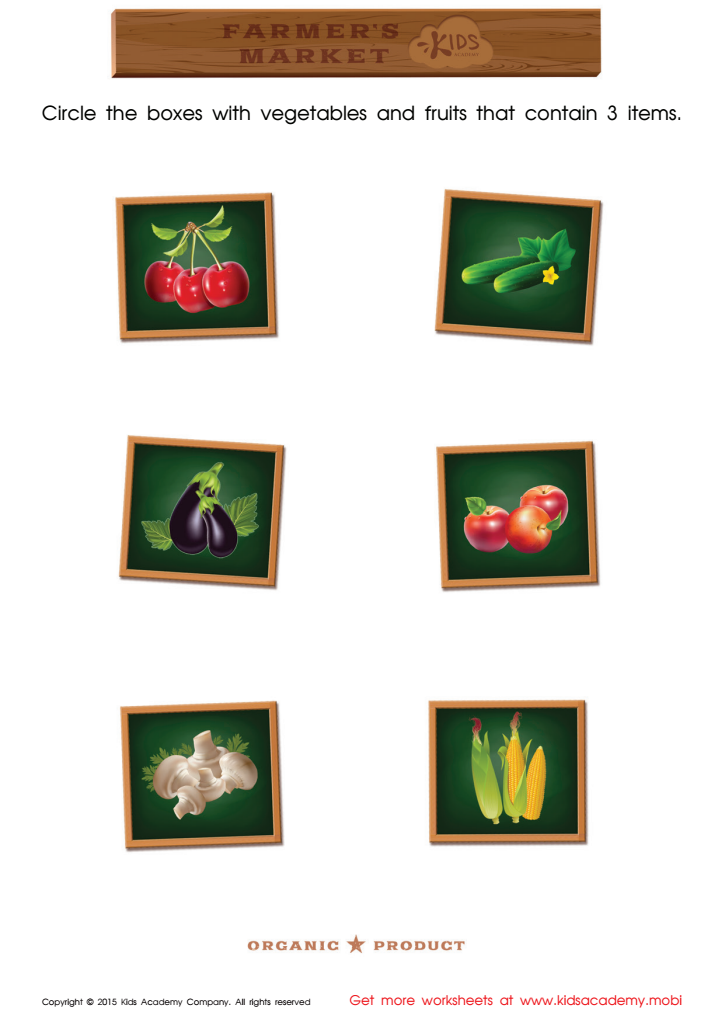
Count and Match Vegetables 1 – 5 Math Worksheet
Get your kindergartener to match the same number of vegetables with the boxes using this fantastic math worksheet. Using the Singapore approach, this printable worksheet makes math problems easy and fun for kids. Want more free worksheets? Click here for Kids Academy's selection!
Count and Match Vegetables 1 – 5 Math Worksheet
Worksheet
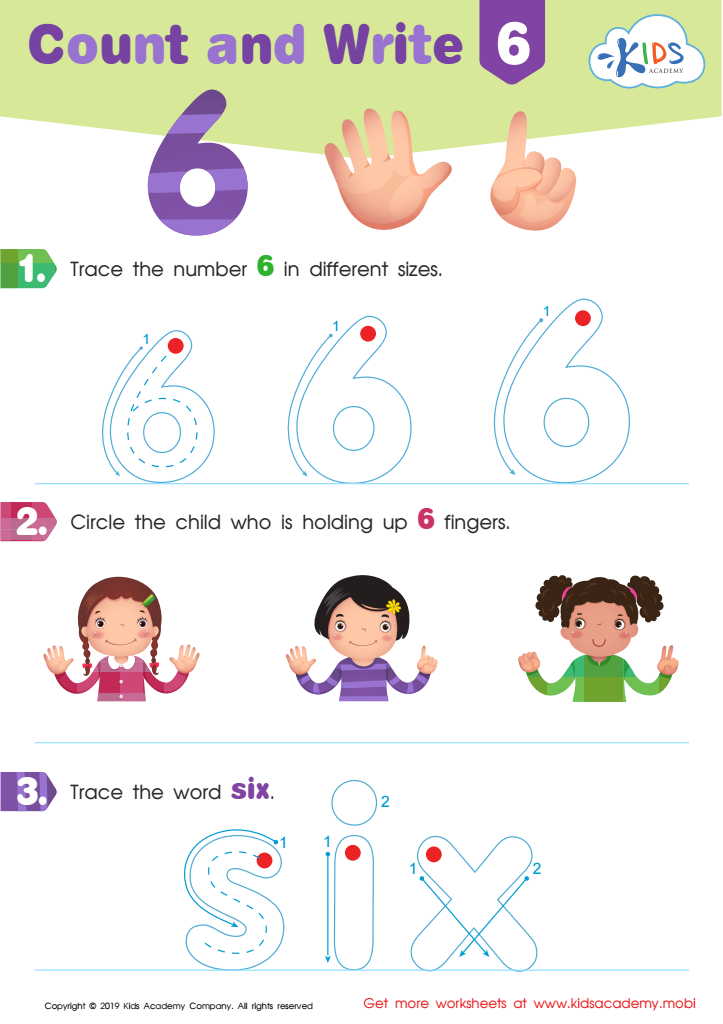
Count and Write 6 Worksheet
Kids begin math by mastering recognition skills. This worksheet helps with that by giving them practice writing "six" and the numeral 6, with guide dots and traceable lines. Giving kids multiple ways to learn the basics helps them build a strong math foundation.
Count and Write 6 Worksheet
Worksheet
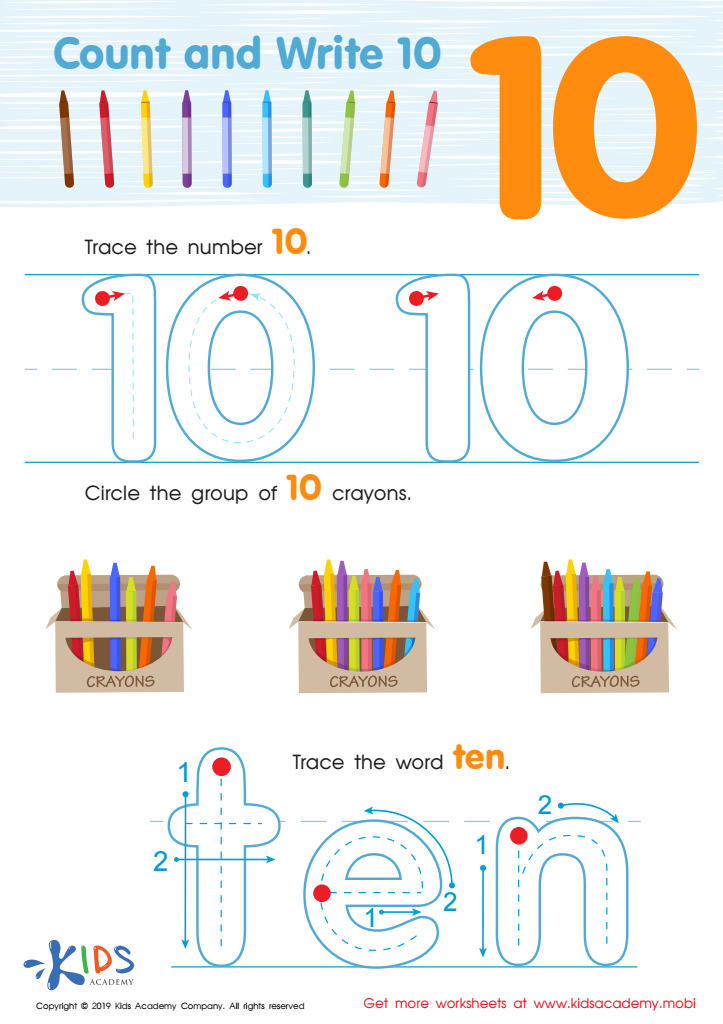
Count and Write 10 Worksheet
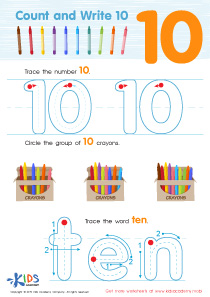
Help your child succeed by teaching them numbers! They should already know their 1,2,3s before their first day of school. This worksheet will give them the practice they need to write and count to 10. Get them to count and circle the 10 crayons, then trace the number 10. It's a great way to help them understand numbers and get a head start.
Count and Write 10 Worksheet
Worksheet
Join Kids Academy for Free
Who is primarily going to use this learning content?








Counting skills for normal numbers 0-10 are essential for children ages 3-5 as they serve as the foundation for all future math learning and everyday problem-solving skills. During these early years, children are highly receptive to learning and can quickly grasp basic numerical concepts through engaging activities. Being able to recognize, recite, and understand the sequence of numbers helps children develop their memory, focus, and ability to follow patterns—all crucial cognitive skills.
Moreover, early numeracy prepares children for more advanced mathematical operations. When children can count to 10 confidently, they’re ready to understand concepts such as addition, subtraction, and even the idea of quantity and comparison.
Counting also reinforces language development by introducing mathematical vocabulary. It's not just about rote memorization; kids learn words like "more," "less," "equal," and other comparison terms that enrich their overall vocabulary.
Socially, early counting activities can offer opportunities for collaboration and teamwork. Whether counting blocks with a friend or singing a counting song with classmates, these interactions build communication skills and cooperative play.
In conclusion, counting skills from 0-10 are critical for cognitive, academic, linguistic, and social development. Investing time in teaching these skills ensures a smoother transition into formal education and fosters a lifelong love of learning, which benefits young children immensely.