Matching numbers Normal Numbers 0–10 Worksheets for Ages 3-5
3 filtered results
Difficulty Level
Grade
Age
-
From - To
Subject
Activity
Standards
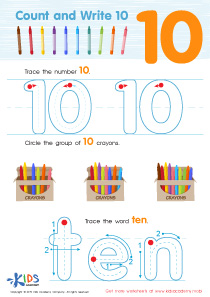
Explore our engaging "Matching Numbers Normal Numbers 0–10 Worksheets," designed specifically for young learners aged 3-5. These colorful and interactive worksheets help children develop foundational math skills by matching numbers with images and quantity representations. Perfect for early education, these resources promote visual recognition, enhance counting abilities, and encourage critical thinking. Each worksheet is crafted to provide an enjoyable learning experience, ensuring that kids stay motivated while mastering the basics of numeracy. Ideal for homeschooling or classroom use, these worksheets lay the groundwork for future math success in a fun, playful environment. Get started today and make learning numbers a breeze!
Favorites
With answer key
Interactive
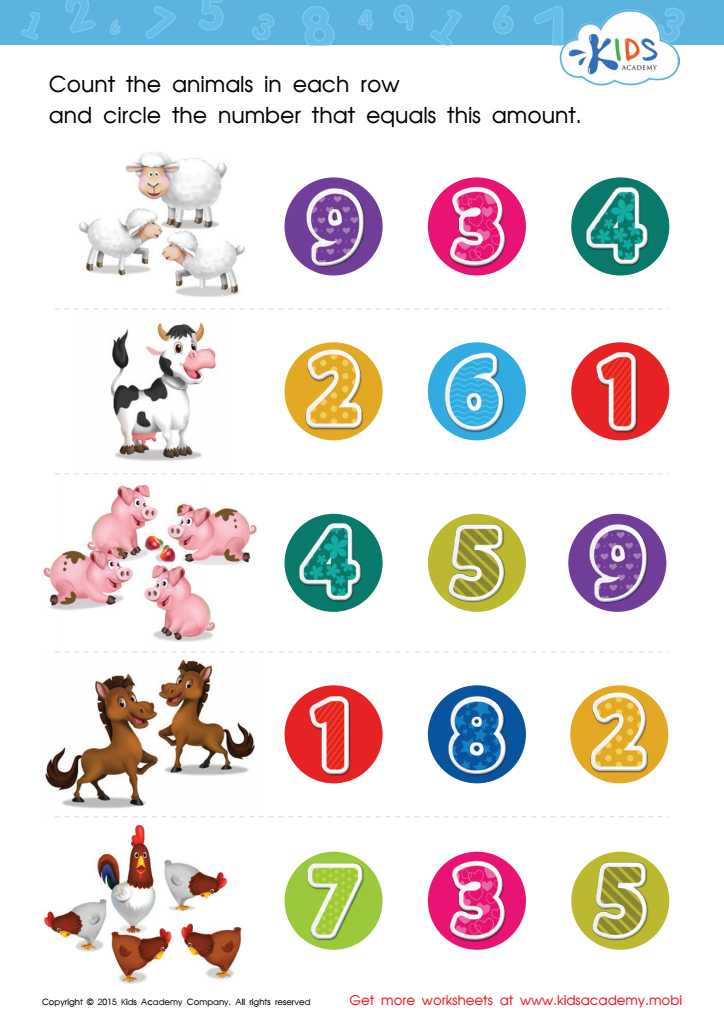
Count and Match 1 – 5 Math Worksheet
Find the colorful worksheet aimed to help your little learner develop their math skills. Count the cute animals and identify the correct numbers based on the Singapore Math method. This worksheet is a fantastic way to start your kid on their mathematical journey.
 Assign to My Students
Count and Match 1 – 5 Math Worksheet
Worksheet
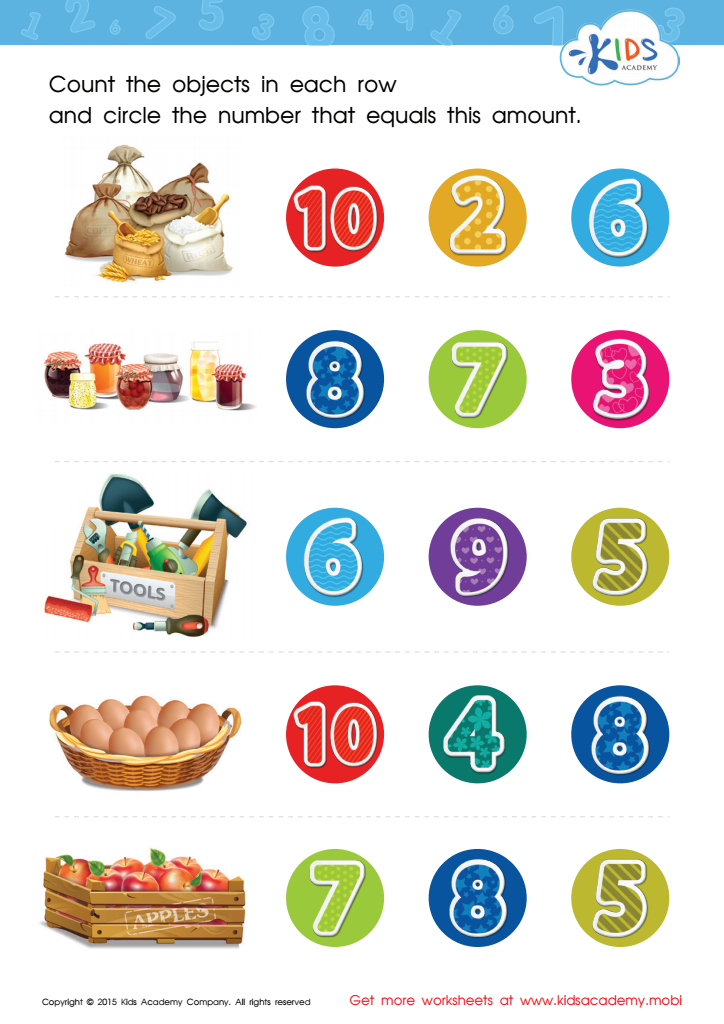
Count and Match 6 – 10 Math Worksheet
Print this fun math worksheet for your kindergartener and help them practice counting up to ten! They'll draw a line from the objects to the correct numbers, visualizing the problem and having fun at the same time. Kids Academy offers more free printable worksheets. Get them now!
Count and Match 6 – 10 Math Worksheet
Worksheet
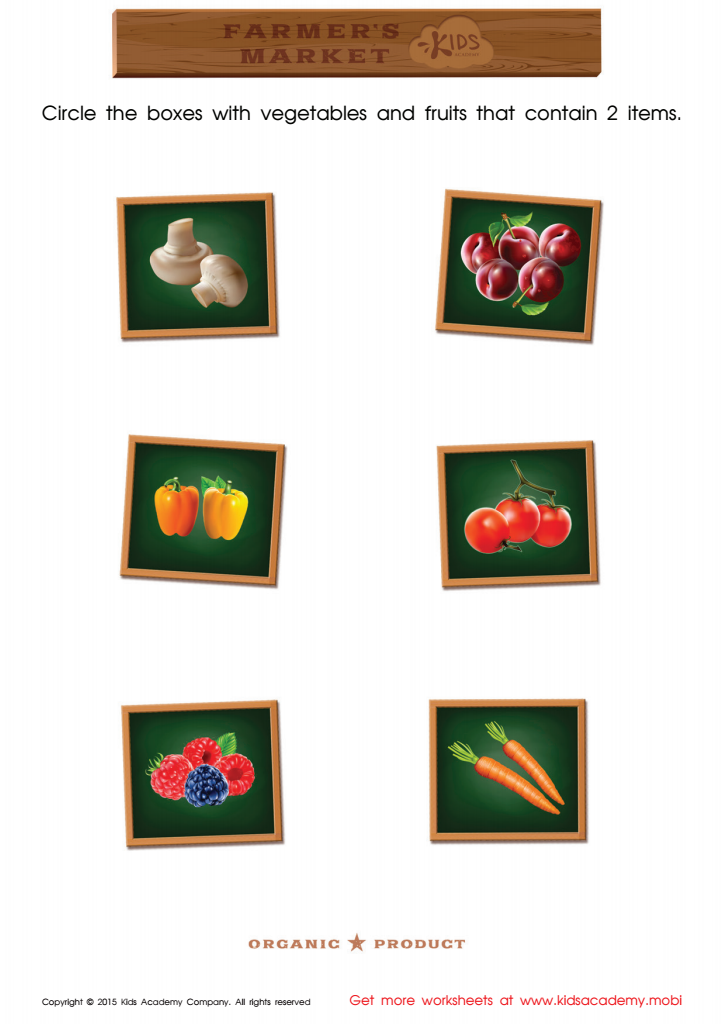
Count and Match Vegetables and Points Math Worksheet
Make your kids excited about math with this free printable kindergarten worksheet! Kids will count up to seven and match boxes with the same number of vegetables. Visualizing the task with this worksheet layout will entertain them while they practice math. Download additional worksheets by topic on Kids Academy.
Count and Match Vegetables and Points Math Worksheet
Worksheet
Join Kids Academy for Free
Who is primarily going to use this learning content?








Matching numbers (normal numbers from 0-10) is an essential foundational skill for children aged 3-5. Understanding and recognizing these numbers lays the groundwork for basic math concepts and everyday problem-solving. Parents and teachers should care about this because it fosters number recognition, counting skills, and cognitive development.
At this stage, children are naturally curious about the world around them, and engaging them in fun activities, such as matching numbers, supports their learning. It promotes critical thinking and enhances fine motor skills as children manipulate physical objects. Recognizing numbers helps with literacy development as well, enabling kids to make connections between visual symbols and verbal expressions, which is crucial for early reading skills.
Moreover, matching numbers encourages social interaction during group activities, enhancing communication and cooperation skills. Teaching number matching provides children with a sense of accomplishment and boosts their confidence, which is vital for lifelong learning.
In summary, parents and teachers play a vital role in building a solid mathematical foundation by introducing children to matching numbers. This fundamental skill not only prepares them for more complex mathematical concepts later on but also enriches their overall developmental experience in early childhood education.