Logical Reasoning Normal Two-step Word Problems Worksheets for Ages 3-5
3 filtered results
-
From - To
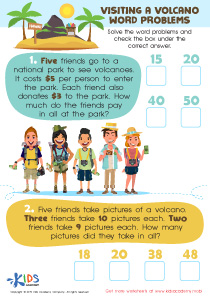
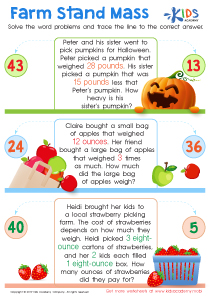
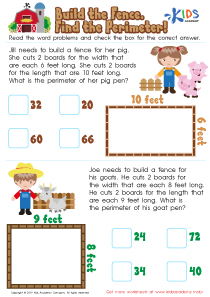
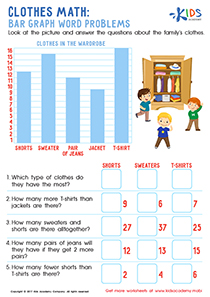
Unlock your child's potential with our engaging Logical Reasoning Normal Two-step Word Problems Worksheets, designed specifically for ages 3-5. These worksheets provide a fun and interactive way for young learners to develop essential problem-solving skills while enhancing their understanding of basic math concepts. Each worksheet features age-appropriate scenarios that encourage critical thinking as children practice deciphering two-step word problems. With vibrant illustrations and relatable examples, your little ones will enjoy learning as they boost their logic and reasoning abilities. Perfect for home or classroom use, these worksheets foster confidence and curiosity in early math learners. Start your journey towards mathematical mastery today!
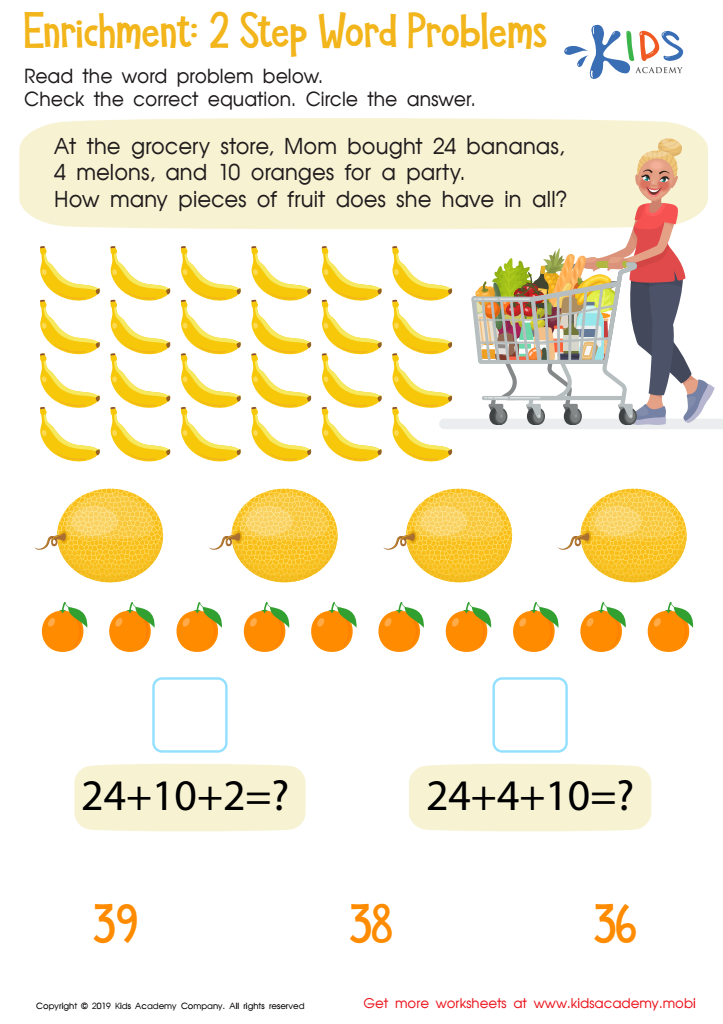
Enrichment -2 Step Word Problems Worksheet
 Assign to My Students
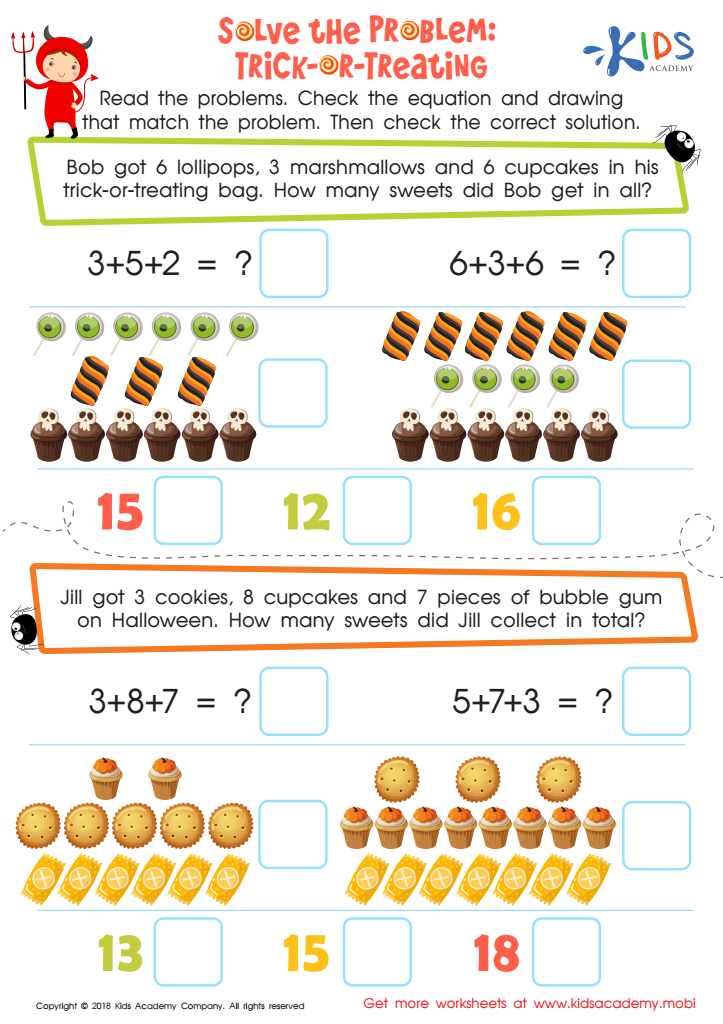
Solve the Problem: Trick–or–treating Worksheet
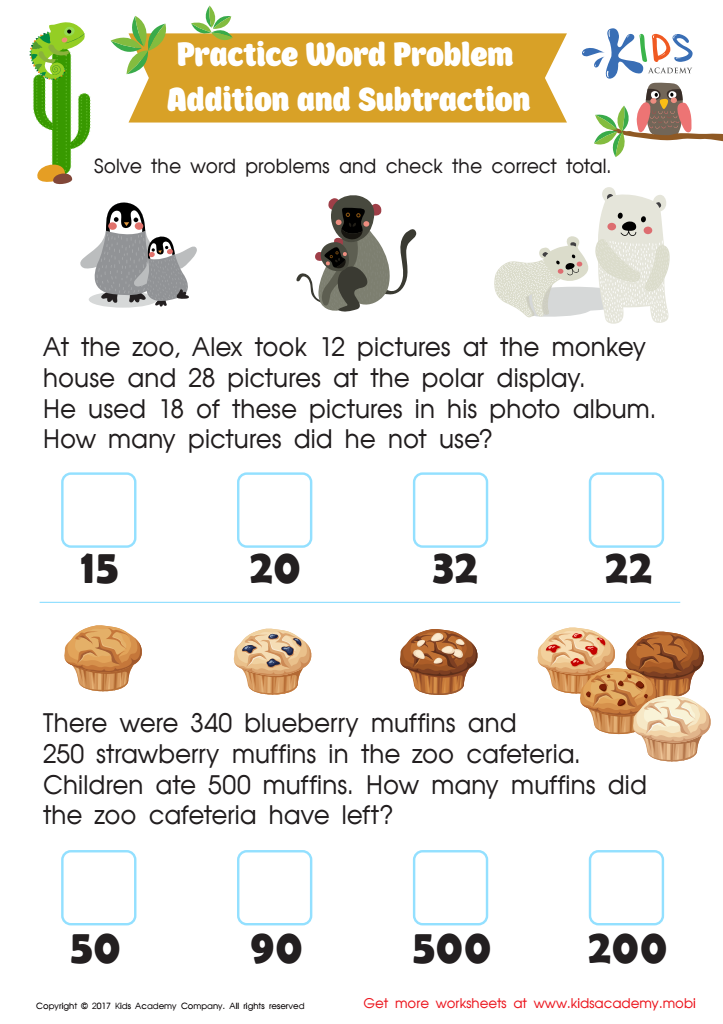
Addition and Subtraction: Word Problems Worksheet



Logical reasoning and the ability to solve two-step word problems are critical skills for children aged 3-5, as they lay the foundation for future academic success. Engaging with these problems nurtures critical thinking and improves cognitive abilities. When children encounter two-step word problems, they learn to analyze a situation, identify relevant information, and devise a plan to arrive at a solution. This practice fosters deeper understanding of mathematical concepts such as addition and subtraction, which are essential for more advanced math later on.
Moreover, addressing these problems enhances language skills, as children must comprehend the language used in the questions. This not only develops their vocabulary but also strengthens their ability to communicate ideas clearly. Parents and teachers play a vital role in this developmental stage; by introducing logical reasoning activities, they can make learning a fun and engaging process.
Early exposure helps children develop persistence and resilience, as they learn to approach challenges systematically. Overall, nurturing logical reasoning through two-step word problems is more than just math practice—it's about equipping children with essential life skills they will carry into adulthood. Hence, parents and teachers should prioritize these activities to foster well-rounded learners.