Sound recognition Normal Reading Worksheets for Ages 3-5
3 filtered results
-
From - To
Discover our engaging "Sound Recognition Normal Reading Worksheets" designed for children ages 3-5! These specially crafted worksheets help young learners develop essential phonemic awareness by focusing on sound recognition. Each activity features vibrant illustrations and interactive exercises that make learning enjoyable and effective. Your child will master identifying, distinguishing, and producing sounds, laying a solid foundation for reading success. Perfect for homeschooling or classroom use, these worksheets encourage creativity and critical thinking while boosting language skills. Download the worksheets now and watch your child gain confidence in their reading abilities, setting them on a path to become fluent readers!
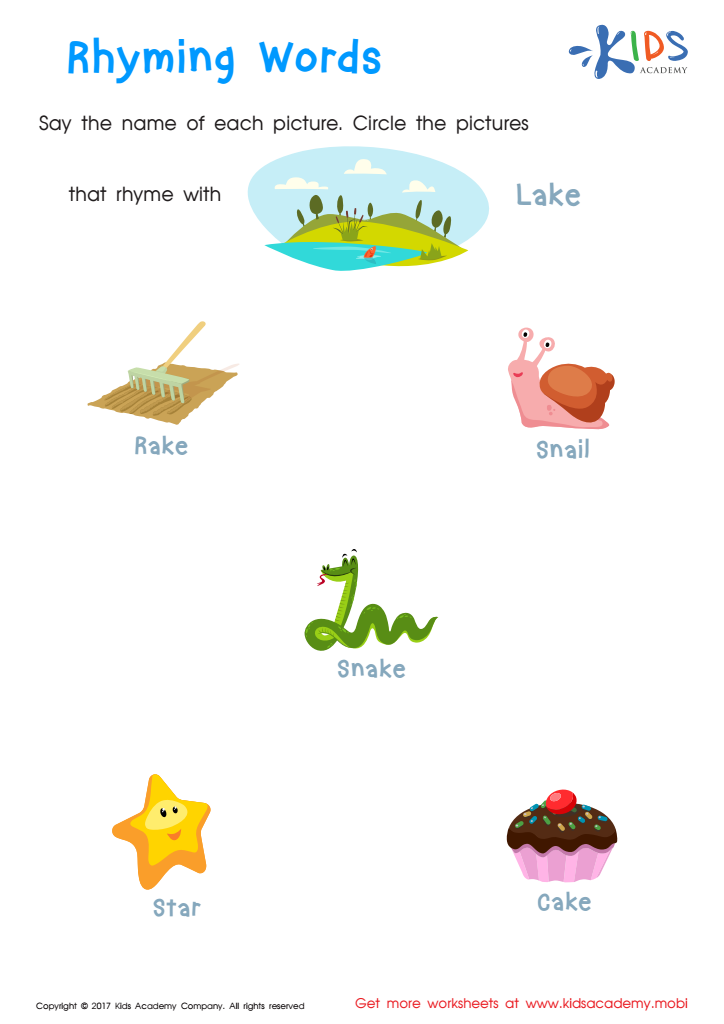
Rhyming Words Rhyming Worksheet
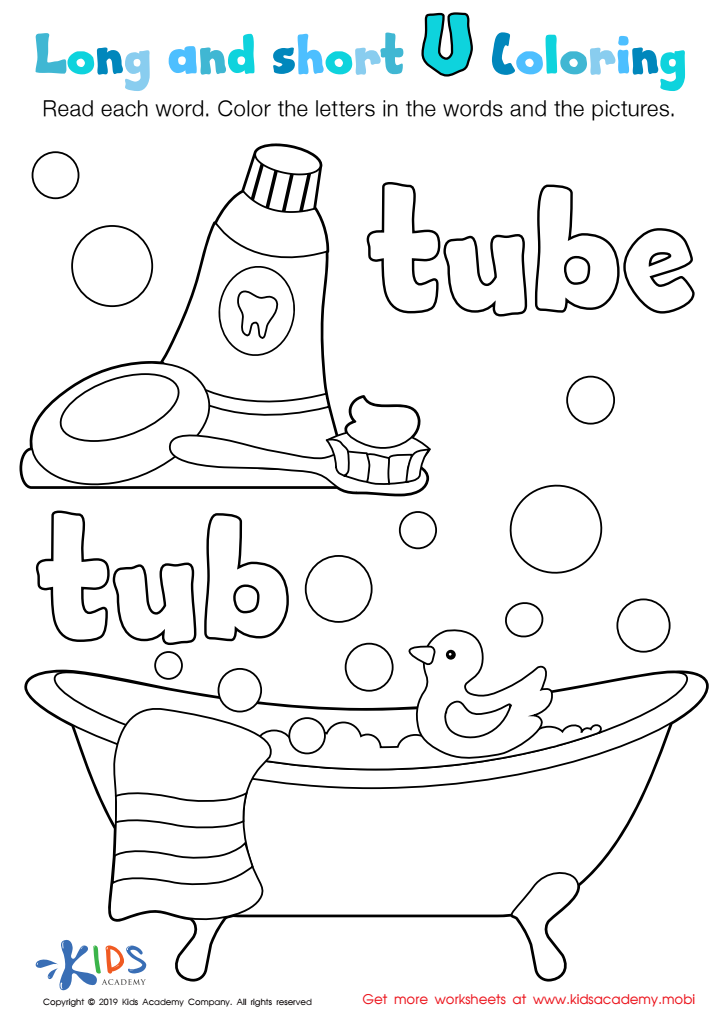
Long and Short U Worksheet
 Assign to My Students
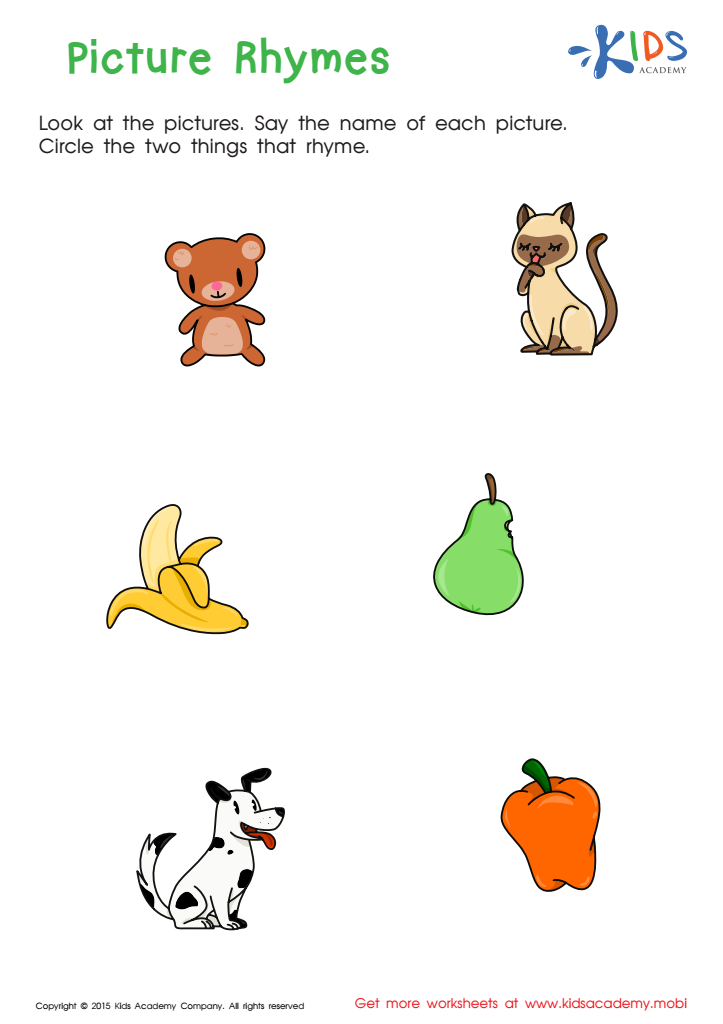
First Words: Picture Rhymes Worksheet







Sound recognition, or phonemic awareness, is crucial for young children when learning to read, especially between ages 3 to 5. During this developmental stage, children begin to notice the sounds that make up words, leading to foundational literacy skills. Parents and teachers should prioritize sound recognition because it lays the groundwork for reading success.
Understanding sounds helps children decode words, enabling them to map phonemes (individual sounds) to graphemes (letters or letter combinations), a concept essential for reading fluency. When children can identify and manipulate sounds, they are better equipped to tackle new words, improving their vocabulary and comprehension skills.
Moreover, engaging in sound recognition activities fosters listening skills and cognitive development, enhancing overall language capabilities. These skills not only aid in reading but also enrich conversations, storytelling, and written expression.
Additionally, cultivating sound recognition at a young age can nurture a lifelong love for reading, making early educational investment vital. By incorporating fun activities like rhymes, songs, and sound games, parents and teachers can make learning enjoyable and effective, helping children develop confidence in their reading abilities as they grow. Ultimately, sound recognition is a key element of a child’s early literacy journey.








