Visual interpretation Normal Reading Worksheets for Ages 3-5
3 filtered results
-
From - To
Enhance your child's reading skills with our specialized Visual Interpretation Normal Reading Worksheets designed for ages 3-5. These engaging and educational worksheets improve young learners' visual reasoning and comprehension abilities by using colorful images and simple texts. Each activity is carefully crafted to boost visuospatial skills, sharpen focus, and support early literacy development in an enjoyable way. Perfect for parents and educators, these worksheets offer a playful approach to learning, ensuring that kids stay motivated and excited about reading. Give your child a head start on the path to literacy with our expertly designed visual interpretation reading resources.
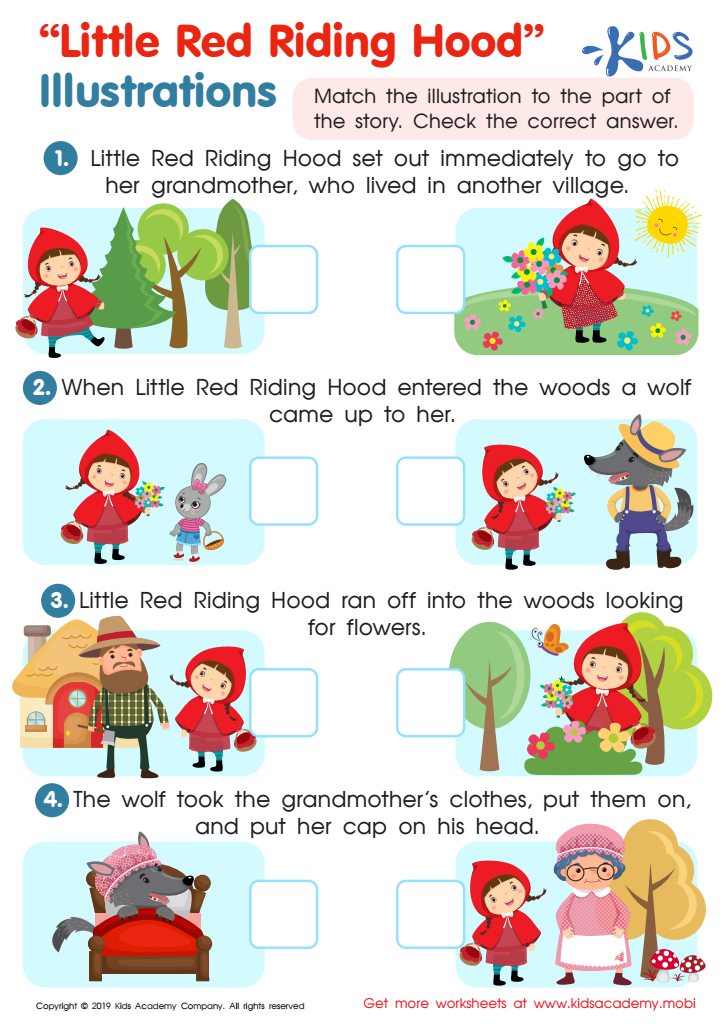
Little Red Riding Hood: Illustrations Worksheet
 Assign to My Students
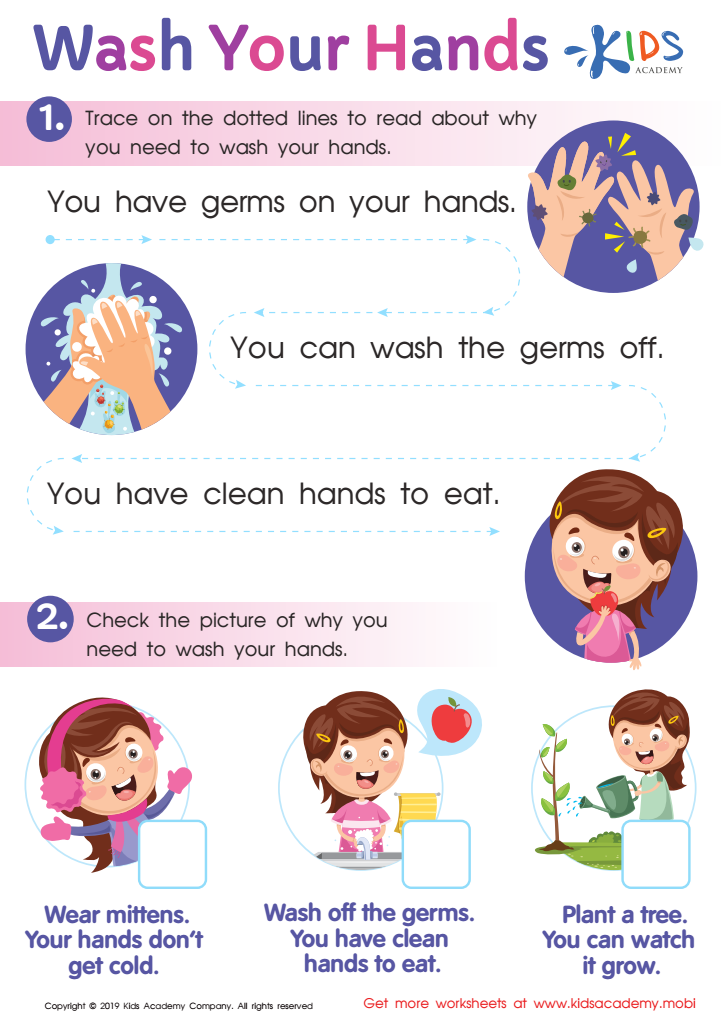
Wash Your Hands Worksheet
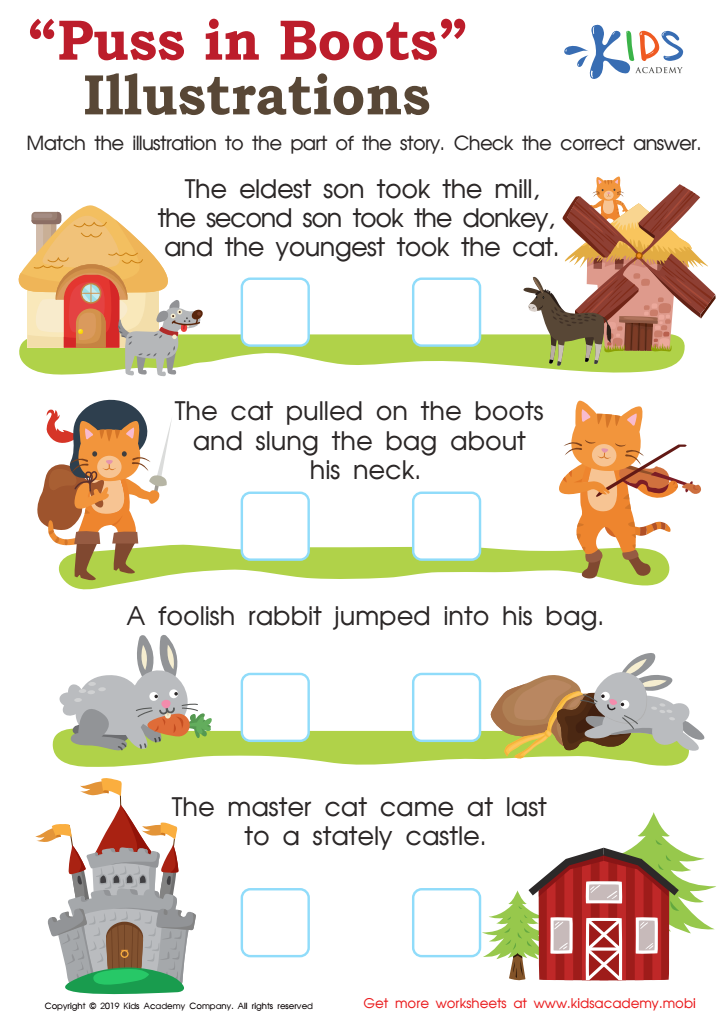
Puss in Boots Illustrations Worksheet







Visual interpretation plays a crucial role in normal reading development for children aged 3-5. During this formative period, young learners are highly receptive to visual stimuli, which enhances their comprehension and cognitive skills. Parents and teachers should prioritize visual interpretation to foster a strong foundation for literacy.
First, visual interpretation aids in vocabulary acquisition. For example, picture books with vivid illustrations help children associate images with words, enhancing their understanding and recall. This visual context supports decoding and meaning-making, key aspects of reading readiness.
Second, visual interpretation cultivates critical thinking. When children analyze pictures to anticipate a story, they develop inferencing skills and narrative comprehension, which are essential for more advanced reading tasks.
Third, visual engagement captivates young learners’ attention and stimulates their interest in books. Attractive images can make reading sessions more enjoyable and less daunting, encouraging a love for reading that endures beyond early childhood.
Lastly, visual interpretation supports diverse learning styles. Some children may struggle with text alone but excel when visual elements are integrated. By catering to these differences, educators can create inclusive learning environments where every child can succeed.
Thus, by investing in visual literacy skills during the early years, parents and teachers equip children with the tools they need for academic and lifelong success.








