Visual interpretation Normal Reading Comprehension Worksheets for Ages 3-5
3 filtered results
-
From - To
Enhance your child's reading skills with our Visual Interpretation Normal Reading Comprehension Worksheets designed for ages 3-5. These engaging worksheets encourage young learners to connect visuals with text, fostering essential comprehension and critical thinking skills. Each activity features vibrant illustrations paired with simple questions, promoting interaction and discussion. Ideal for preschool and early kindergarten students, these worksheets help your child identify key details and understand story elements through visual cues. Nurture your child’s love for reading and prepare them for future academic success with our fun and effective resources, crafted to support early learning and literacy development. Start your journey today!
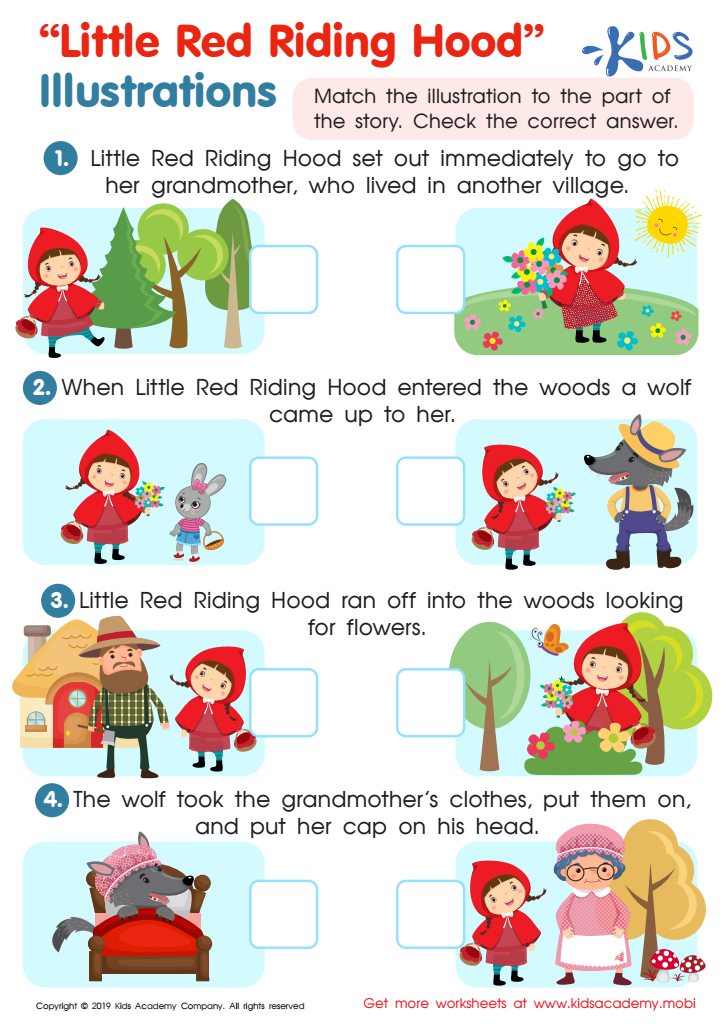
Little Red Riding Hood: Illustrations Worksheet
 Assign to My Students
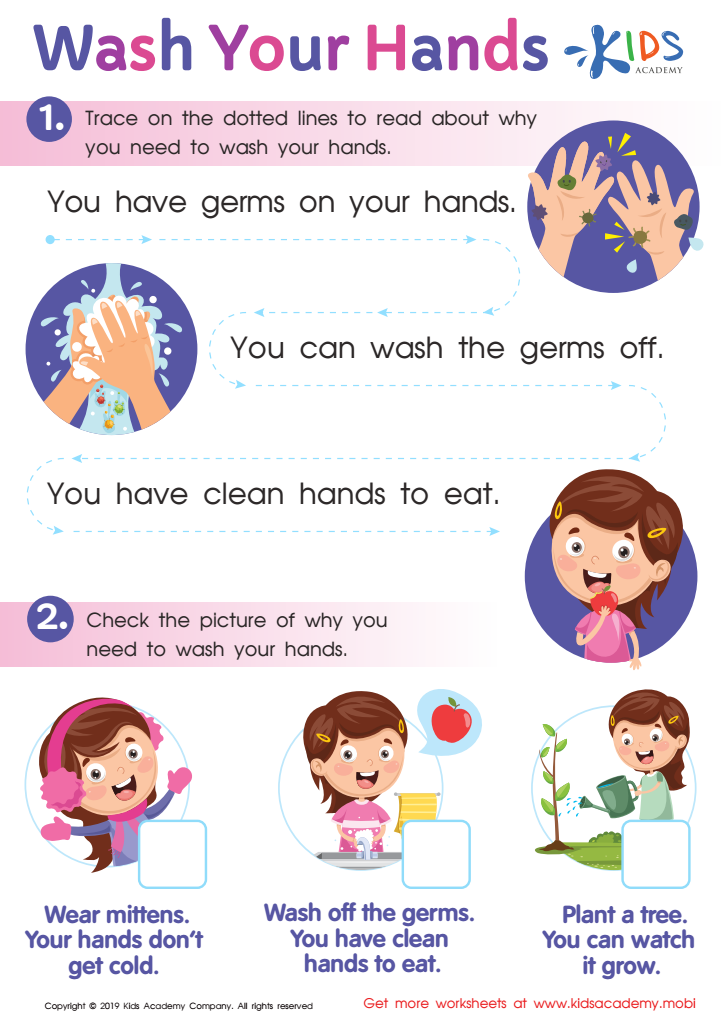
Wash Your Hands Worksheet
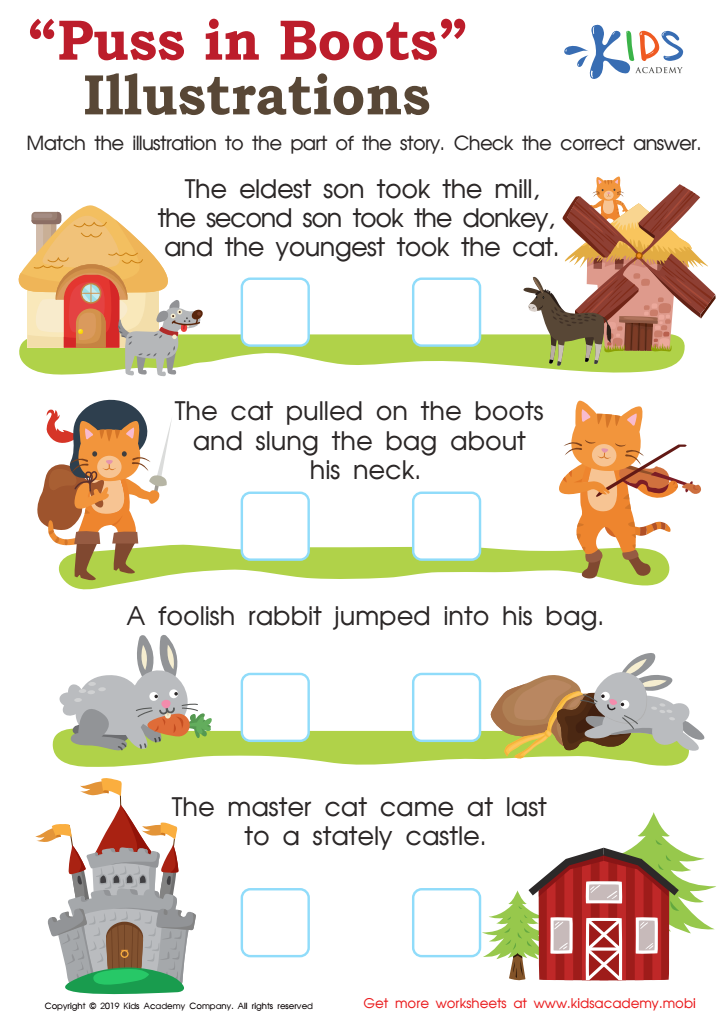
Puss in Boots Illustrations Worksheet






.jpg)

Visual interpretation is a crucial component of reading comprehension, especially for children aged 3-5, as it lays the foundation for later literacy skills. At this developmental stage, children are learning not just to recognize letters and words, but also to decipher and understand images, diagrams, and other visual aids that accompany text. Parents and teachers should care about this skill because it enhances a child's ability to connect visual information with verbal language, thus improving overall comprehension.
At this age, children's brains are highly receptive to visual stimuli. They can grasp concepts and narratives more effectively when they can interpret visual elements. This skill encourages critical thinking as children learn to make inferences and predictions based on visual cues. Moreover, fostering visual interpretation helps promote engagement with stories and content, making reading a more enjoyable experience. This lays the groundwork for sophisticated reading strategies in the future.
By cultivating an environment that encourages visual analysis—through picture books, storytelling with illustrations, and playful activities—adults help shape children into confident readers and learners. Engaging with visuals not only sharpens comprehension skills but also nurtures creative thinking, making it essential for parents and teachers to prioritize this vital aspect of early literacy development.








