Reading comprehension Normal Rhyming Words Worksheets for Ages 3-5
5 filtered results
-
From - To
Enhance your child's literacy skills with our "Reading Comprehension Normal Rhyming Words Worksheets" designed specifically for ages 3-5. These engaging worksheets expose young learners to the magical world of rhymes, fostering essential reading comprehension abilities. By pairing exciting visuals with age-appropriate activities, children will cultivate phonemic awareness and language skills. Each worksheet promotes critical thinking as kids identify and relate rhyming words, making learning fun and interactive. Perfect for home or classroom use, these resources offer a foundational approach to early reading development. Download and inspire a love for reading in your little ones while helping them grasp the joy of rhyming!
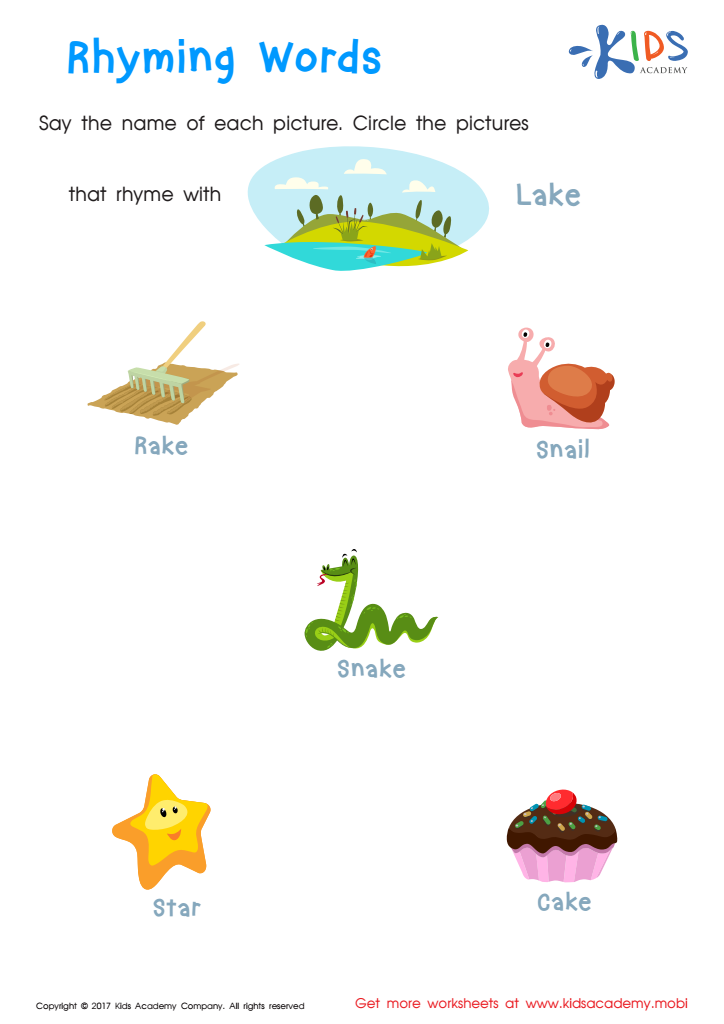
Rhyming Words Rhyming Worksheet
 Assign to My Students
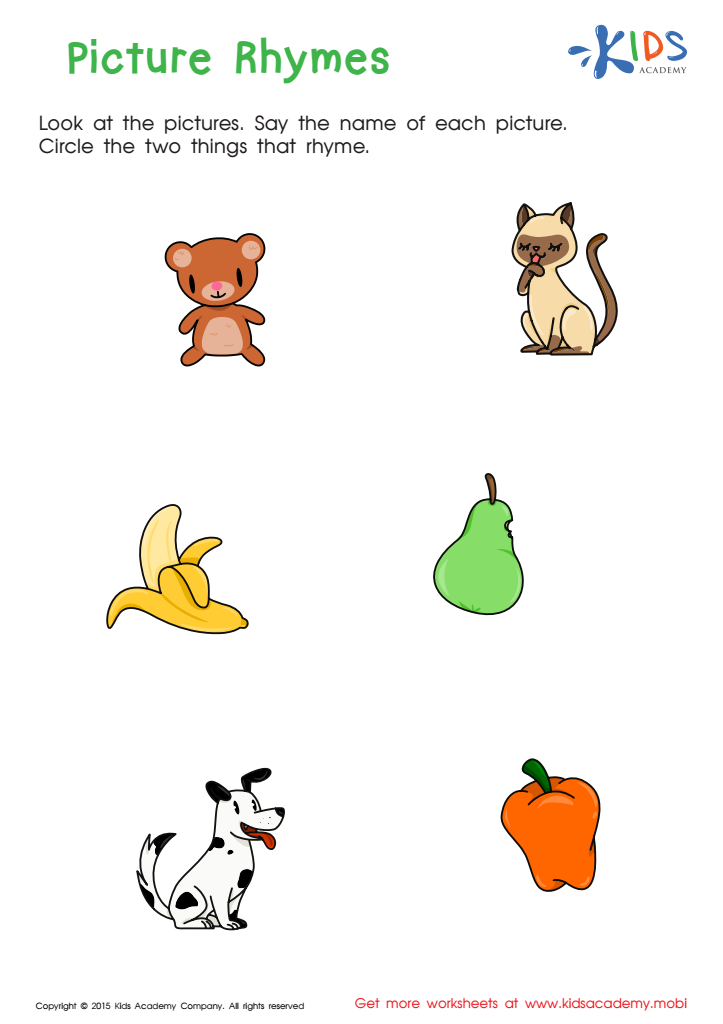
First Words: Picture Rhymes Worksheet
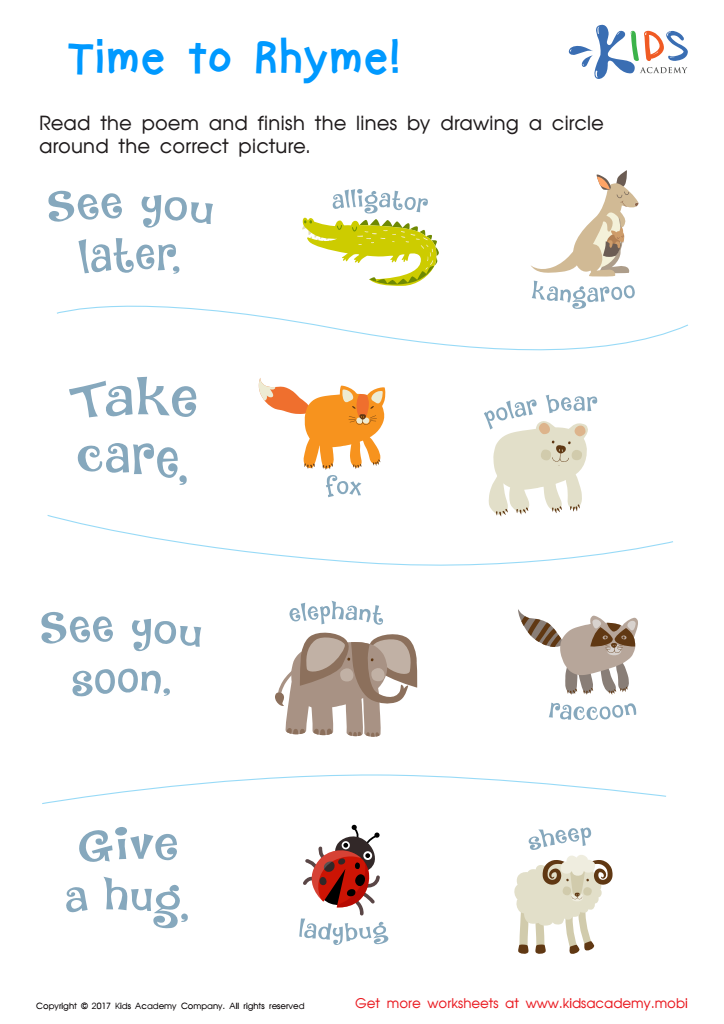
Time to Rhyme Rhyming Worksheet
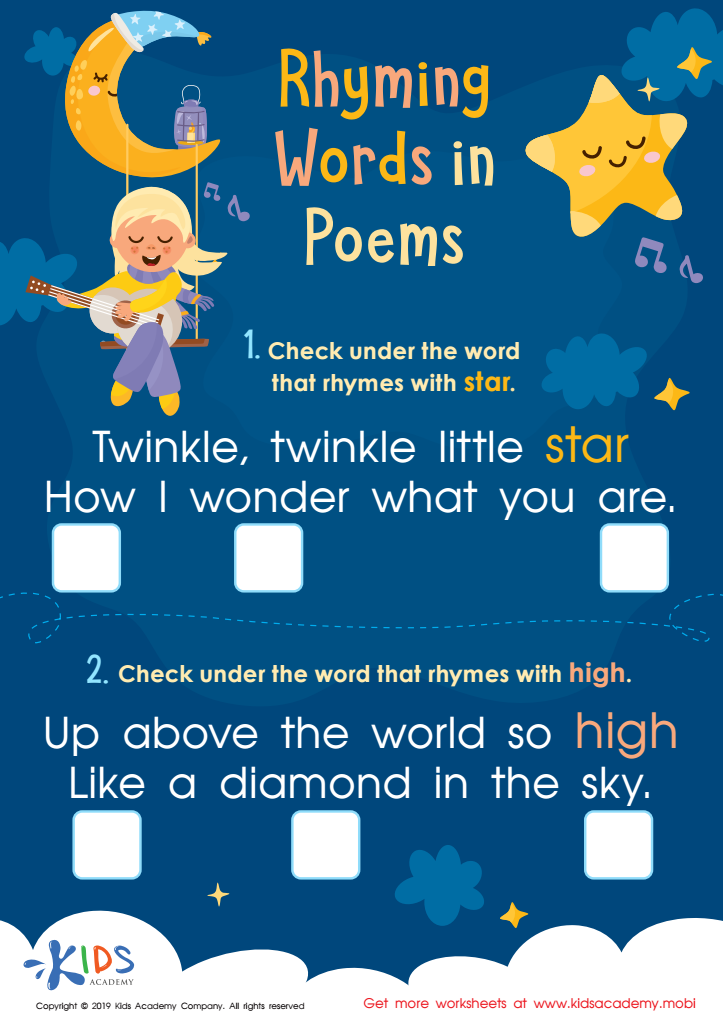
Rhyming Words in Poems Worksheet
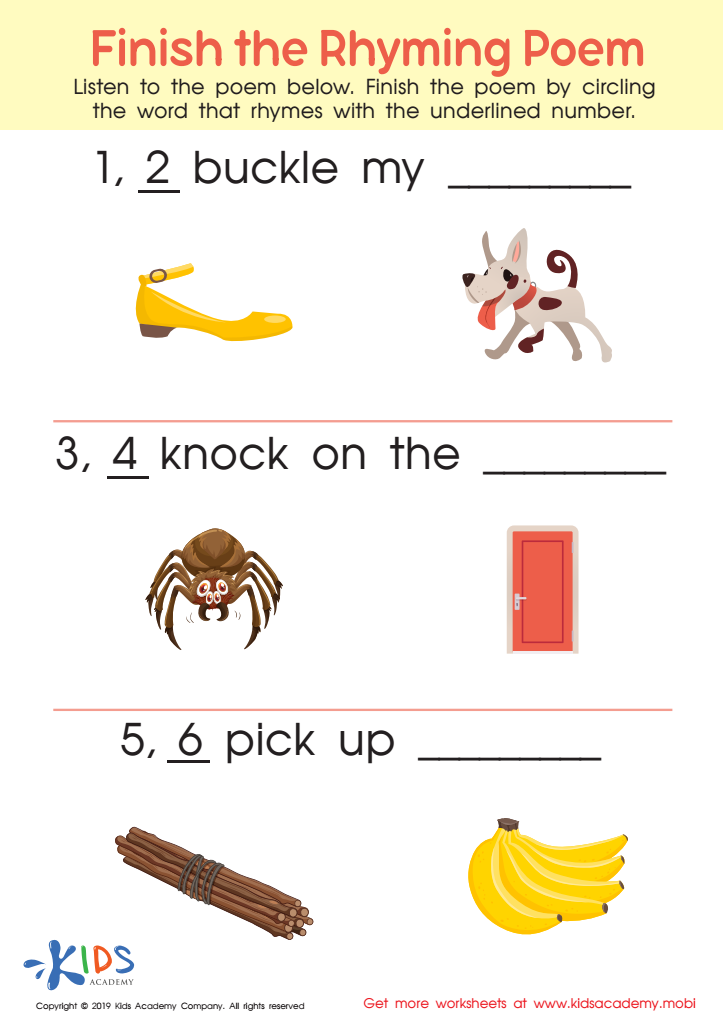
Finish Rhyming Poem Worksheet








Reading comprehension and normal rhyming words are critical for early childhood development, especially for children ages 3-5. At this crucial stage, children are laying the groundwork for their literacy skills. Understanding the rhythm and sound patterns of normal rhyming words enhances phonemic awareness, which is the ability to hear, identify, and manipulate phonemes, the smallest units of sound in language.
When children engage with rhymes, they are more likely to develop strong vocabulary, better listening skills, and improved overall comprehension. This playful interaction with language fosters enthusiasm for reading, making it a joyful experience rather than a chore. Additionally, it supports cognitive skills by helping children make connections between sounds and meanings, which is essential for their ability to decode words in the future.
Parents and teachers should prioritize activities that involve rhyming to nurture language acquisition and comprehension at an early age. Action rhymes, nursery rhymes, and storybooks with rhyming text not only make storytelling more engaging but also promote retention and recall among young learners, contributing to their language development during these formative years. Investing in these skills early helps pave the way for lifelong reading success and a love for literature.








