Categorization skills Normal Science Worksheets for Ages 3-5
4 filtered results
-
From - To
Enhance your child's learning journey with our Categorization Skills Normal Science Worksheets, tailored specifically for children aged 3-5. These engaging worksheets are designed to develop critical thinking and cognitive abilities by introducing young learners to the concept of sorting and grouping. Through fun and interactive activities, children will explore various scientific themes, helping them to understand how to categorize objects by color, size, shape, and function. Our printable resources foster creativity and encourage a love for science, laying the groundwork for future learning. Perfect for parents and educators alike, these worksheets make learning enjoyable and effective! Get started today!
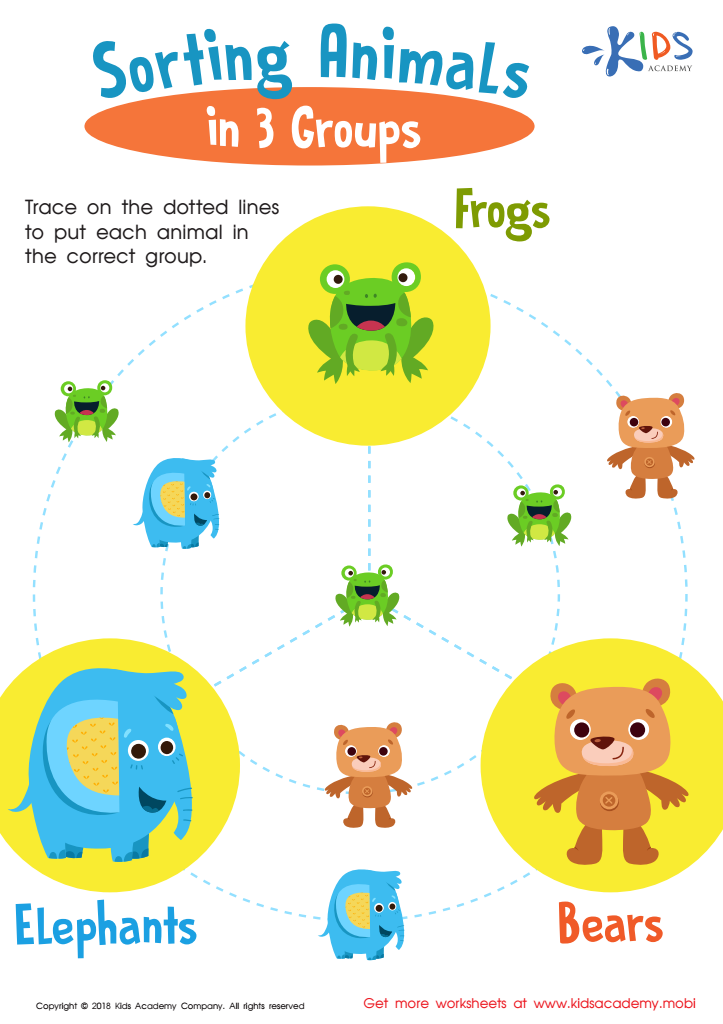
Sorting Animals in 3 Groups Worksheet
 Assign to My Students
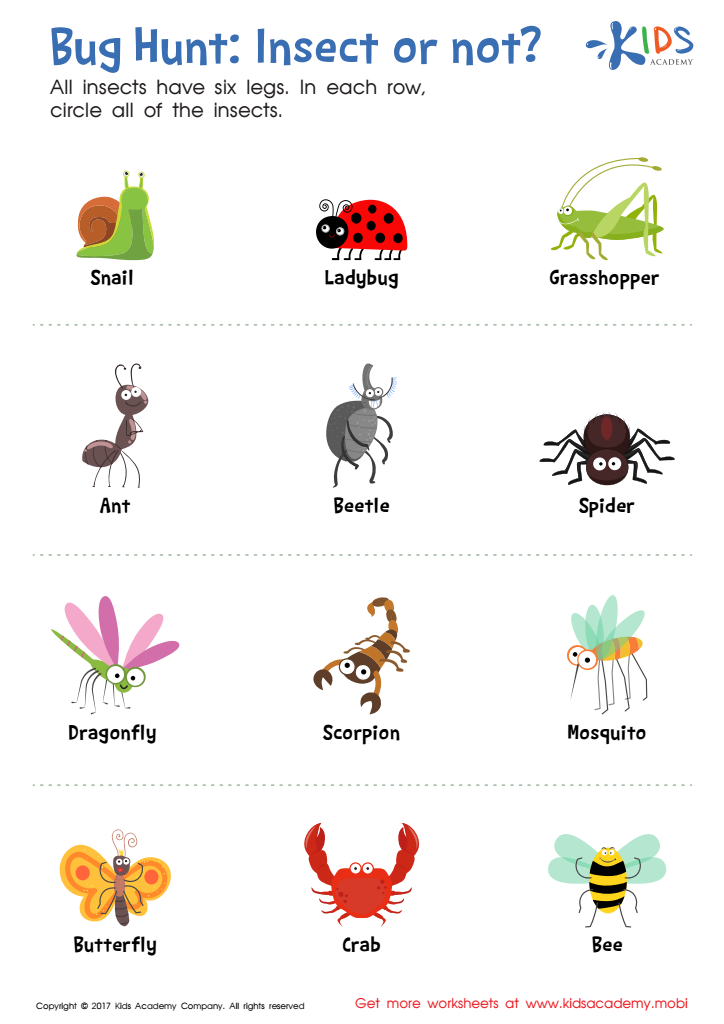
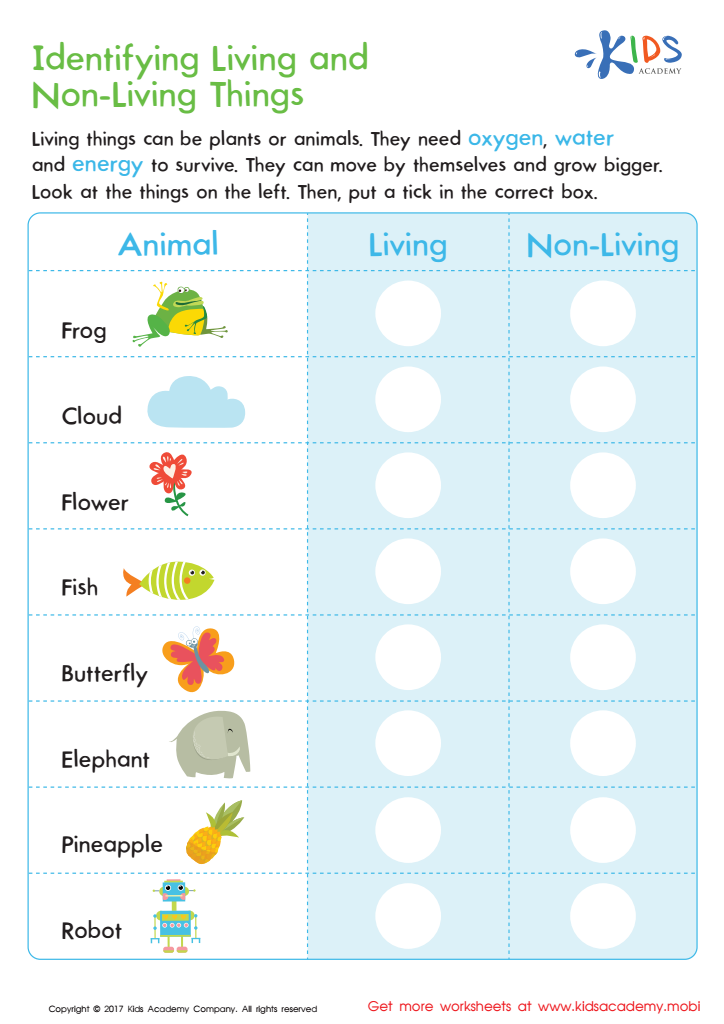
Identifying Living or Non–living Worksheet
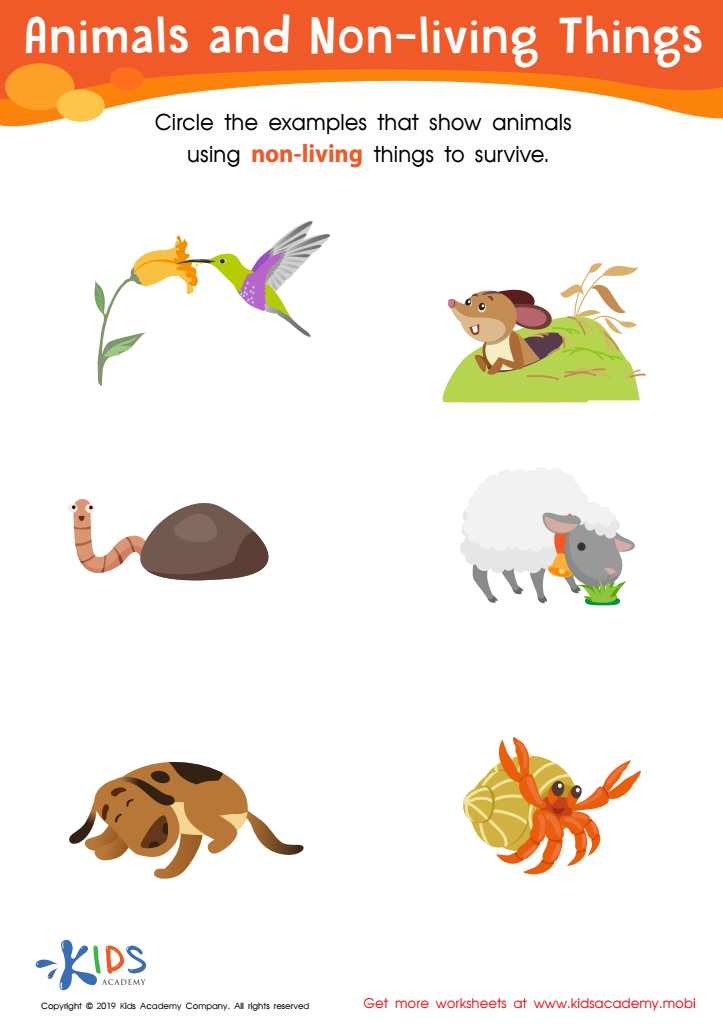
Animals and Non-Living Things Worksheet






Categorization skills are crucial for early childhood development, particularly for ages 3-5. At this stage, children analytically engage with their environment and begin to organize information into groups based on shared characteristics. This skill enhances cognitive development, facilitating better problem-solving capabilities and critical thinking.
Parents and teachers should care about nurturing these skills because they provide the foundation for later learning across domains, including math, language, and science. Through categorization, children learn to identify patterns and make connections, which fosters creativity and exploration. For instance, when children classify fruits, they not only learn about different types but also enhance their vocabulary and comprehension.
Moreover, categorization promotes social skills and emotional intelligence. It allows children to understand differences and similarities among peers, hence fostering inclusivity and teamwork. As they recognize groups—whether by color, shape, or function—they develop the ability to communicate effectively and resolve conflicts.
Incorporating categorization activities, such as sorting games or nature walks focusing on similarities and differences, makes learning interactive and fun. Overall, prioritizing categorization skills in early education equips children with essential tools for a successful academic journey and meaningful social interactions.







