Enhancing observation skills Normal Science Worksheets for Ages 3-5
5 filtered results
-
From - To
Introduce your child to the wonders of science with our "Enhancing Observation Skills Normal Science Worksheets" tailored for ages 3-5. These engaging printables are designed to boost young learners' natural curiosity and critical thinking through fun, hands-on activities. Each worksheet focuses on honing observational skills, essential for scientific inquiry and everyday problem-solving. Easy-to-follow and visually appealing, our curated exercises help preschoolers learn to notice minute details, categorize objects, and make thoughtful predictions. A fantastic early educational resource, these worksheets cultivate a lifelong love for discovery and learning. Unlock your little one’s potential with Kids Academy resources today!
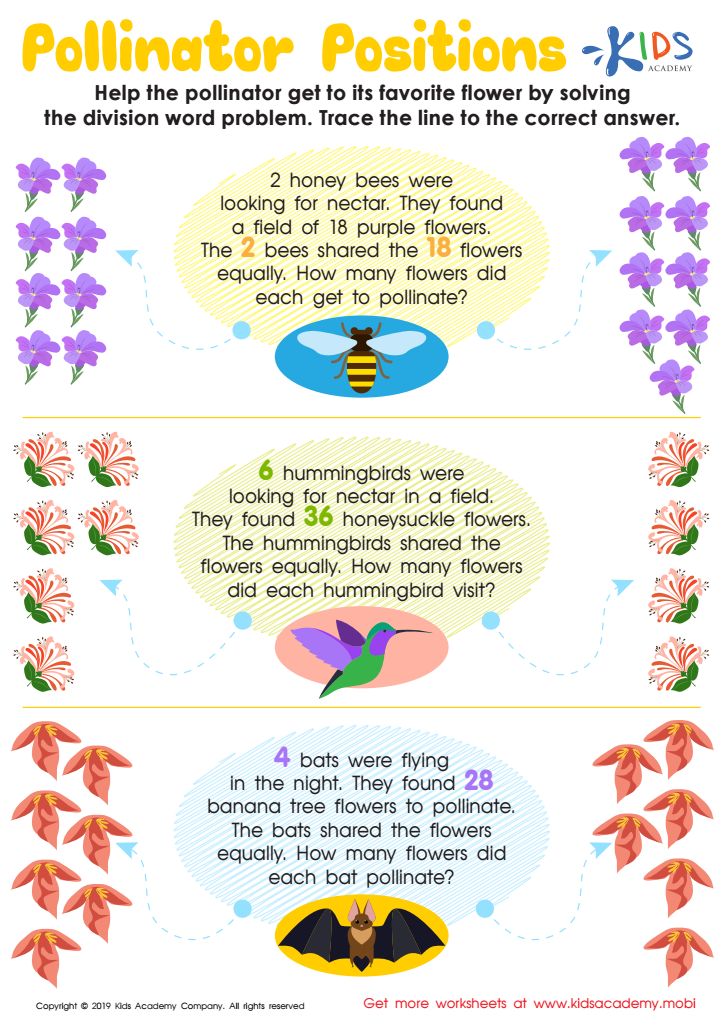
Pollinator Positions Worksheet
 Assign to My Students
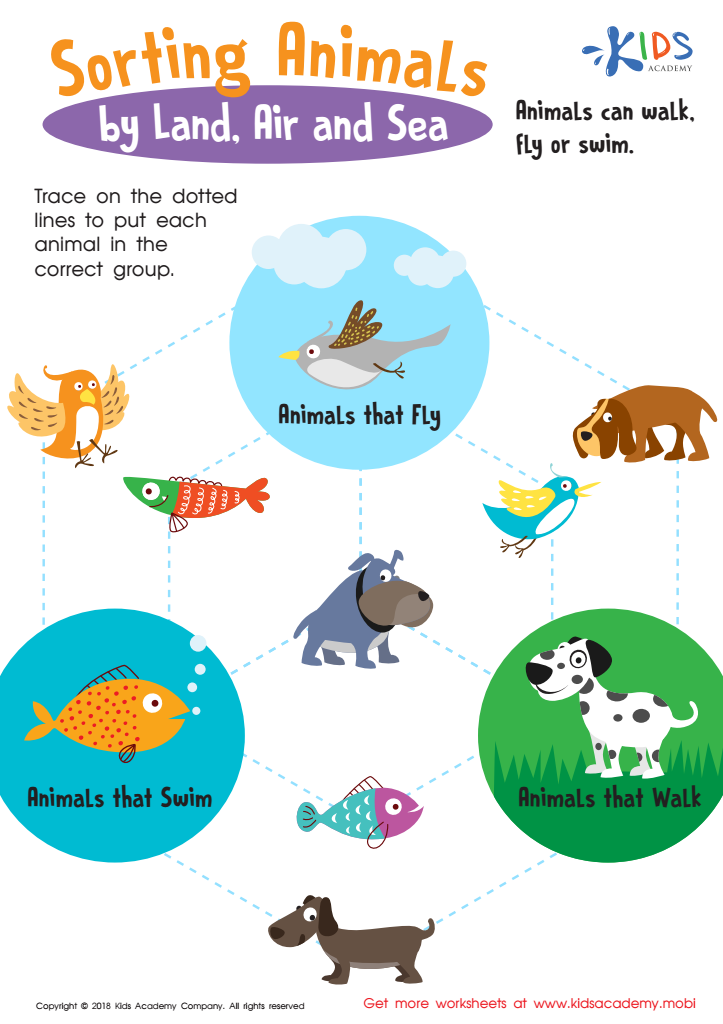
Sorting Animals by Land, Air and Sea Worksheet
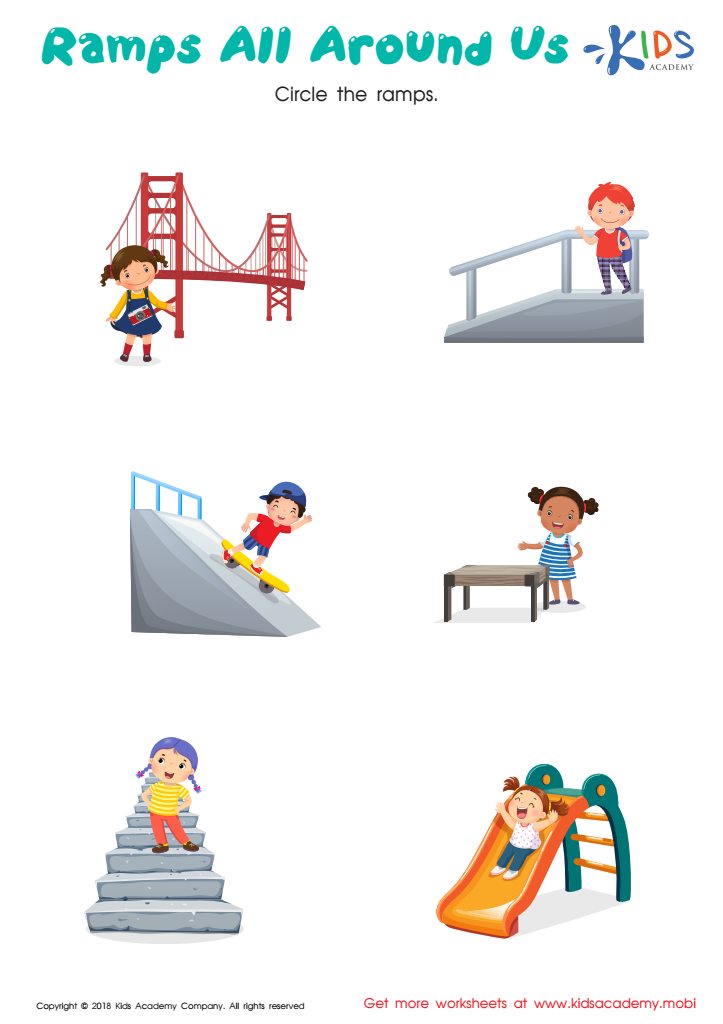
Ramps All Around us Worksheet
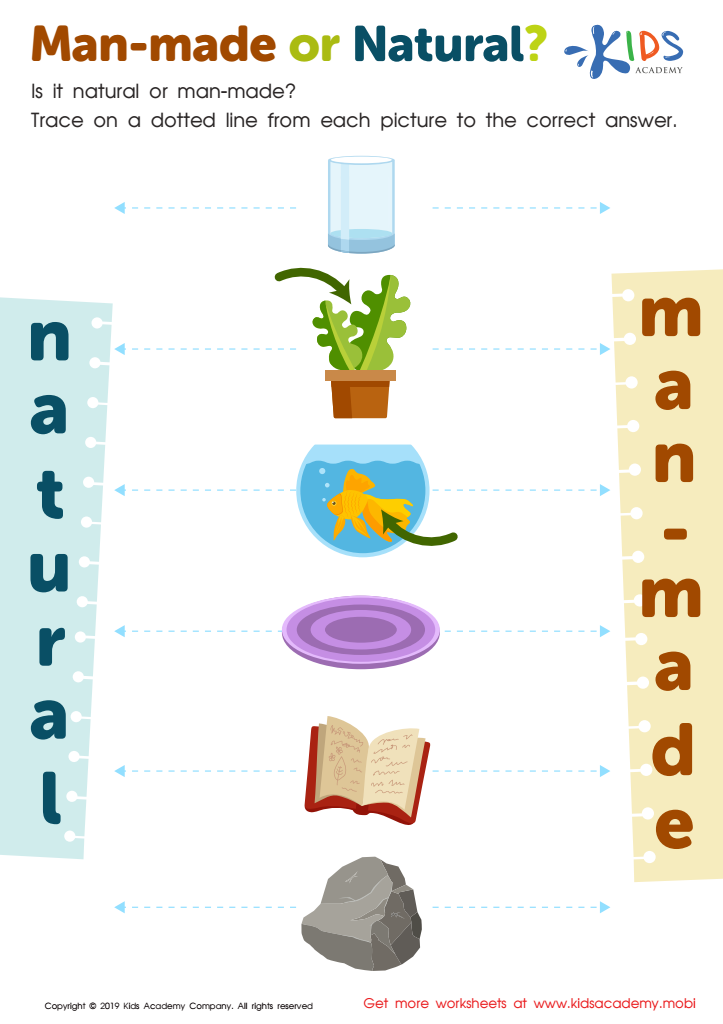
Man-Made or Natural? Worksheet
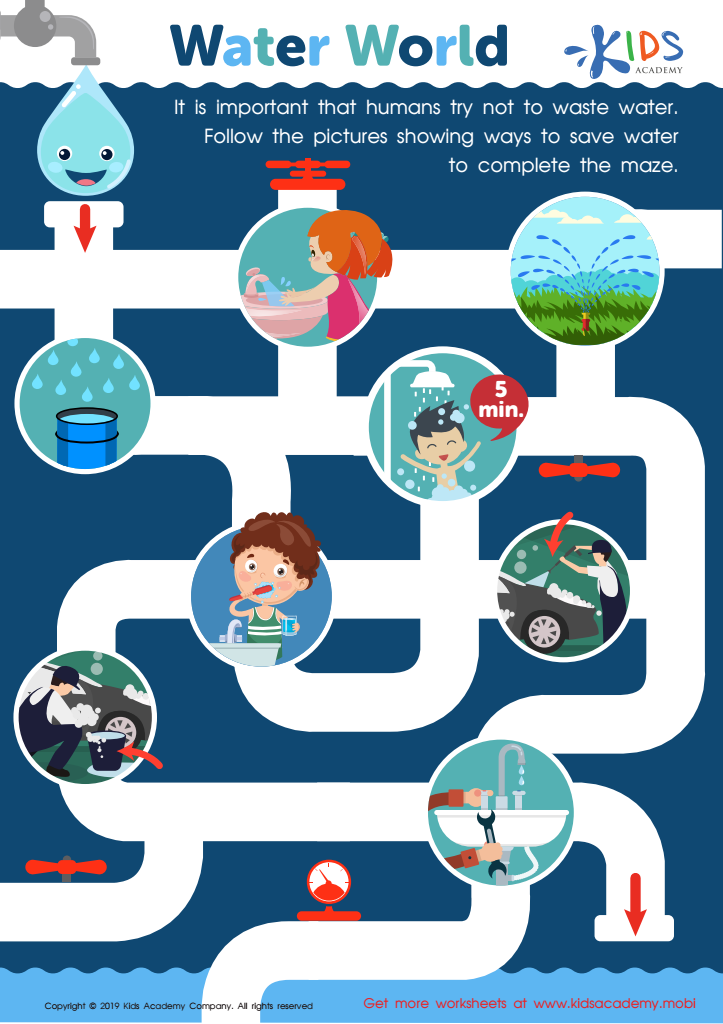
Water World Worksheet








Enhancing observation skills in normal science for children ages 3-5 is crucial for their early development and sets a foundation for lifelong learning. During these formative years, children are inherently curious and enthusiastic to explore their surroundings. Observation skills allow them to notice details, recognize patterns, and develop an understanding of the natural world, fostering cognitive development.
When parents and teachers emphasize these skills, they promote critical thinking and problem-solving abilities. Observing and describing phenomena such as the weather, plants, or animal behavior cultivates a scientific mindset, encouraging children to ask questions and seek answers. Moreover, engaging with nature and simple scientific experiments enhances vocabulary and language skills, as children learn to articulate their observations and ideas.
Additionally, observation skills contribute to social and emotional development. Group activities that involve observing nature or conducting simple experiments teach cooperation, sharing, and turn-taking, enhancing interpersonal skills. Parents and teachers play a pivotal role in guiding and nurturing these abilities. Providing opportunities for hands-on learning and encouraging curiosity helps shape confident, inquisitive learners who are better prepared for future educational challenges. In essence, focusing on observation skills during early childhood is an invaluable investment in a child's intellectual, social, and emotional growth.







