Understanding directions Normal Science Worksheets for Ages 3-5
3 filtered results
-
From - To
Explore our engaging "Understanding Directions Normal Science Worksheets" designed specifically for children aged 3-5! These worksheets help young learners develop vital directional skills through fun and interactive science activities. By following age-appropriate instructions, kids will enhance their comprehension of primary concepts such as up, down, left, and right while fostering cognitive development. Each worksheet is crafted to seamlessly blend scientific exploration with essential directional learning, making education both enjoyable and effective. Perfect for teachers and parents alike, these resources are ideal for at-home learning or classroom activities. Dive into the world of science with our thoughtfully designed worksheets today!
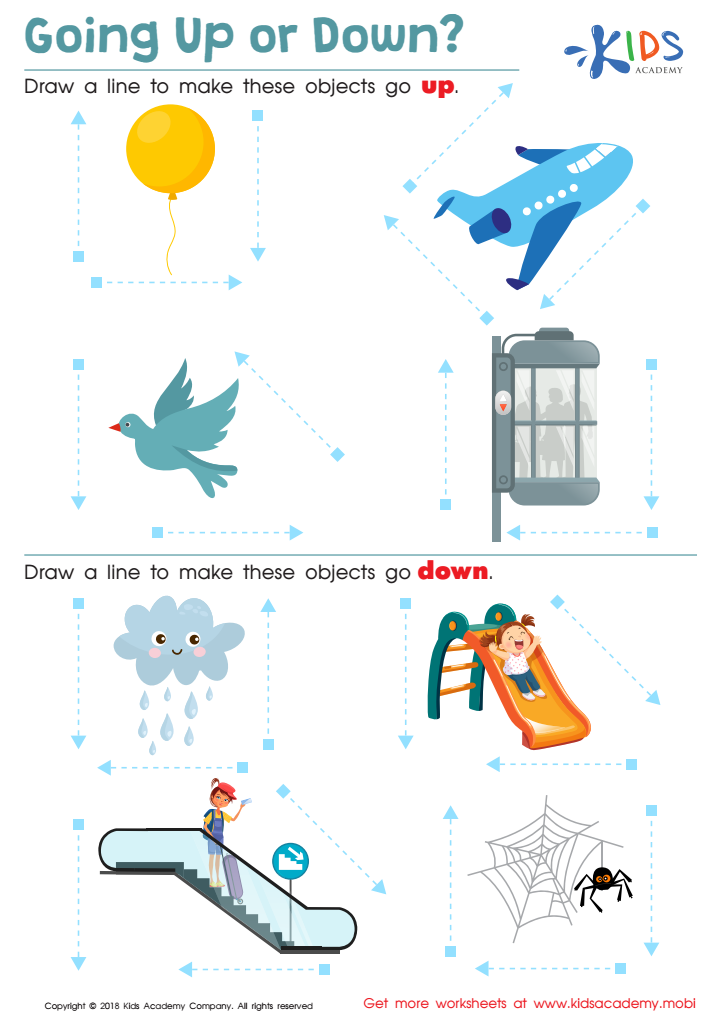
Going up or Down? Worksheet
 Assign to My Students
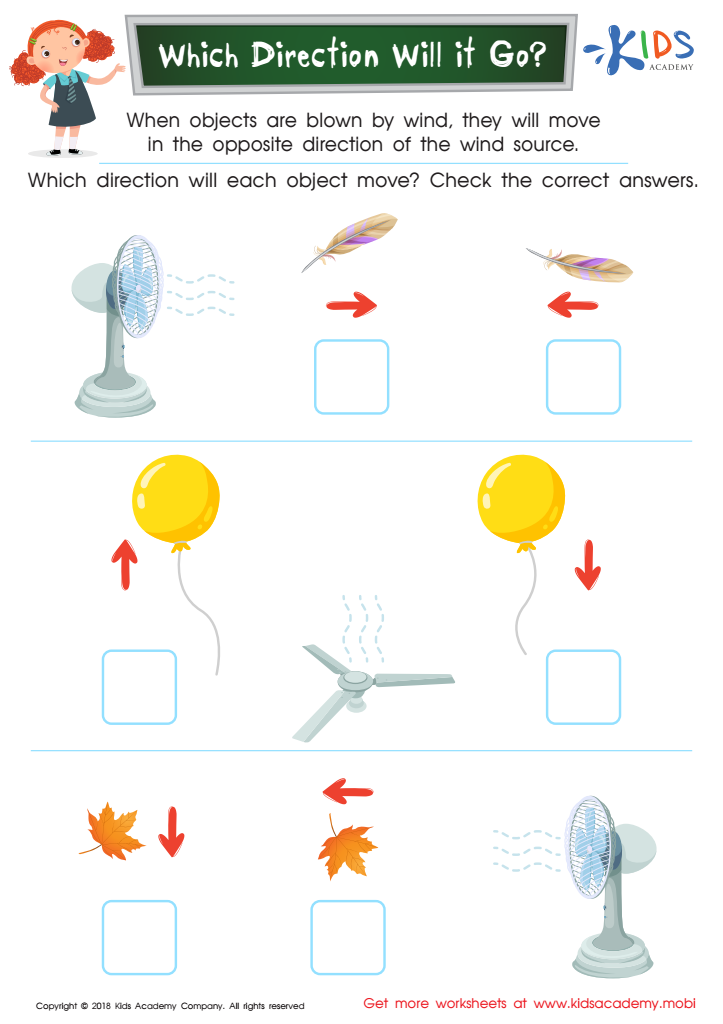
Which Direction Will it Go? Worksheet
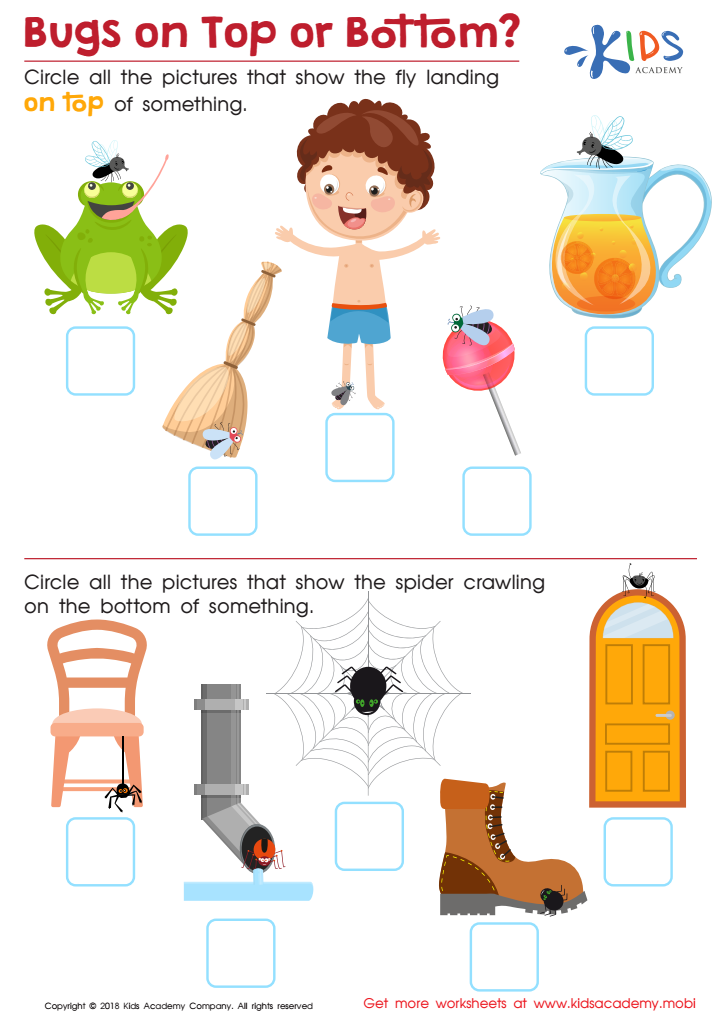
Bugs on Top or Bottom? Worksheet






.jpg)

Understanding directions is crucial for children aged 3-5, as it lays the foundation for their cognitive and social development. At this stage, young learners are eager to explore the world around them, and the ability to follow and understand directions is essential for their safety and independence. Teachers and parents play a vital role in guiding this process, helping children learn to listen actively and engage with instructions they receive.
By fostering direction-following skills, educators and caregivers can enhance children's problem-solving abilities and critical thinking. This sets the stage for later academic success, as these skills transfer to classroom learning and structured activities. Plus, children who can follow directions are often more capable of working cooperatively in group settings, building their social skills through collaboration.
Additionally, understanding directions promotes self-regulation and patience. As children learn to follow multi-step instructions, they develop the ability to focus and practice persistence. This habit is essential for achieving personal goals in both academic and everyday contexts. Therefore, investing time and effort in teaching direction-following not only enhances children's immediate learning experiences but also cultivates essential life skills that will serve them well into the future.







