Weather identification Normal Science Worksheets for Ages 3-5
4 filtered results
-
From - To
Explore our engaging Weather Identification Normal Science Worksheets designed specifically for children ages 3 to 5. These interactive resources help young learners develop essential observational skills while discovering various weather types. Each worksheet features fun activities and illustrations to capture children’s imagination, promoting early scientific thinking. From sunny days to rainy weather, kids will enhance their vocabulary as they identify and discuss different weather conditions. Perfect for enhancing classroom or home learning, these worksheets foster curiosity about the world around them, making science both accessible and enjoyable for preschoolers. Download and start exploring the wonders of weather with your little ones today!
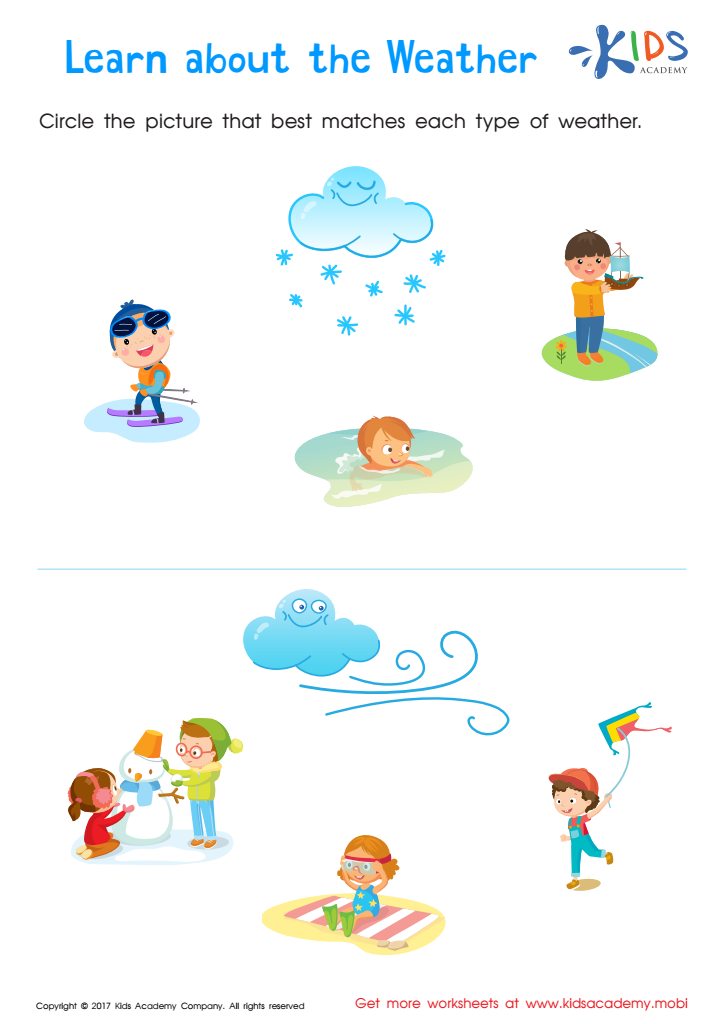
About the Weather Printable
 Assign to My Students
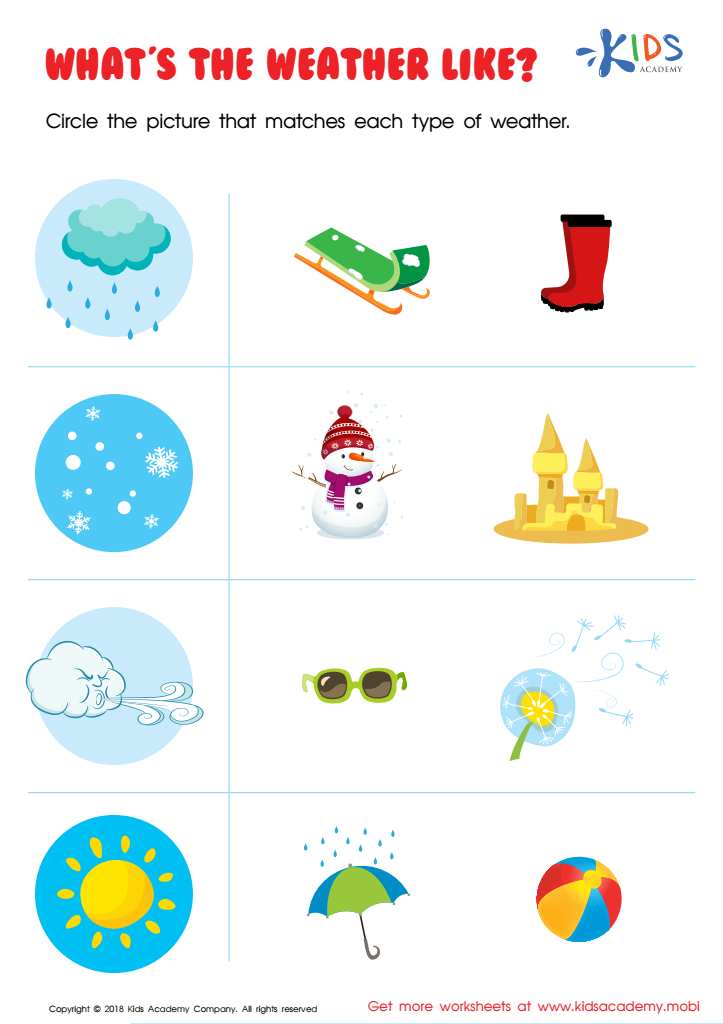
What's the Weather Like? Worksheet
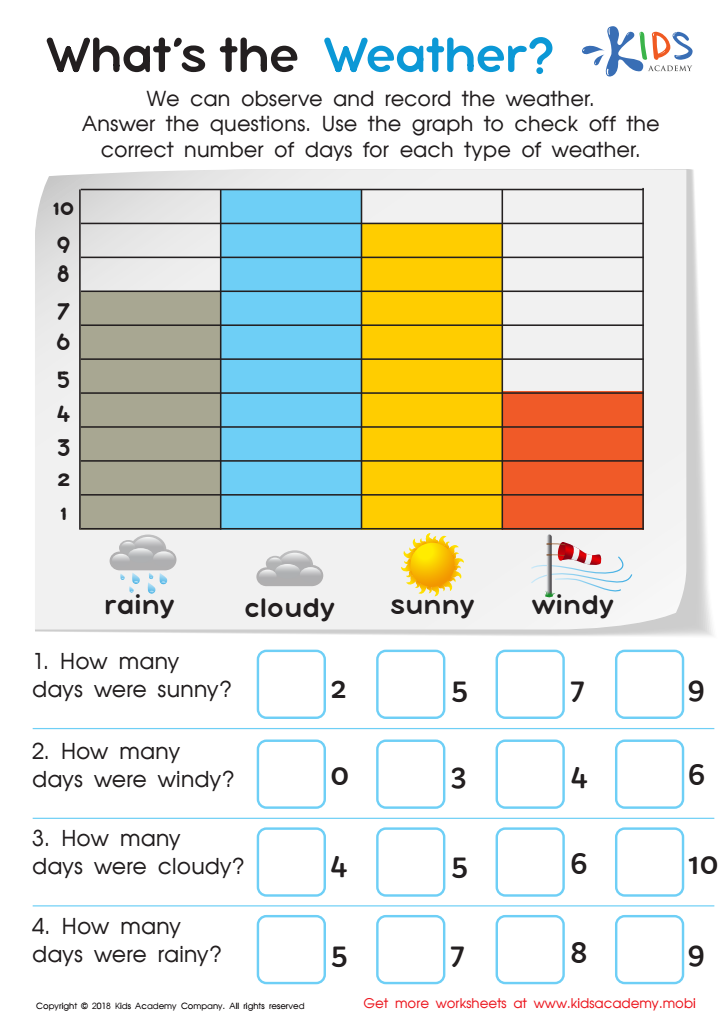
What's the Weather? Worksheet
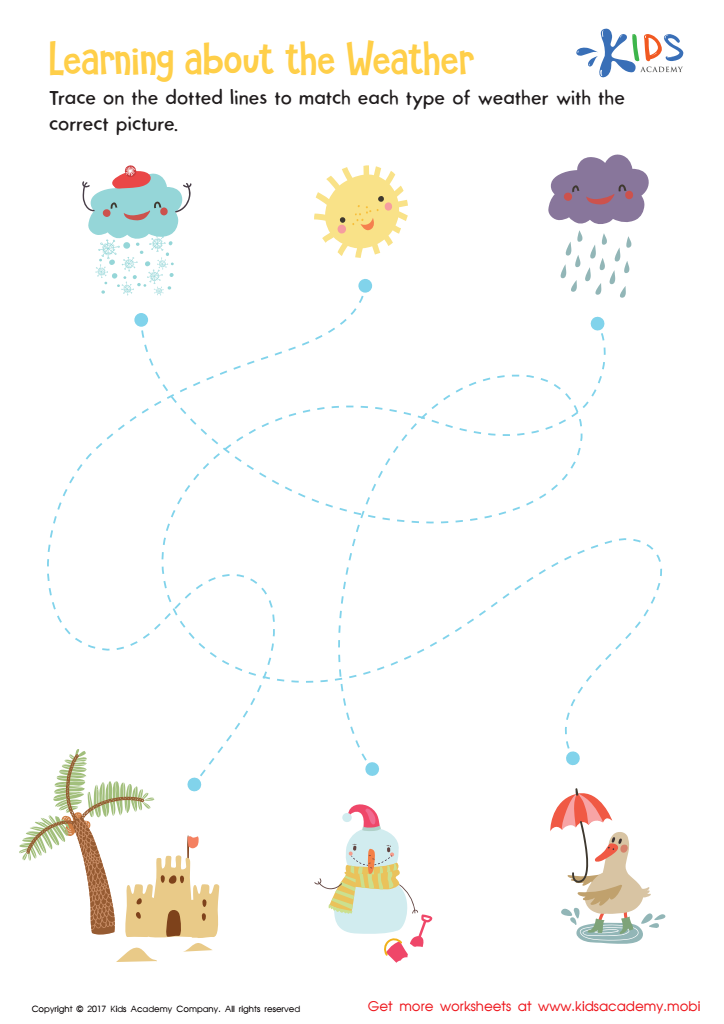





Weather identification is crucial for young children aged 3-5 as it lays the foundation for scientific inquiry and promotes curiosity about the world around them. When parents and teachers engage children in observing and identifying different weather conditions, they foster critical thinking skills and enhance their understanding of the environment.
At this developmental stage, children are naturally curious and eager to learn through play and exploration. By introducing concepts of weather—such as sunny, rainy, snowy, or cloudy—adults can promote vocabulary development, helping children articulate their observations. Activities like crafting weather charts or participating in outdoor observations make learning fun and relatable, while simultaneously developing their observational and categorization skills.
Furthermore, early weather education enhances children's awareness of safety and daily routines. Understanding what to wear or how to prepare for different weather conditions cultivates problem-solving skills and independence. Overall, weather identification is a hands-on way to integrate science into daily life, enriching a child's learning experience and fostering a lifelong love for inquiry and nature. Parents and teachers should prioritize this engagement, as it significantly contributes to children's cognitive and emotional development, setting them up for future academic success.







