Motor skills development Normal ABC Letters Worksheets for Ages 3-6
3 filtered results
-
From - To
Enhance your child's motor skills with our engaging "Normal ABC Letters Worksheets" designed for ages 3-6! These worksheets provide a fun, hands-on way for preschoolers to develop fine motor coordination while learning the alphabet. Children will practice tracing, coloring, and writing letters through interactive activities that keep them entertained and motivated. Each worksheet is crafted to challenge young learners, promoting both creativity and cognitive skills. Perfect for home or classroom use, these resources support early childhood development and encourage a love for learning. Start nurturing your child's motor skills and literacy today with our expertly designed ABC worksheets!

Letter H Tracing Page










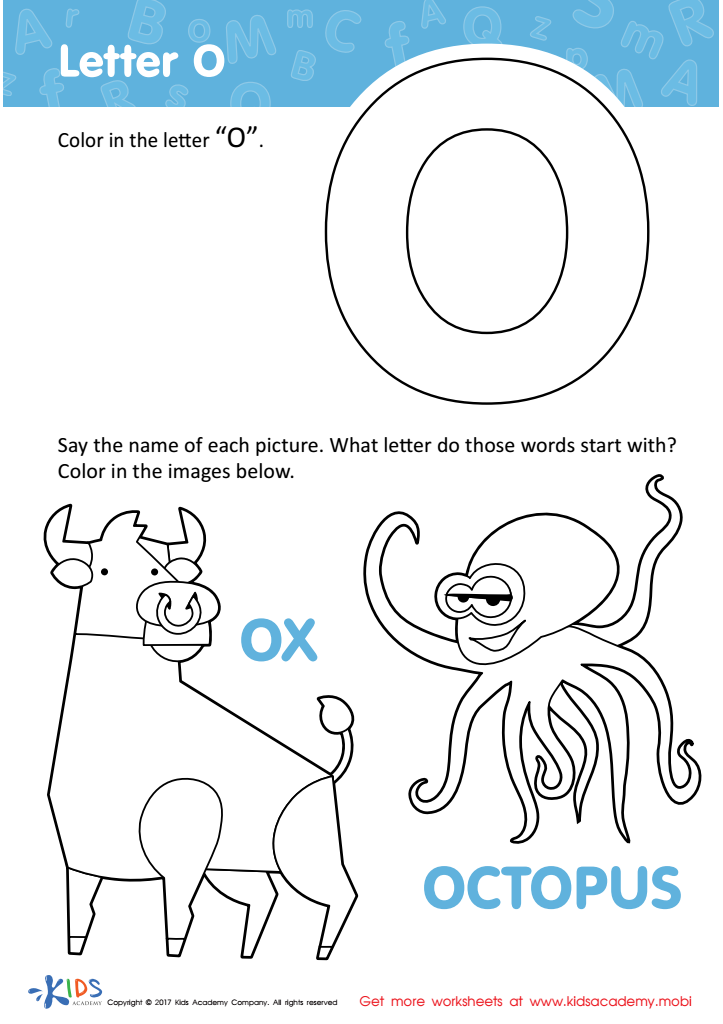
Letter O Coloring Sheet
 Assign to My Students

Letter B Tracing Page








Motor skills development in children ages 3-6 is crucial for their overall growth and learning capabilities. During this developmental stage, children refine both fine and gross motor skills which are foundational for many everyday tasks, such as writing, playing, and self-care activities. When it comes to writing letters, the formation of normal ABCs is essential; it not only helps with literacy but also promotes hand-eye coordination and dexterity.
Parents and teachers should prioritize this aspect of development as it affects a child’s confidence and independence. Children who struggle with motor skills may experience frustration, leading to a reluctance to participate in activities like drawing and writing, which can hamper academic success. Additionally, proficient motor skills can enhance language acquisition, as children engage in activities that promote communication and interaction.
By engaging in activities that foster motor skills—such as threading beads, cutting with scissors, or playing with building blocks—parents and teachers not only assist in letter formation but also stimulate cognitive and social development. investing time and attention into motor skills prepares children for future education, supports their social interactions, and lays the groundwork for lifelong learning and self-sufficiency. Thus, it’s essential to nurture these skills holistically for a child’s well-rounded development.







