Motor skills development Normal Alphabet Worksheets for Ages 3-6
3 filtered results
-
From - To
Enhance your child's motor skills with our engaging Normal Alphabet Worksheets designed for ages 3-6. These printable worksheets are perfect for young learners to practice letter recognition and hand-eye coordination while having fun! Each activity encourages fine motor skill development through tracing, coloring, and connecting letters. With vibrant illustrations and age-appropriate exercises, children will enjoy exploring the alphabet while improving their dexterity. Perfect for home or classroom use, our worksheets support early learning in an interactive way. Download now to provide your child with a foundational skillset that prepares them for successful reading and writing in the years to come!

Letter H Tracing Page
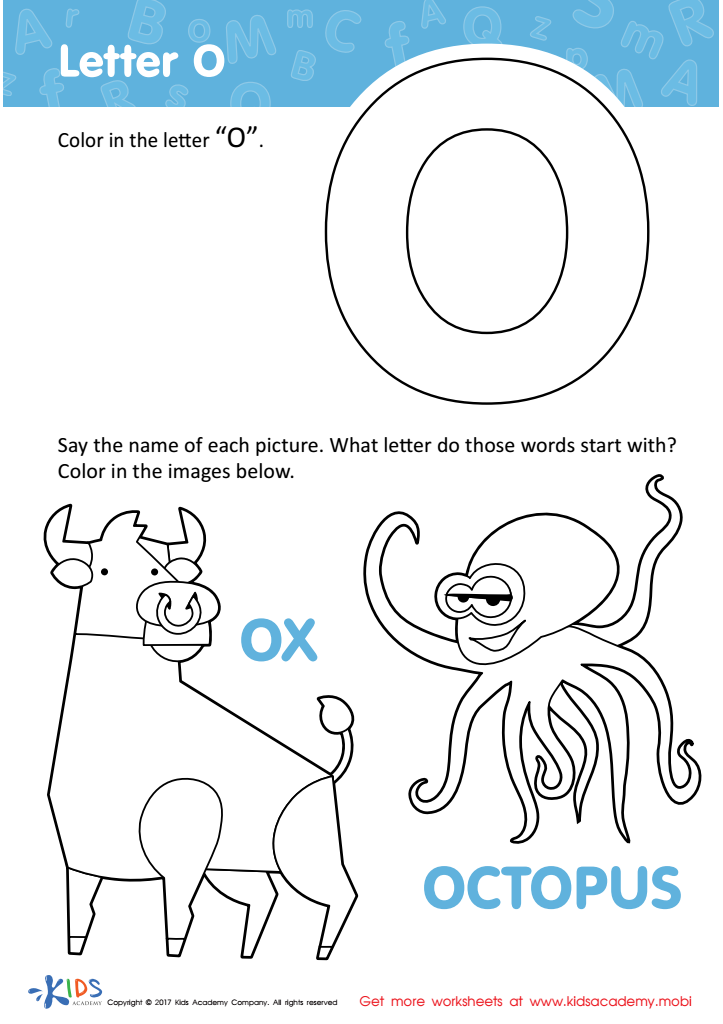
Letter O Coloring Sheet
 Assign to My Students
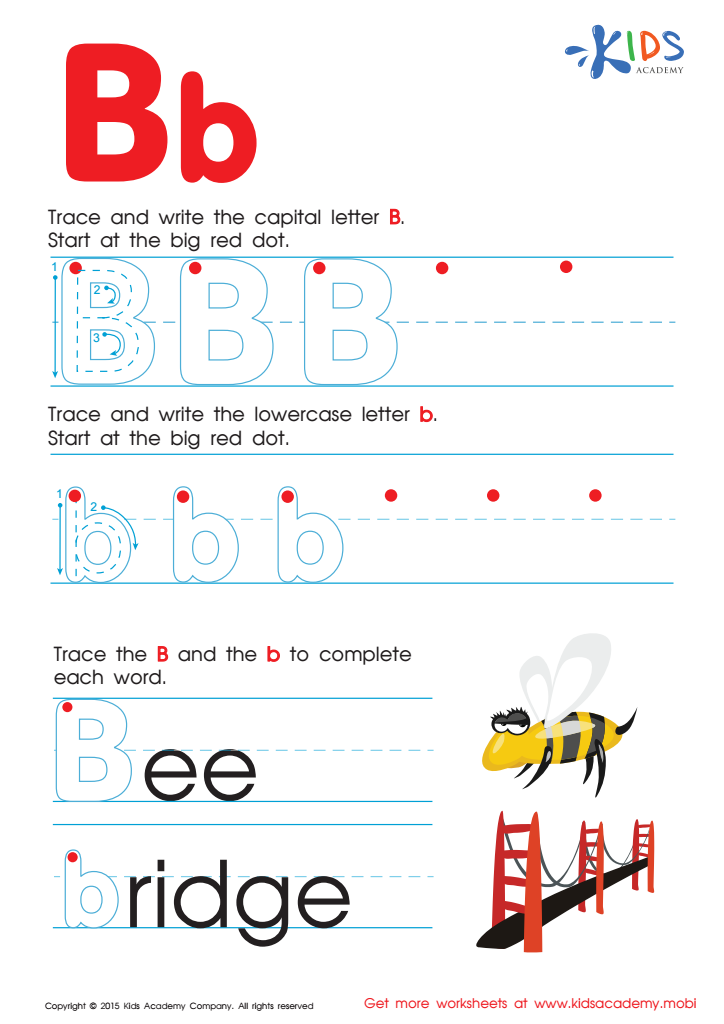
Letter B Tracing Page








Motor skills development is crucial for children aged 3-6, as it forms the foundation for their physical, cognitive, and social growth. During these formative years, children refine their fine motor skills, which involve small muscle movements that allow them to perform tasks like gripping a pencil, buttoning their clothes, and manipulating small objects. Mastery of these skills not only encourages independence but also bolsters self-confidence.
Moreover, motor skills are closely tied to cognitive development. Engaging in activities that enhance coordination and balance aids brain development, improving attention span and learning capabilities in other areas. For instance, when children practice drawing letters during these years, they are not just learning to write; they are also enhancing their hand-eye coordination and visual perception skills.
Furthermore, proficient motor skills contribute significantly to a child's social interactions. Shared play activities often involve physical coordination, allowing children to engage with peers, learn teamwork, and develop communication skills.
Parents and teachers should prioritize motor skill development to ensure children are well-prepared for later academic challenges and social environments, fostering an all-rounded readiness for school and life ahead. By promoting these skills, adults can help cultivate a generation of confident, capable individuals.







