
Alphabet understanding Normal Letter Recognition Worksheets for Ages 3-6
5 filtered results
Difficulty Level
Grade
Age
-
From - To
Subject
Activity
Standards
Our Alphabet Understanding Normal Letter Recognition Worksheets are tailored for children ages 3-6, providing a fun and effective way to boost early literacy skills. These engaging worksheets serve as an essential tool to help young learners recognize and understand both uppercase and lowercase letters. Through a variety of interactive activities, kids can practice letter identification, matching, and writing, fostering a solid foundation in alphabet knowledge. Ideal for classroom and home learning, these worksheets support early reading development, hand-eye coordination, and cognitive skills, ensuring your child feels confident and ready for their educational journey.
Favorites
With answer key
Interactive
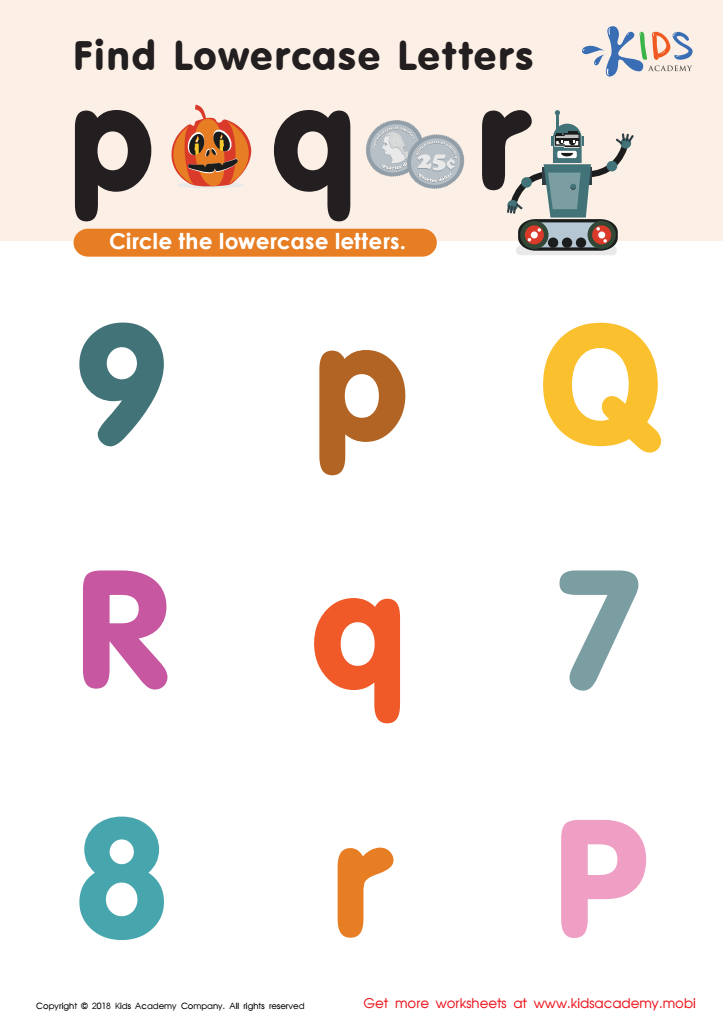
Find lowercase Letters p q r Worksheet
Help your child spot the lowercase letters among the numbers and uppercase letters in this worksheet. It's a great way to teach them to identify and write the lowercase and uppercase letters. Assist them in completing the exercise to give them a better understanding of the alphabets.
 Assign to My Students
Find lowercase Letters p q r Worksheet
Worksheet
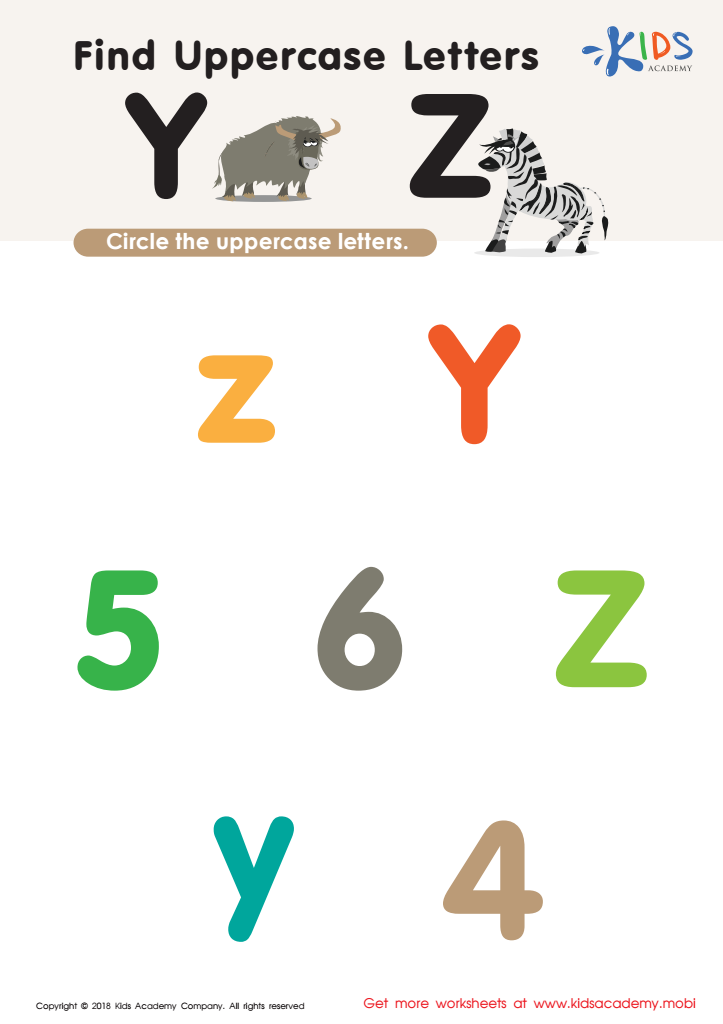
Find Uppercase Letters Y Z Worksheet
Download the worksheet! Help your youngster to learn the alphabet and distinguish uppercase from lowercase letters by having them circle the uppercase ones. It's an important first step towards reading and writing success!
Find Uppercase Letters Y Z Worksheet
Worksheet
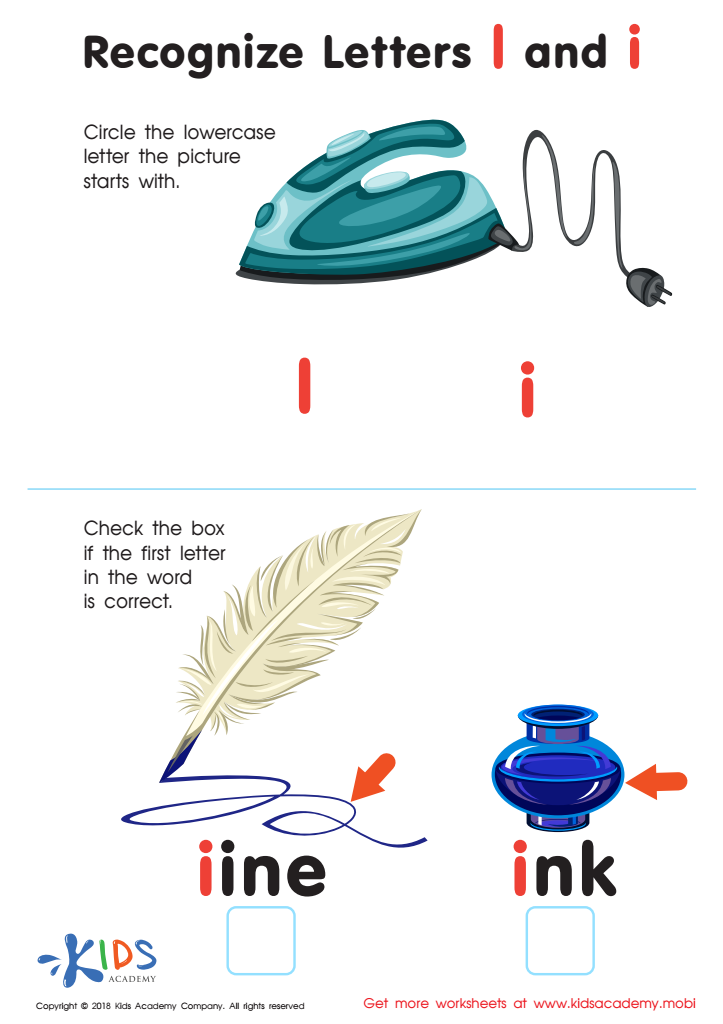
Recognize Letters l and i Worksheet
Help your child become familiar with uppercase and lowercase letters. Have them look at the pictures in the worksheet and circle the lowercase letter the picture starts with. For example: which one is the lowercase "i", the capital "I" or the small "i"?
Recognize Letters l and i Worksheet
Worksheet
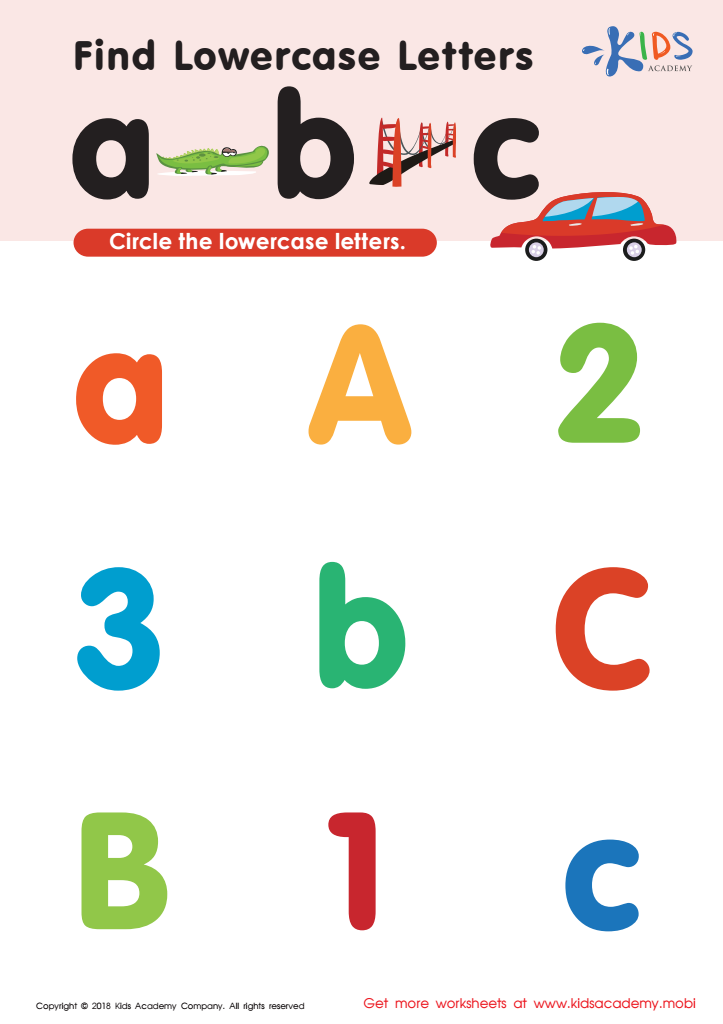
Find lowercase letters a b c Worksheet
Help your child identify lowercase letters with this worksheet. Carefully look at each letter and have your child circle the lowercase ones. This exercise is vital in helping them understand the alphabet and the difference between lower and uppercase letters.
Find lowercase letters a b c Worksheet
Worksheet
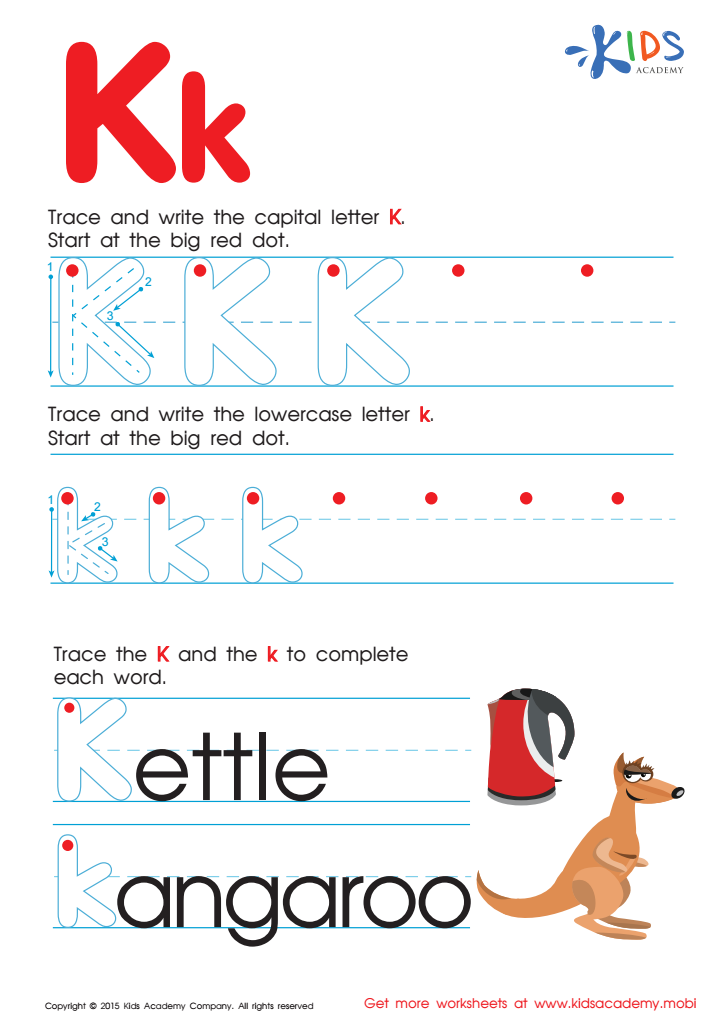
Letter K Tracing Page
Trace and write the letter K; start at the big red dot. Use it to complete words like "Kettle" and "Kangaroo". Visit Kids Academy for more free alphabet worksheets for kindergarten.
Letter K Tracing Page
Worksheet
Join Kids Academy for Free
Who is primarily going to use this learning content?








Alphabet understanding and normal letter recognition for children ages 3-6 are foundational skills essential for early literacy development. Studies show that early mastery of the alphabet is a strong predictor of future reading achievement. When parents and teachers prioritize these skills, they provide young learners with the tools needed to decode words, which is essential for reading comprehension.
At this age, children's brains are exceptionally receptive to learning new concepts, and acquiring the alphabet helps in building their language and cognitive skills. Recognizing letters not only contributes to their ability to read but also aids in other areas such as vocabulary building, spelling, and even writing. When children can identify letters and understand their associated sounds, they begin to decode words and ultimately develop fluency in reading.
Additionally, achieving proficiency in letter recognition boosts children's confidence and fosters a love for reading from an early age. These positive early experiences with literacy can lead to more enthusiastic and dedicated learners as they grow older. Educators and parents should actively engage children with fun, interactive, and multi-sensory activities like singing alphabet songs, using flashcards, and playing letter-matching games to reinforce these fundamental skills, establishing a strong foundation for all future learning endeavors.








