Fine motor skills development Normal Letter Recognition Worksheets for Ages 3-6
3 filtered results
-
From - To
Enhance your child's fine motor skills with our expertly crafted Normal Letter Recognition Worksheets for ages 3-6. Specifically designed to advance early learning, these worksheets assist young learners in recognizing letters while nurturing their penmanship. Each activity encourages precise hand movements essential for writing proficiency. Perfect for both classroom use and home practice, our engaging exercises are tailored to captivate children’s attention and make learning fun. Parents and educators will appreciate how seamlessly these worksheets blend entertainment with education, providing a solid foundation for future academic success. Equip your little one for a bright learning journey with Kids Academy’s proven method.
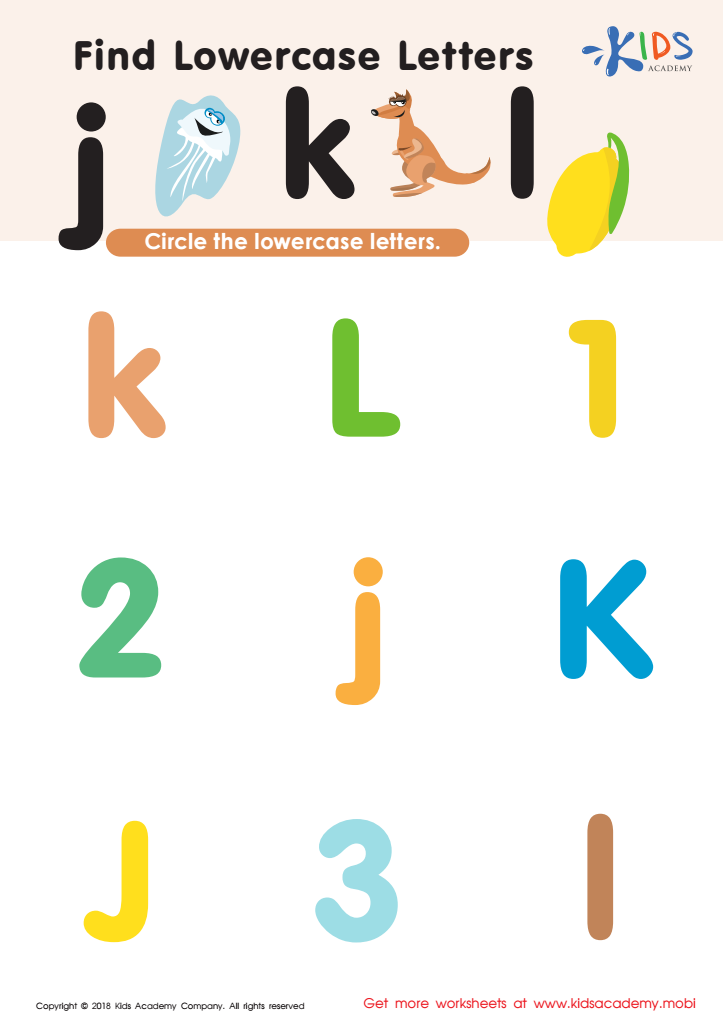
Find Lowercase Letters j k l Worksheet
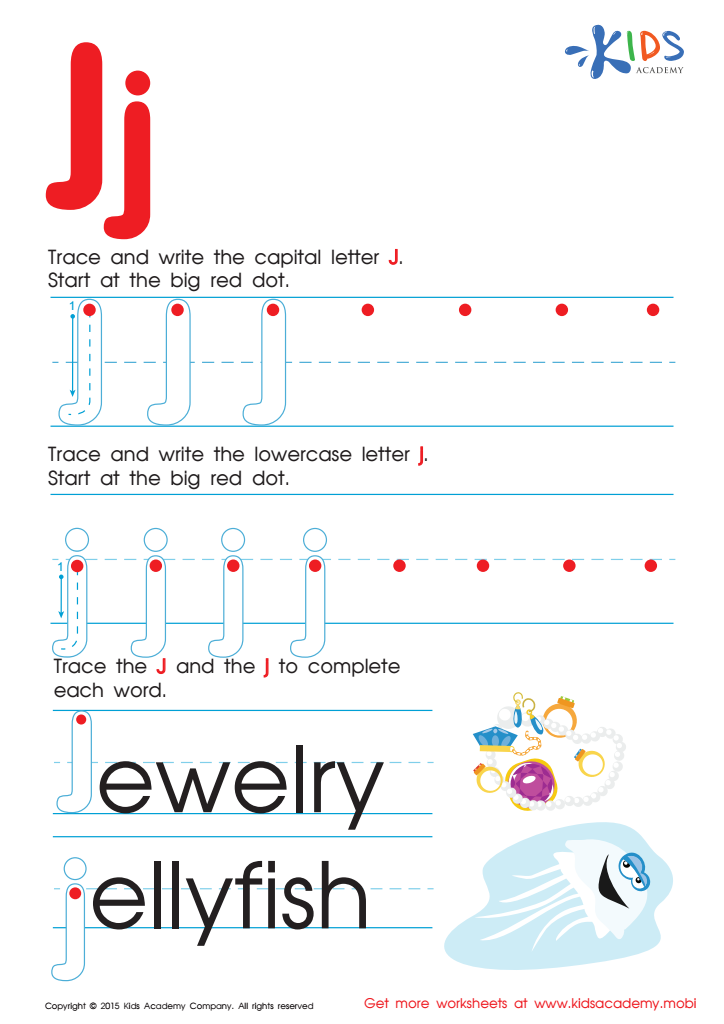
Letter J Tracing Page
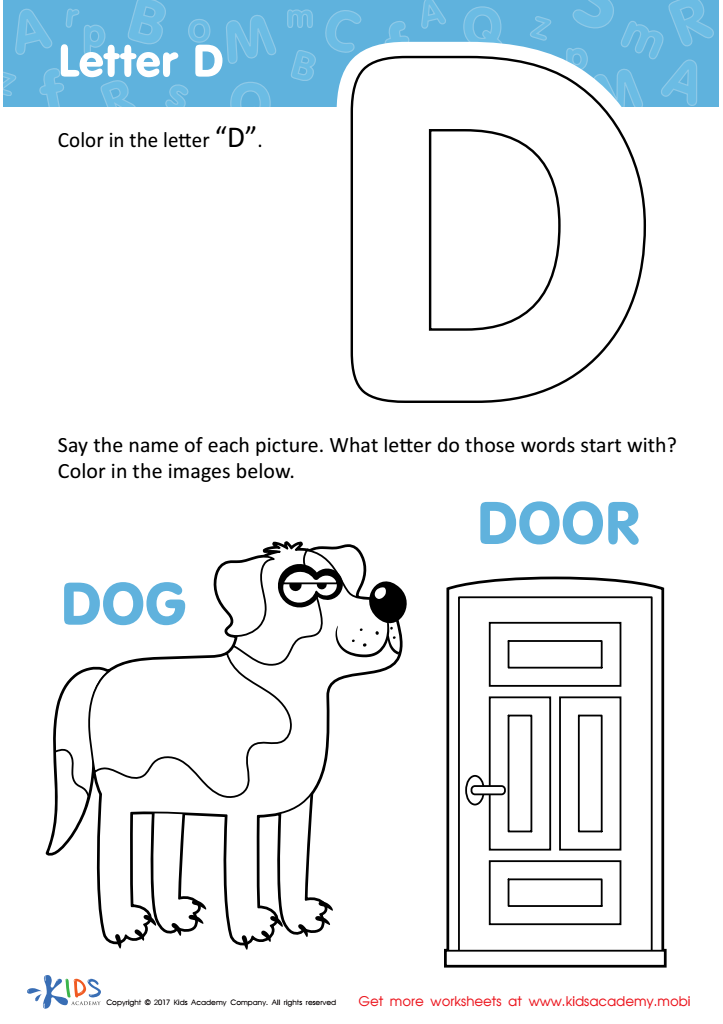
Letter D Coloring Sheet
 Assign to My Students








Fine motor skills development and normal letter recognition for ages 3 to 6 are critical for a child’s overall growth, learning, and future academic success. Fine motor skills involve the coordination of small muscles, specifically in the hands and fingers, with the eyes. These skills enable children to perform essential tasks such as writing, buttoning a shirt, or using small tools. Mastery of these tasks facilitates greater independence and self-esteem in young children.
During the ages of 3 to 6, children's brains are particularly receptive to learning new skills, making it an optimal period for developing fine motor control. Normal letter recognition is another foundational skill learned during this stage. Identifying and correctly recognizing letters early on is crucial for literacy development. It sets the stage for reading and writing proficiency, which are fundamental skills for lifelong learning.
If fine motor skills and letter recognition are not adequately developed, children may struggle academically, as these abilities are directly linked to handwriting quality and reading fluency. Thus, parents and teachers play a vital role in providing opportunities for practice through activities like drawing, cutting, and interactive games. By actively engaging in the development of fine motor skills and letter recognition, adults support children's readiness for school and help lay a strong foundation for their educational journey.








