Reading comprehension Normal Rhyming Worksheets for Ages 3-6
5 filtered results
-
From - To
Discover our "Reading Comprehension Normal Rhyming Worksheets for Ages 3-6," designed to fuel early literacy skills in a fun and engaging way. Perfect for young learners, these worksheets feature playful rhymes that help children recognize patterns, improve vocabulary, and enhance comprehension. Each activity is carefully crafted to build foundational reading skills while keeping kids entertained and eager to learn. Whether at home or in the classroom, these printable resources support teachers and parents in fostering a love for reading. Boost your child's confidence and reading abilities with our delightful rhyming worksheets today!
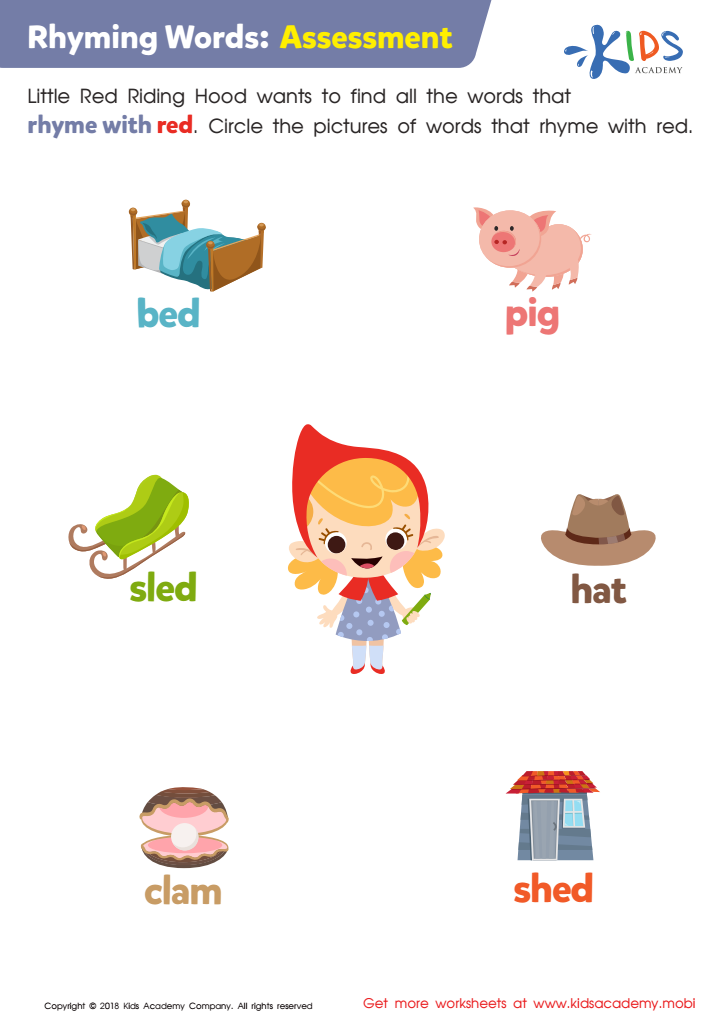
Rhyming Words: Assessment Worksheet
 Assign to My Students
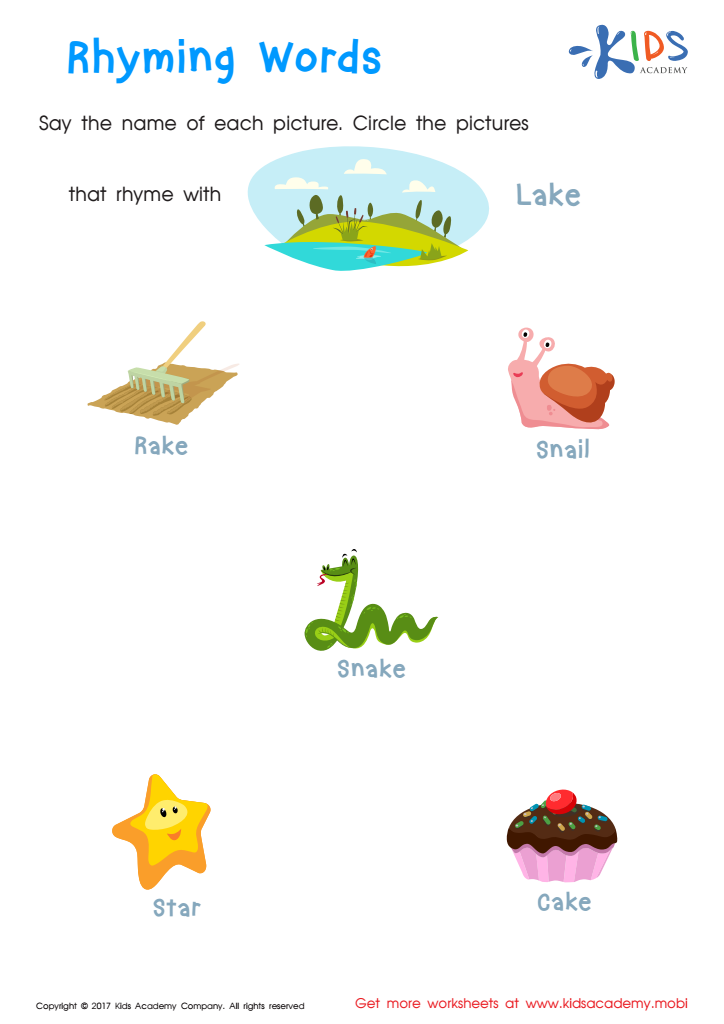
Rhyming Words Rhyming Worksheet
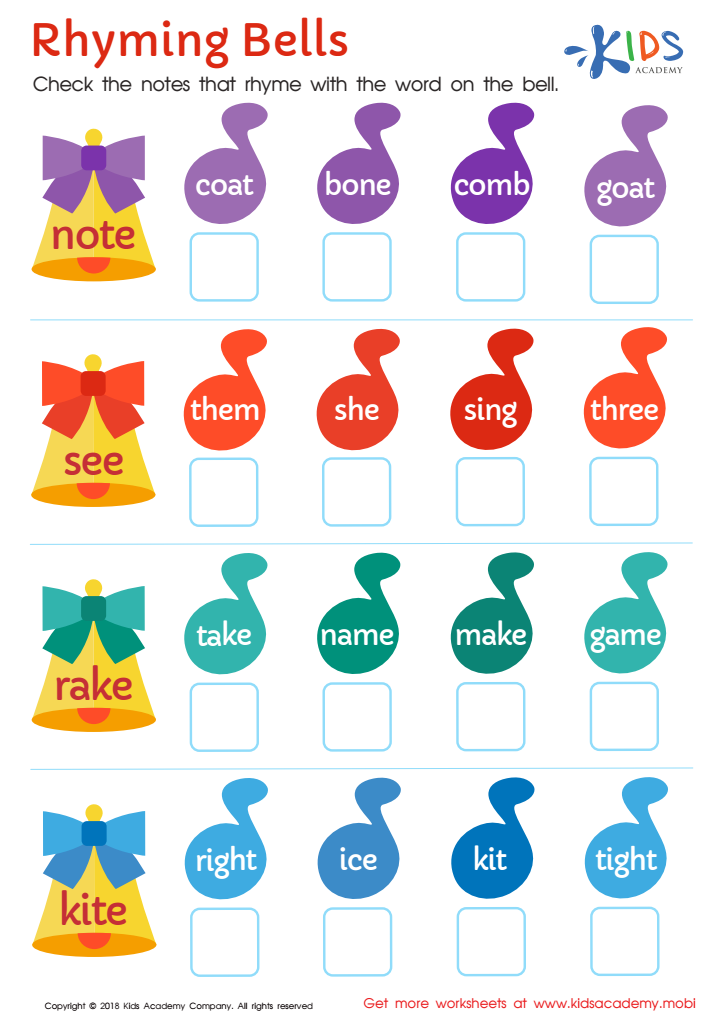
Rhyming Bells Worksheet
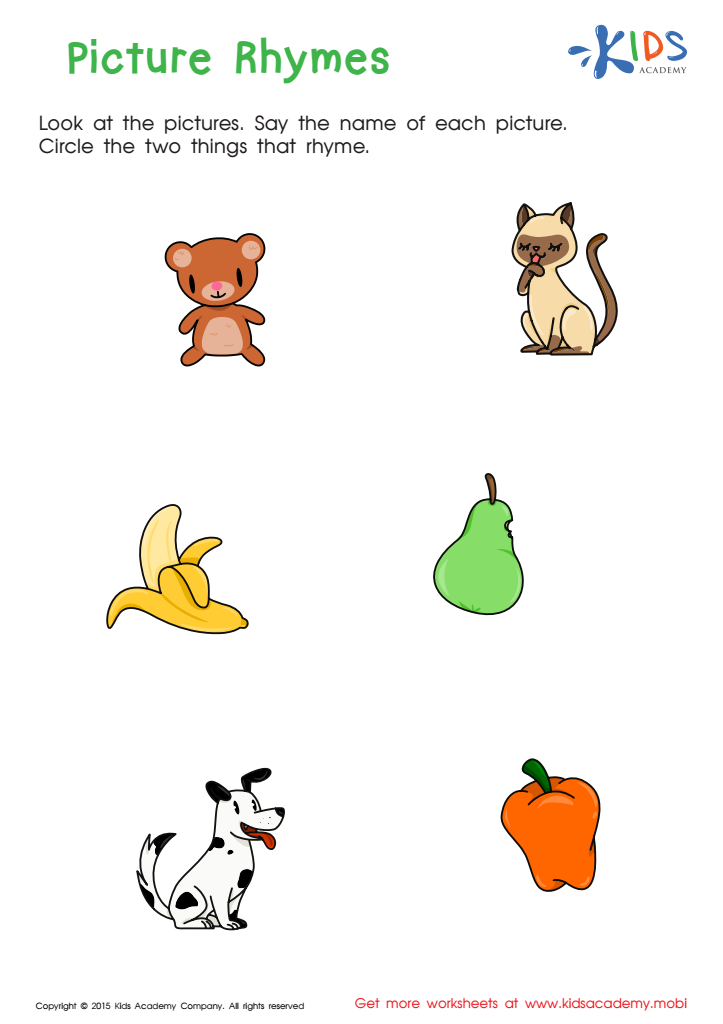
First Words: Picture Rhymes Worksheet
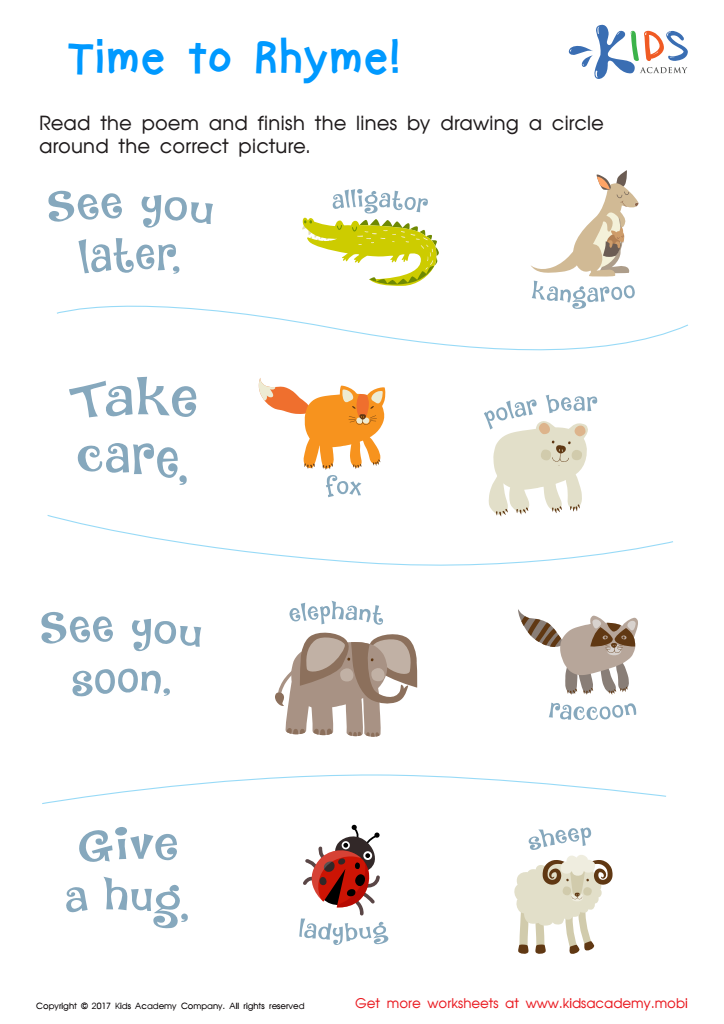
Time to Rhyme Rhyming Worksheet







Parents and teachers should prioritize reading comprehension and rhyming for children ages 3-6 because these foundational skills significantly impact future academic and language development. During early childhood, the brain is exceptionally receptive to language acquisition. Engaging children with stories and rhymes not only enhances their vocabulary but also fosters phonemic awareness — the ability to recognize and manipulate sounds — which is crucial for learning to read.
Rhyming plays a critical role in this process. When children identify and predict rhyming patterns, they develop an understanding of sounds and word families, making it easier for them to decode new words. Nursery rhymes and rhythmic stories capture a child's attention and stimulate memory, enabling them to recall and articulate words more effectively.
Reading comprehension, on the other hand, allows children to understand and derive meaning from text. Early exposure to a variety of stories helps build cognitive skills such as critical thinking, sequencing, and inferencing. Comprehension also encourages empathy and imagination as children explore different characters, settings, and scenarios.
By fostering a love for reading and understanding rhyming patterns at a young age, parents and teachers set the stage for successful literacy development. They empower children with the tools needed for effective communication, academic success, and an enduring love of reading.