Letter Tracing Practice Normal Tracing Letters Worksheets for Ages 3-6
3 filtered results
-
From - To
Enhance your child's writing skills with our engaging Letter Tracing Practice worksheets, designed specifically for ages 3 to 6. These normal tracing letter worksheets provide a fun and interactive way for young learners to familiarize themselves with the alphabet. Each worksheet features colorful designs that inspire creativity while promoting fine motor skills, coordination, and letter recognition. As children trace each letter, they build confidence in their writing abilities, paving the way for successful literacy development. Ideal for home or classroom use, these printable resources are perfect for reinforcing early learning fundamentals in a playful and educational manner. Get started on your educational journey today!
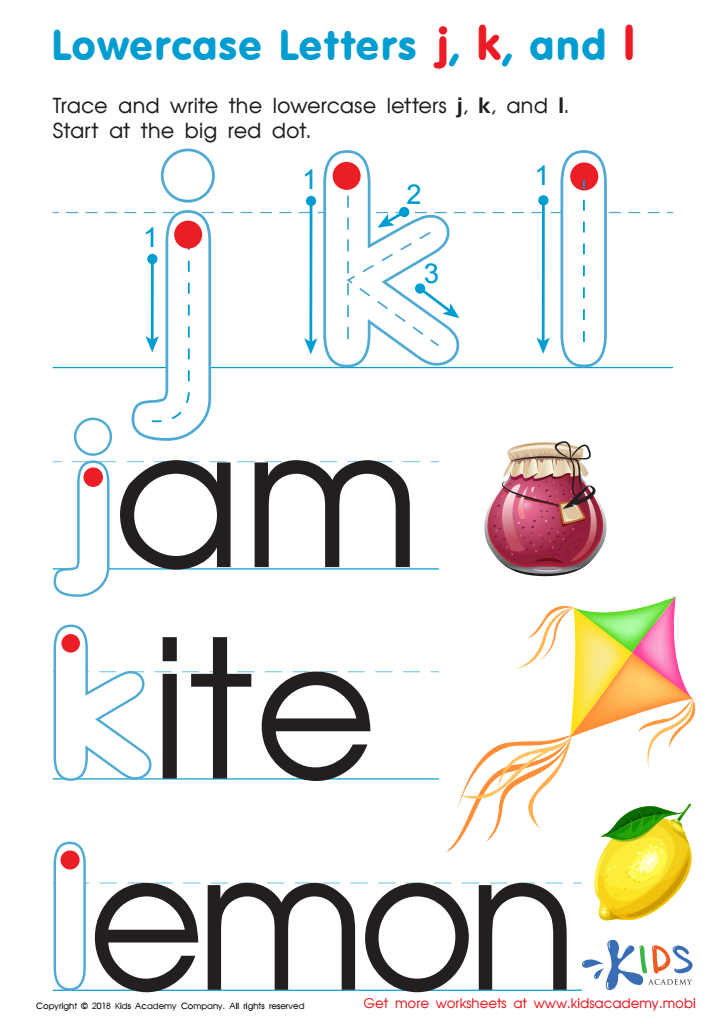
Lowercase Letters j k l Worksheet
 Assign to My Students
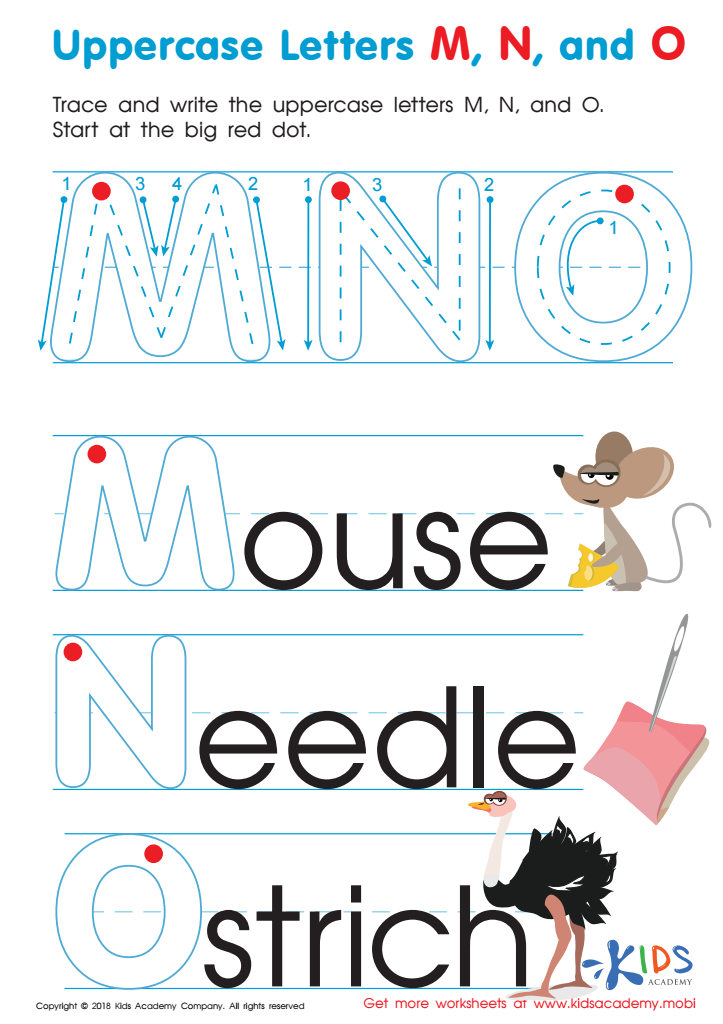
Uppercase Letters M, N, and O Worksheet
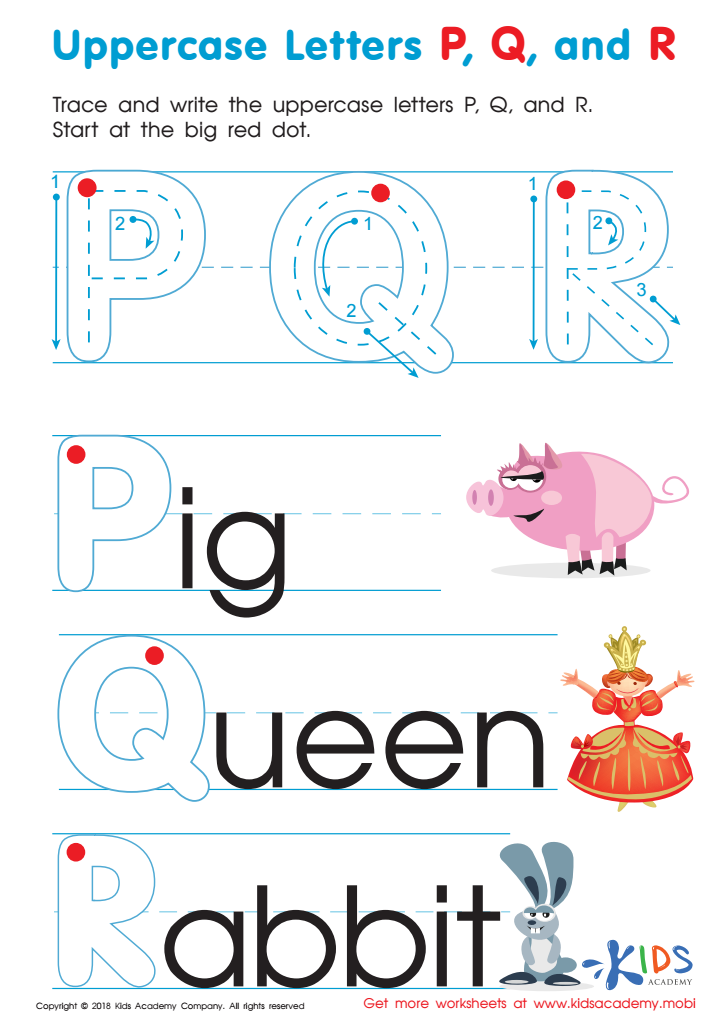
Uppercase Letters P, Q, and R Worksheet








Letter tracing practice is a vital educational activity for young children aged 3-6, and both parents and teachers should prioritize it for several reasons. First, tracing helps develop fine motor skills, which are essential for handwriting and other fine tasks. Through repetitive motion, children strengthen the small muscles in their hands, improving their ability to control pencils, crayons, and other writing tools.
Moreover, tracing letters reinforces letter recognition and phonemic awareness. As children trace letters, they become more familiar with their shapes and sounds, laying the foundation for early literacy skills. This practice encourages cognitive development as children make connections between the visual representation of letters and their corresponding sounds.
Additionally, letter tracing fosters discipline and concentration, as children learn to focus on specific tasks and follow instructions. This ability to concentrate early on can benefit their overall academic performance in the years to come.
Lastly, completing tracing exercises can provide a sense of accomplishment and boost self-esteem. Positive reinforcement from parents and teachers during these activities enhances motivation to learn further. By caring about and facilitating letter tracing practice, adults support children's growth in multiple areas, ensuring they are well-prepared for continued educational success.








