Uppercase identification Normal Upper & Lowercase Letters Worksheets for Ages 3-6
5 filtered results
-
From - To
Discover our engaging Uppercase Identification worksheets designed specifically for children ages 3-6! These printable activities are perfect for helping young learners recognize and differentiate between uppercase and lowercase letters. Each worksheet features fun illustrations and interactive exercises that make learning enjoyable. As kids trace, color, and identify letters, they develop essential foundational skills that boost their confidence in reading and writing. Our Uppercase Identification worksheets cater to early learners, ensuring a smooth and effective learning experience. Start your child's literacy journey today with these captivating resources, and watch them thrive as they master the alphabet!
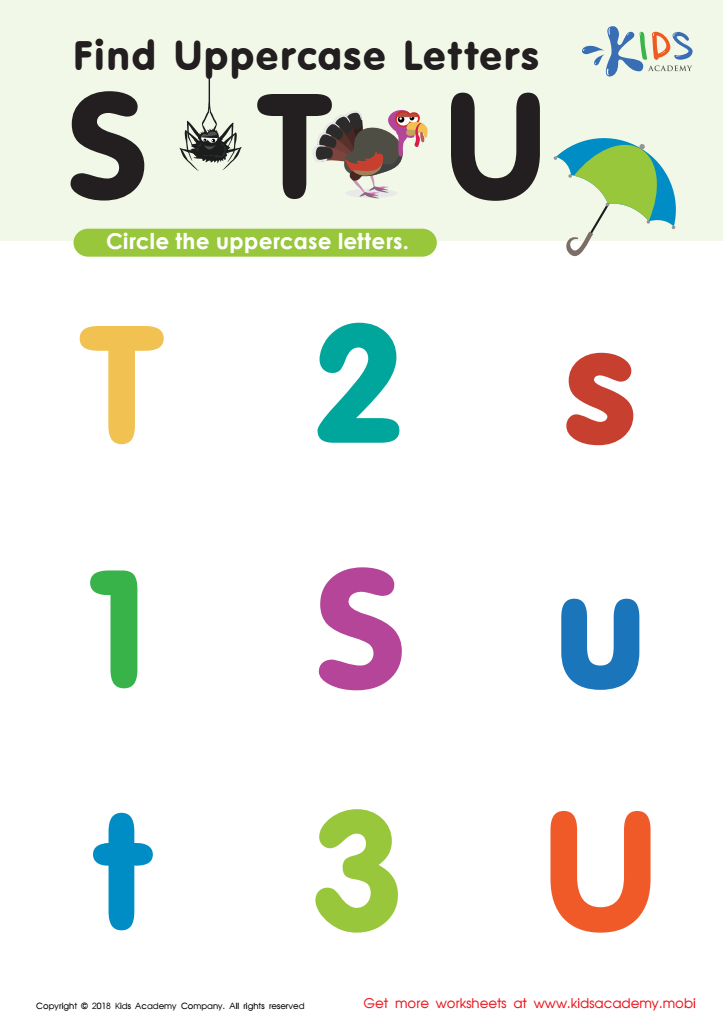
Find Uppercase Letters Worksheet
 Assign to My Students

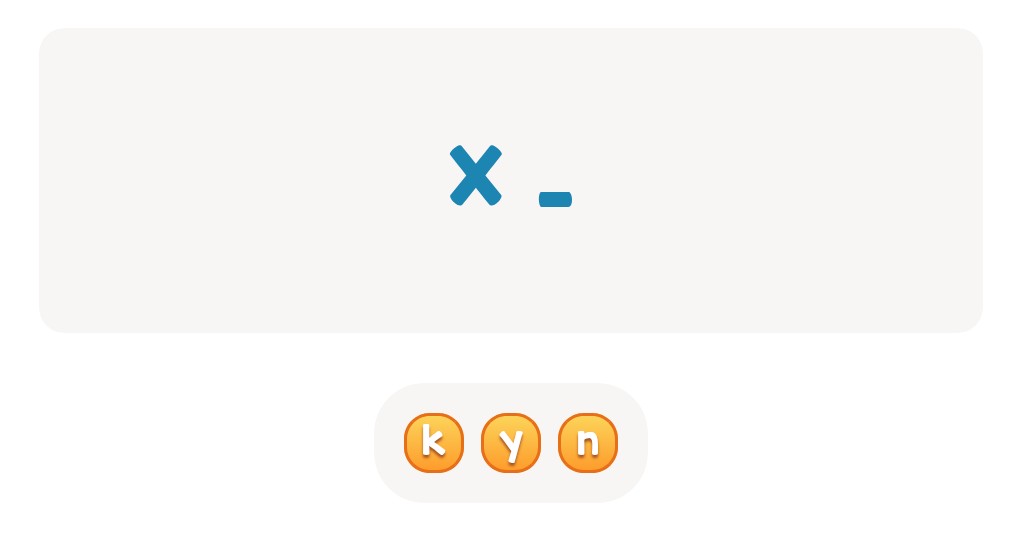
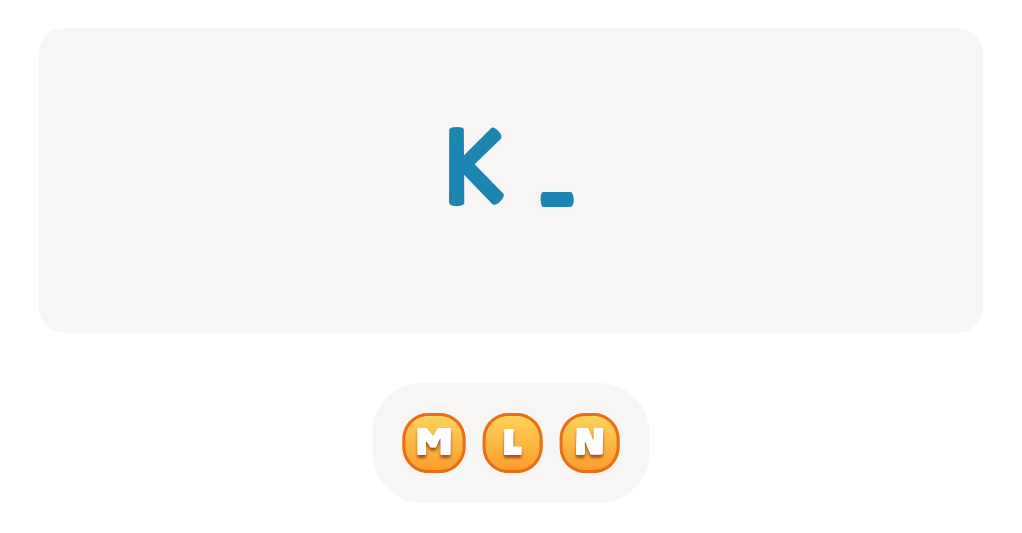
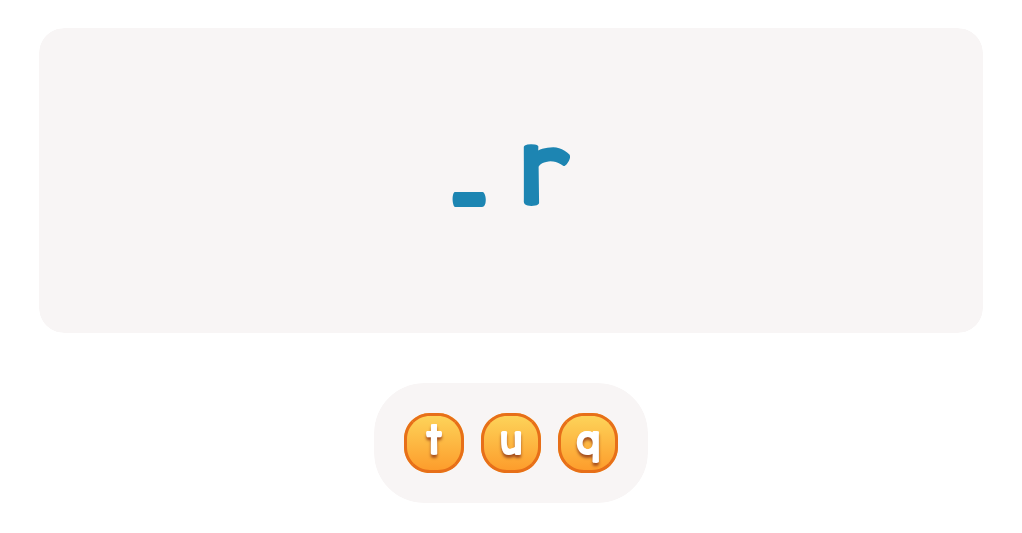
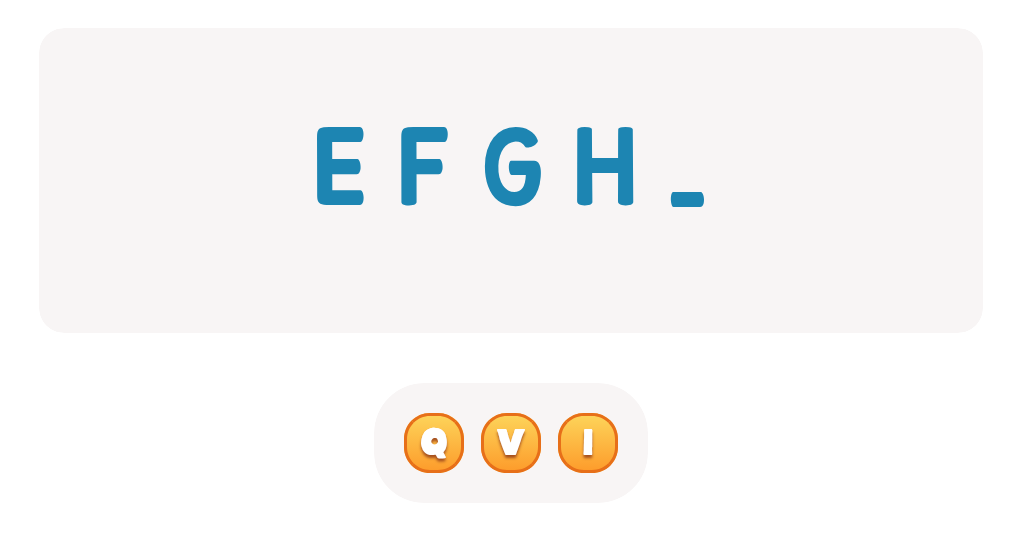
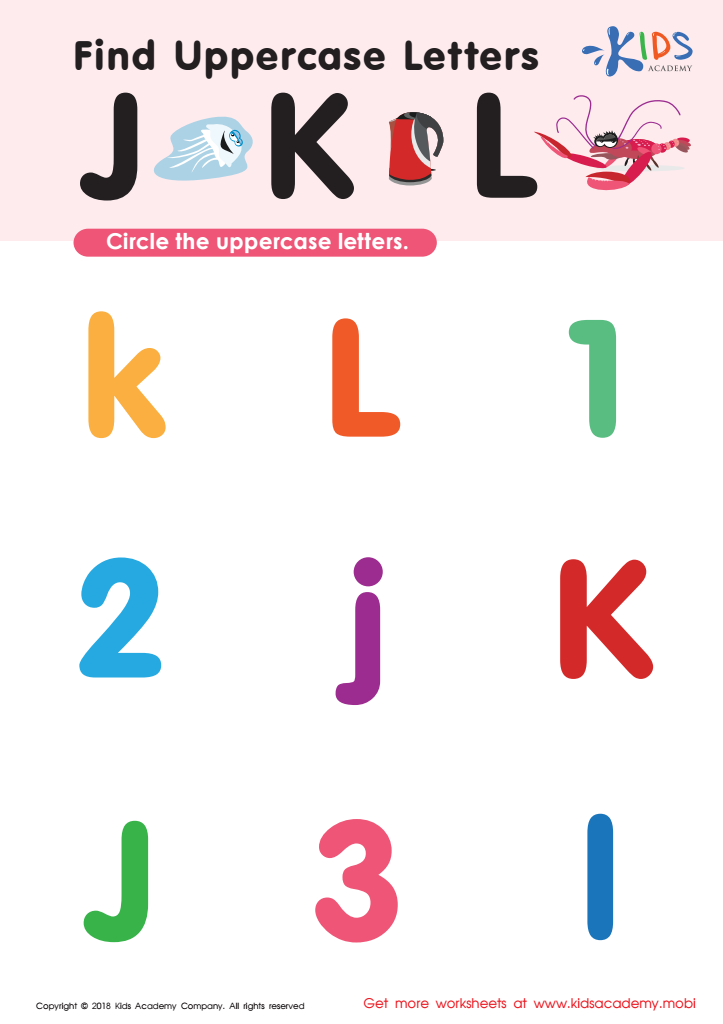
Find Uppercase Letters J, K, and L Worksheet
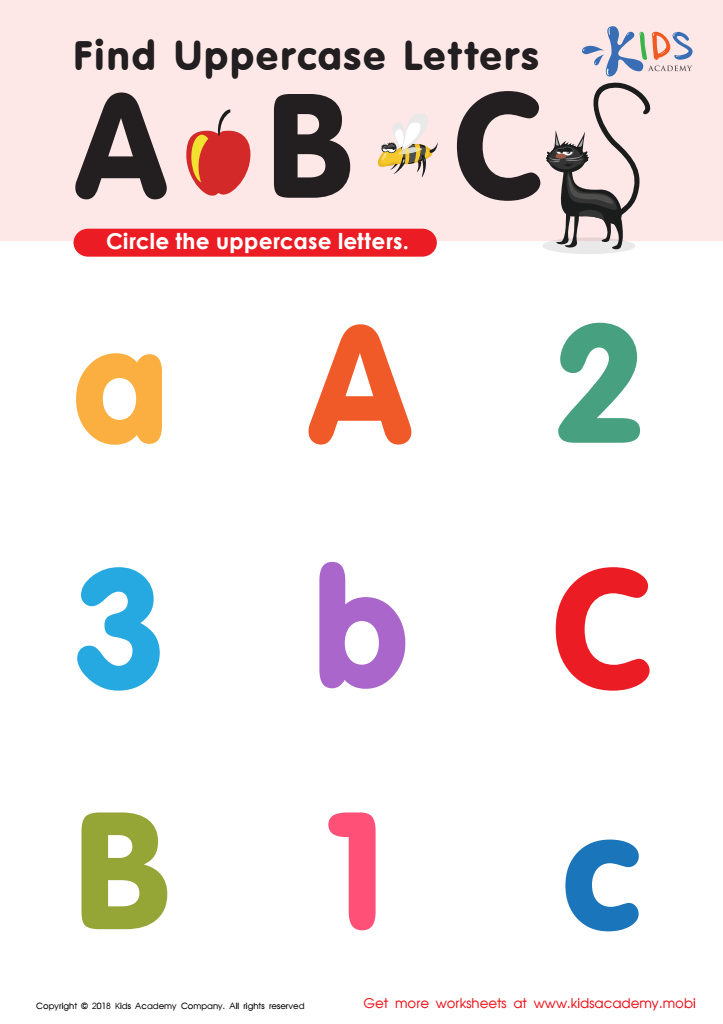
Find Uppercase Letters A, B, and C Worksheet
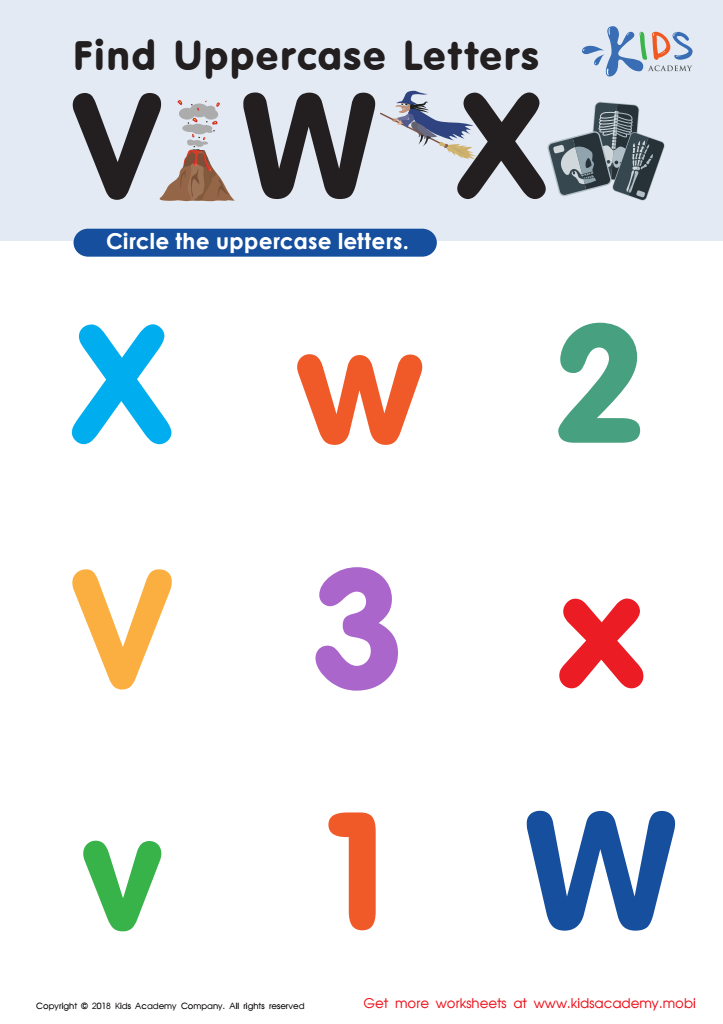
Find Uppercase Letters V, W, X Worksheet
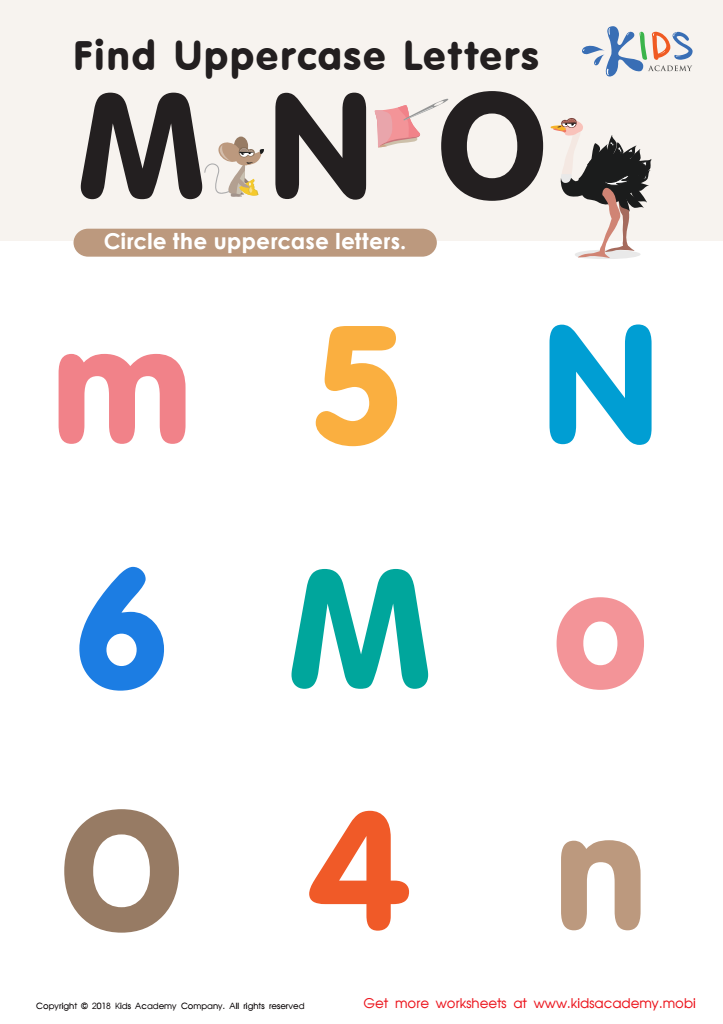
Find Uppercase Letters M, N, and O Worksheet






Identifying uppercase and lowercase letters is fundamental for children aged 3-6, laying a critical foundation for literacy skills. During this crucial developmental stage, young learners begin to interact with letters in their environment, from books to signs. Understanding uppercase letters, often used at the beginning of sentences or names, helps children grasp basic sentence structure and context. In contrast, lowercase letters are used far more frequently in writing, and knowing them is essential for reading fluency and comprehension.
For parents and teachers, fostering recognition of both types of letters cultivates early reading habits. Mastery of this skill encourages confidence in writing and reading, which translates into eagerness to learn more complex language concepts. Moreover, engaging children in activities that involve these letters—such as storytime, alphabet games, or letter matching—strengthens cognitive development and fine motor skills through hands-on practice.
Beyond academic benefits, proficiency in letter identification enhances communication skills, enabling children to express thoughts and feelings. Encouraging interest in letters transforms learning into an enjoyable experience, aligning educational activities with play, thus fostering a positive attitude toward future learning challenges. Ultimately, understanding uppercase and lowercase letters is a stepping stone toward successful literacy.







