Visual discrimination Normal Upper & Lowercase Letters Worksheets for Ages 3-6
4 filtered results
-
From - To
Welcome to our Visual Discrimination Normal Upper & Lowercase Letters Worksheets, specifically designed for children aged 3-6! These engaging worksheets help young learners develop essential visual discrimination skills while distinguishing between uppercase and lowercase letters. Through vibrant images and interactive activities, children will enhance their abilities to identify, differentiate, and remember letter shapes. Perfect for early education settings or at-home learning, our thoughtfully crafted worksheets provide a fun and effective way to support literacy development. Foster a love for letters and lay a strong foundation for reading success with our easy-to-use resources. Explore our collection and spark your child's learning journey today!
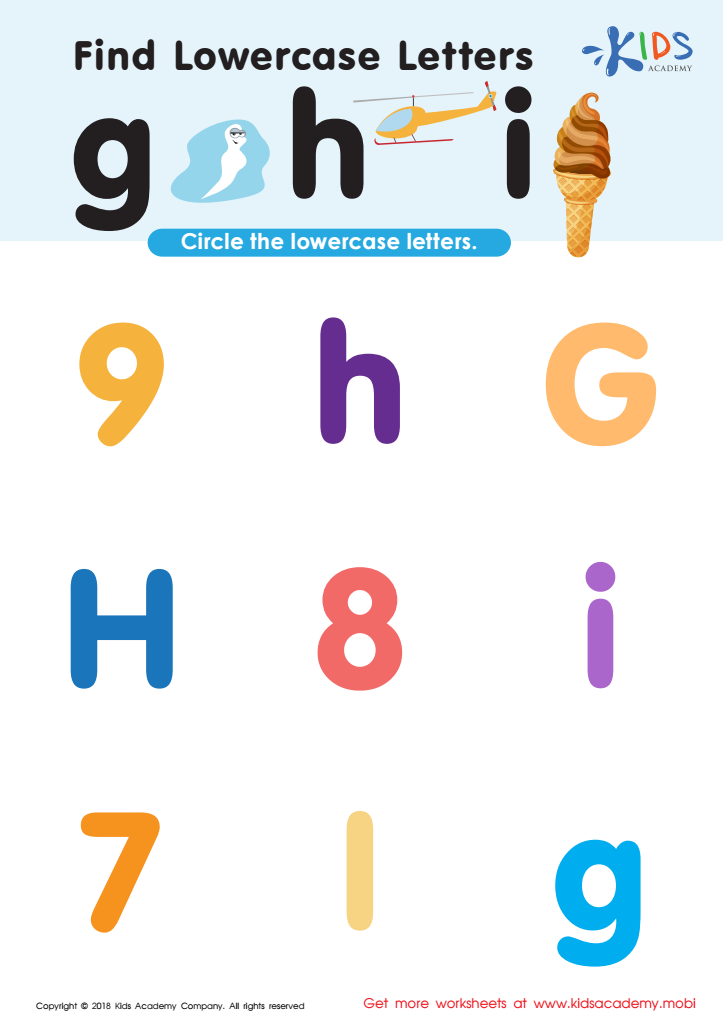
Find Lowercase Letters g h i Worksheet
 Assign to My Students



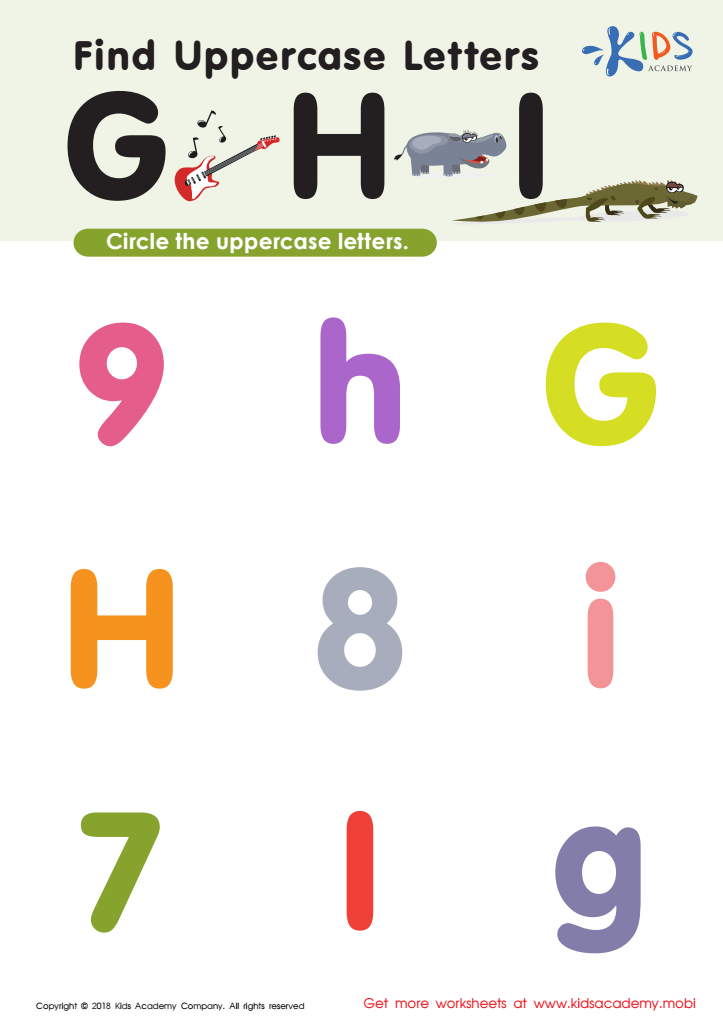
Find Uppercase Letters G, H, and I Worksheet
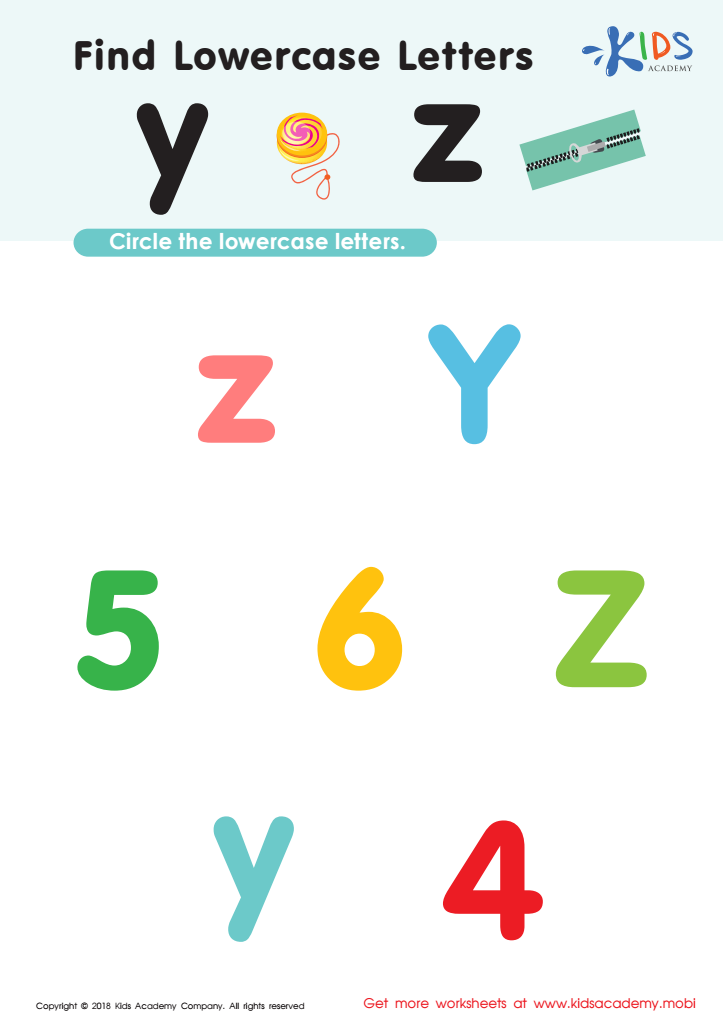
Find Lowercase Letters y z Worksheet
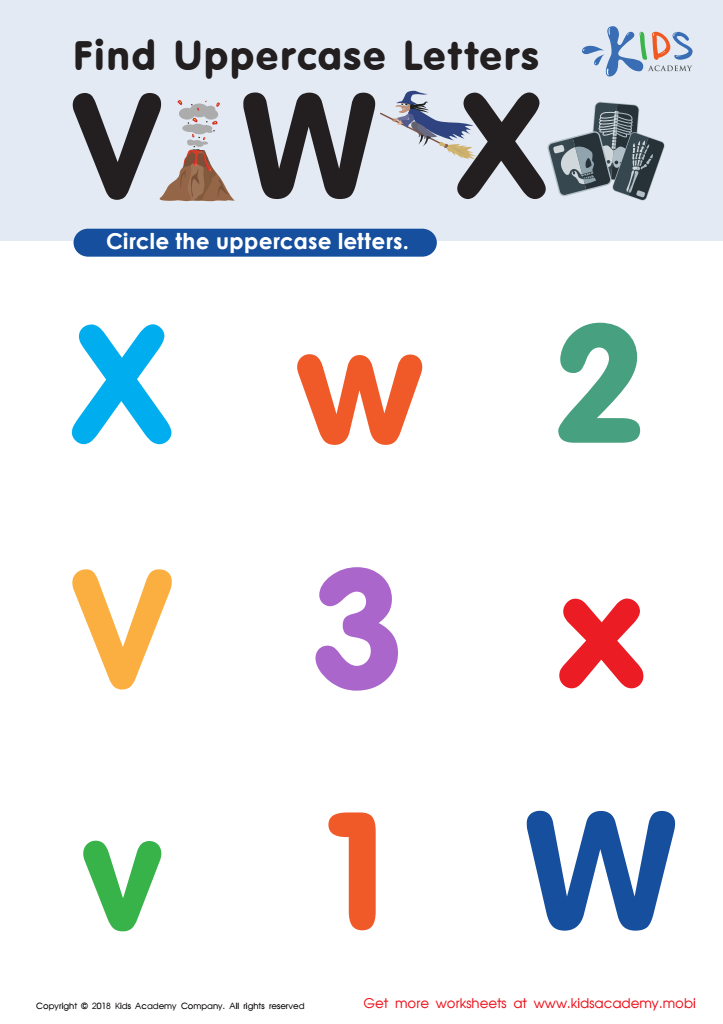
Find Uppercase Letters V, W, X Worksheet






Visual discrimination of normal upper and lowercase letters is essential for children aged 3-6 as it lays the foundation for their reading and writing skills. During this developmental stage, young learners are beginning to recognize letters and understand how they differ from one another in shape and case, which is crucial for literacy.
Parents and teachers should care about visual discrimination because it directly impacts a child's ability to decode words, a skill necessary for reading comprehension. Accurate letter recognition helps children identify, distinguish, and reproduce letters, which are fundamental skills used in early writing activities, such as spelling their names or copying words.
Additionally, strong visual discrimination skills can aid in minimizing confusion among similar-looking letters, such as 'b' and 'd,' or 'p' and 'q,' thereby preventing common reading errors as children progress to more complex texts.
Encouraging activities that promote visual discrimination, such as letter games, matching activities, and multisensory approaches, can enhance a child’s confidence and motivation in their learning journey. Overall, fostering these skills during early childhood supports academic success and prepares children for a positive experience in school.







